Why grow Flora Blanca?
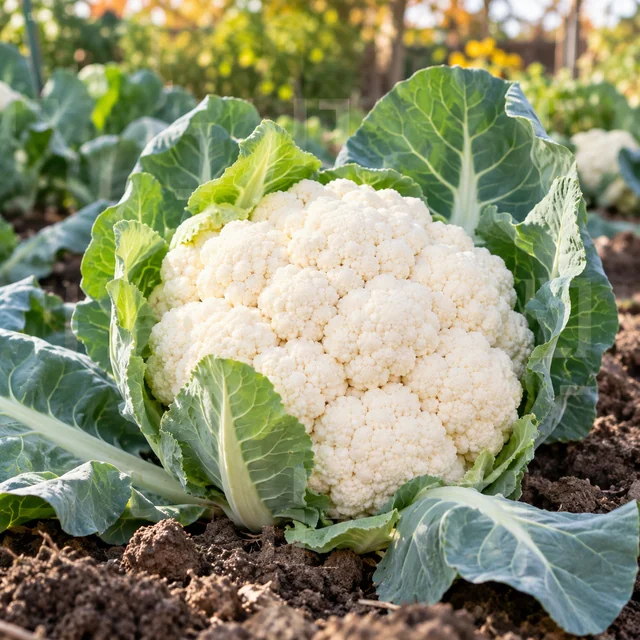
Flora Blanca is a white cauliflower for autumn growing. It gives a clear seasonal emphasis to cabbage planning.
Choose this variety to extend cabbage harvesting into autumn. Neckarperle is a different selection for very early harvesting.
How this choice tastes
The source gives no cultivar-specific aroma comparison. Familiar cauliflower flavour is therefore used as crop information, not as a unique promise.
From harvest to kitchen
Small florets suit brief steaming or frying. Use firm parts of the stalk too after trimming.
What needs attention when growing
Maintain uninterrupted growth with fertile soil and enough moisture. A stressed plant can form a small head too early.
Cut the head while florets are compact. Check regularly, as a harvestable head does not stay firm indefinitely.
Choose by flavour, shape and use
Flora Blanca: Flora Blanca is a white cauliflower for autumn growing. This gives the cultivar a clear seasonal emphasis in brassica planning. Small florets suit brief steaming or frying. Use firm parts of the stalk too after trimming.
The source gives no cultivar-specific aroma comparison. Familiar cauliflower flavour is therefore used as crop information, not as a unique promise.
Neckarperle: Neckarperle is een zeer vroege selectie met relatief kleine, kegelvormige kolen. Een kleinere kool kan goed bij een bescheiden huishouden passen. Bereid de kleine kool in een paar porties of verdeel hem in roosjes. Dat beperkt overgebleven, aangesneden kool in de koelkast.
The source describes no distinct aroma for Neckarperle. Earliness and head shape are stronger selection criteria than unproven flavour superiority.
Verde di Macerata: Verde di Macerata forms pale green to yellow-green heads. Its unusual colour makes a simple cauliflower dish distinctive. Steam or roast the florets and keep preparation straightforward. The source says the colour can be retained during cooking.
The product source describes the flavour as delicate. A specific nutty note or comparison with white cultivars has not been confirmed.
Paars uit Sicilië: Dit Siciliaanse aanbod is benoemd op herkomst en paarse koolkleur. Het vormt ronde, compacte kolen met een krachtige plantontwikkeling. Gebruik de paarse roosjes om kleur aan een bord toe te voegen. Controleer het resultaat bij koken; kleurbehoud is hier niet bewezen.
The source provides no specific flavour profile for this type designation. The inspiration rests on appearance and use as cauliflower.
You harvest a flower head before it opens
De bekende kool is een onvolgroeide bloeiwijze. Laat je de plant verder groeien, dan verschijnen uiteindelijk bloeistengels. Het oogstmoment ligt daarvoor. Kijk tijdens je tuinronde daarom ook tussen de lange bladeren. De kool ontstaat niet boven op een losse rozet, maar wordt zichtbaar in het hart van de plant.
A cultivar determines how long the bed stays occupied
Cauliflower cultivars are classified partly by harvest season. A quick summer or mini cauliflower needs different planning from an overwintering crop. Choose the type first, then read the seed instructions. A general species calendar does not fully answer for every cultivar and planting position in your vegetable garden.
A strong start is more than a large seedling
Een grote, oude zaailing is niet automatisch de beste plant. De universiteitsbron beschrijft dat overgroeid of gestrest plantgoed kleine kooltjes kan vormen. Beoordeel daarom ook de wortelruimte en conditie. Laat de opkweek aansluiten op het uitplantmoment, zodat de plant haar groei op de nieuwe plek kan voortzetten.
Give each seedling a clear start of its own
Noteer de rasnaam en zaaidatum op een label. Controleer de aanwijzingen bij het zaad en zorg voor licht zodra de kiemplant verschijnt. Houd de opkweekgrond vochtig, zonder haar te verzadigen. Geef groeiende zaailingen tijdig ruimte. Met die eerste notities kun je later terugkijken naar de ontwikkeling van jouw teelt.
Steady growth starts in the root zone
Bloemkool vraagt een gelijkmatige beschikbaarheid van vocht. Droogtestress kan de kwaliteit van de kool beïnvloeden. Kijk niet alleen naar het grondoppervlak: controleer ook waar de wortels groeien. Pas het watergeven aan grond en omstandigheden aan. Een vast aantal liters zonder die context vertelt weinig over wat jouw plant werkelijk nodig heeft.
White and coloured heads need different treatment
Bij witte bloemkool kan het afschermen van de groeiende kool haar kleur helpen behouden. Gekleurde rassen worden daarvoor niet op dezelfde manier afgedekt. Leer dus eerst welk ras er in het bed staat. De handeling die bij een witte kool past, is geen algemene verzorgingsregel voor iedere bloemkool.
Compact and firm matters more than ever bigger
Oogst wanneer de kool bruikbaar, stevig en nog compact is. Wacht je tot de delen uiteen gaan, dan is het beste moment voorbij. Snijd de kool met wat blad eromheen van de plant. Kleine opeenvolgende teelten helpen je de oogst spreiden, in plaats van één grote rij tegelijk te laten rijpen.
Use the heart too and record your experience
De roosjes zijn niet het enige bruikbare deel: het hart kun je klein snijden en mee bereiden. Probeer rauwe roosjes of een warme bereiding en noteer wat je van het resultaat vindt. Bewaar ras en oogstdatum bij Mijn tuin. Zo verbind je de planning in het bed met het gerecht op tafel.
Coordinate raising plants with planting out
For summer and autumn crops, you can usually start in spring; winter varieties have their own longer schedule. Follow the variety's sowing window and do not leave young plants in small modules too long. A strong bought plant is useful if you have no propagation space at home. Acclimatise it gradually to outdoors.
A small, loose cabbage calls for a look at its growth
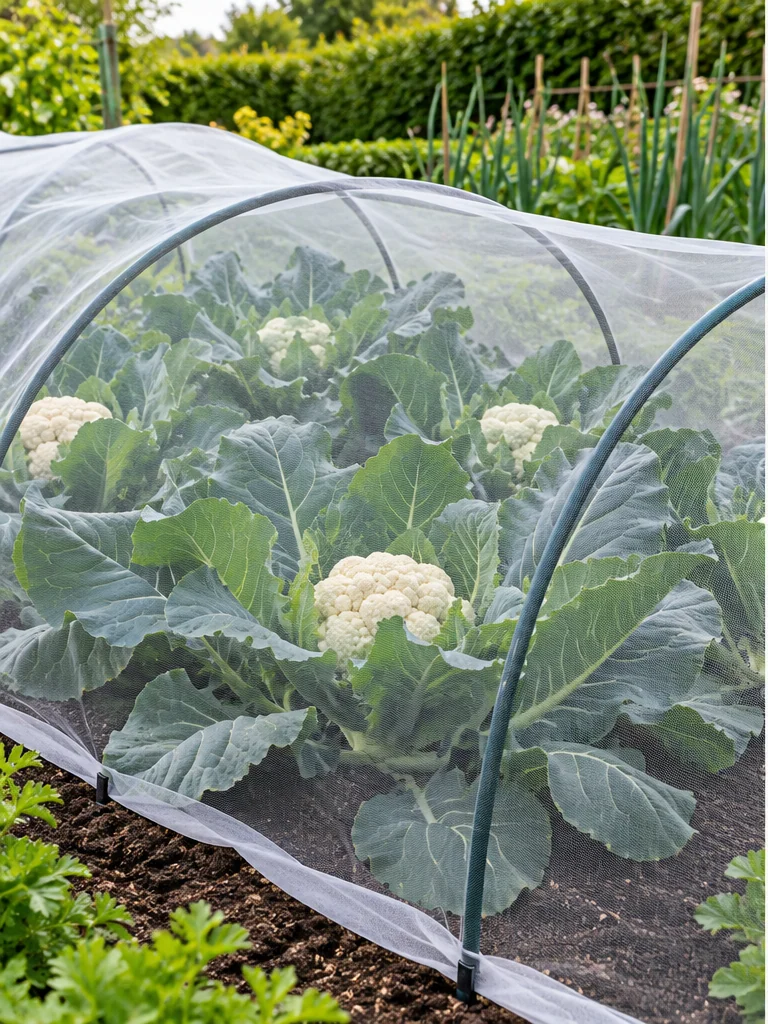
Cold, heat, drought or an overgrown young plant can trigger a small or loose head. Look back at the whole start. Clubroot or caterpillars call for targeted identification and action. Use lime only when soil information supports it; protection and rotation do not replace diagnosis.