
Growing cucumbers: on a frame, in a greenhouse or along the ground
An upward-growing vine makes the harvest visible; an outdoor cucumber can also trail over the bed. Choose the variety first and build the growing space around it. A close-up of a loose tie shows how to support the tender stem without pinching it.
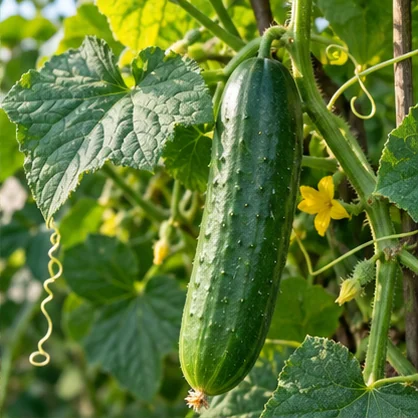
This image was created with AI from described plant characteristics and growing advice. It shows a possible situation and is not a photograph of a verified cultivar.
- Growing location
- Kasras onder glas; buitenras op een warme plek
- Plant out
- Vorstvrij en met voldoende warme nachten
- Pollination
- Controleer de eigenschappen van jouw ras
This growing advice helps you choose. Your variety, growth stage, weather and conditions in your space determine the actual timing.
Sowing under cover and raising seedlings
Warm voorzaaien · Cucumber
April voor koude kas; eind april voor buitenrassenZaai warm binnen voor en reserveer voldoende lichte opkweekruimte.
- Germination and temperature
- Kiem warm, rond 20 °C; jonge planten blijven gevoelig voor koude.
- After emergence
- Zet zaailingen direct na opkomst licht. Een donkere zolder vraagt geschikte groeiverlichting; warmte alleen is onvoldoende. Ventileer en houd de grond vochtig, zonder haar te verzadigen.
- Pricking out and potting on
- Zaai in afzonderlijke potjes of diepe modules. Verspeen niet met kale wortels; zet de hele kluit over voordat de wortels vastlopen.
- Hardening off and planting out
- Laat binnen opgekweekte planten geleidelijk aan zon, wind en buitentemperatuur wennen; zet ze bij koude nachten weer beschut. Zet een intacte kluit pas op de eindplek wanneer grond en nachten warm genoeg zijn. Buiten na de laatste vorst, gewoonlijk eind mei–juni.
Een februaristart hoort bij een daadwerkelijk verwarmde kas als vervolgplek. Kies een kasras of buitenras dat bij je eindplek past.
Sources and use
RHS · komkommer ↗Britse teeltrichtlijn voor een gematigd klimaat; de genoemde perioden zijn richtlijnen voor Nederland en Vlaanderen.
Feggies · Komkommer Bodoana — ras- en teeltbeschrijving ↗Nederlandse producent of teeltbron; de rasinstructie blijft leidend.
Feggies · Komkommer Early Fortune — ras- en teeltbeschrijving ↗Nederlandse producent of teeltbron; de rasinstructie blijft leidend.
Guideline periods for the Netherlands and Flanders. Check the variety, available light, soil and measured temperatures. Greenhouse heating does not guarantee enough winter light.
A different flavour, a different harvest.
Choose by more than the name. Discover how these varieties and crop types taste, what you can use them for and what growing them involves.
16 of 16 choices · 13 named varieties
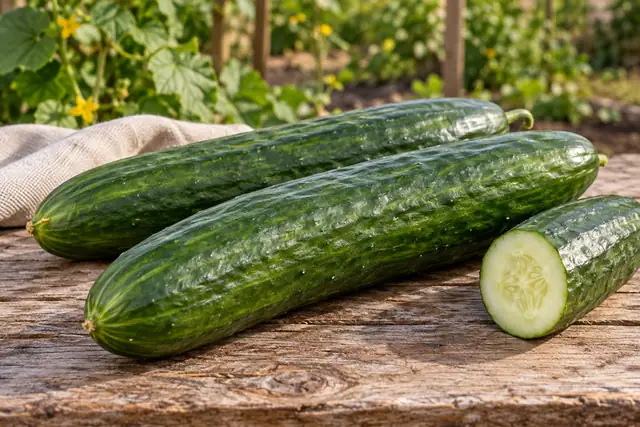
This image was created with AI from described plant characteristics and growing advice. It shows a possible situation and is not a photograph of a verified cultivar.
Bodoana
Een komkommer met langere, zwaardere vruchten dan de Gundel waarmee de aanbieder hem vergelijkt; oogstgericht en herkenbaar van vorm.
Kies Bodoana voor klassieke komkommers en een betrekkelijk vroege start tegenover Gundel, niet als compacte snackplant.
Flavour, kitchen and growing
How does it taste?
De beschreven smaak is fris en evenwichtig. Daarmee is dit een saladeprofiel, zonder een claim dat het ras uitzonderlijk zoet is.
In the kitchen
Snijd plakken voor een salade of maak een frisse komkommersaus. Een grotere vrucht geeft gemakkelijk meerdere porties.
A space in the garden
Geef een zonnige beschutte plek met losse voedzame grond. Regelmatig water en matige voeding verbeteren de opbrengst volgens de aanbieder.
Harvesting
Pluk de vruchten als ze stevig en mals zijn. Ook een ras dat met droogte kan omgaan geeft bij gelijkmatige verzorging een betere oogst.
Read the source notes →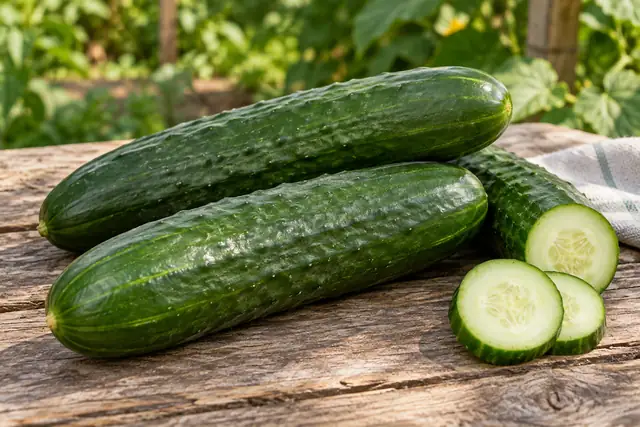
This image was created with AI from described plant characteristics and growing advice. It shows a possible situation and is not a photograph of a verified cultivar.
Early Fortune
Een vroeg oud ras met donkergroene vruchten van ongeveer 20 cm lang: een handzame klassieke tafelkomkommer.
Kies Early Fortune als je een vroeger ontwikkelend klassiek ras wilt, naast een lang Aziatisch of rond komkommertype.
Flavour, kitchen and growing
How does it taste?
Het vruchtvlees wordt als stevig en zonder bitterheid beschreven. Warmte en gelijkmatige verzorging blijven belangrijk voor de werkelijke oogstkwaliteit.
In the kitchen
Maak dikke knapperige plakken voor een salade of snijd staafjes voor een schaal rauwkost.
A space in the garden
Zaai warm in potten en plant na vorst met intacte kluit. Geef compostrijke grond en voldoende ruimte voor de ranken.
Harvesting
Oogst rond bruikbaar tafelkomkommerformaat, voordat de donkergroene huid vergeelt of de zaden grof worden. Pluk regelmatig door.
Read the source notes →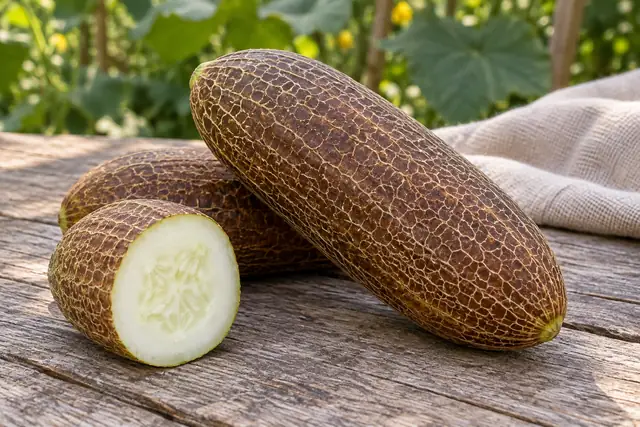
This image was created with AI from described plant characteristics and growing advice. It shows a possible situation and is not a photograph of a verified cultivar.
Kaliser Alexander
Bij volledige rijping ontstaat een donkerbruine netschil: een komkommer met een heel andere buitenkant dan een supermarktmodel.
Kies dit ras als vorm en rijpingskleur je nieuwsgierig maken. De bruine netschil hoort bij de latere ontwikkeling, niet bij ziekte.
Flavour, kitchen and growing
How does it taste?
Het witte vruchtvlees wordt als zacht én knapperig beschreven. De bron prijst de smaak zonder een precieze zoetheidsrangorde te geven.
In the kitchen
Snijd eerst een jonge vrucht voor een salade. Bij een rijpere, dikkere schil kun je schillen en de zaadzone apart beoordelen.
A space in the garden
Teel warm en geef de ranken ruimte of steun. Label dit ras zodat de afwijkende eindkleur niet met een aangetaste komkommer wordt verward.
Harvesting
De aanbieder adviseert oogst rond 15 cm. Laat een proefvrucht verder rijpen om de netschil te bekijken, maar vergelijk de keukenkwaliteit zelf.
Read the source notes →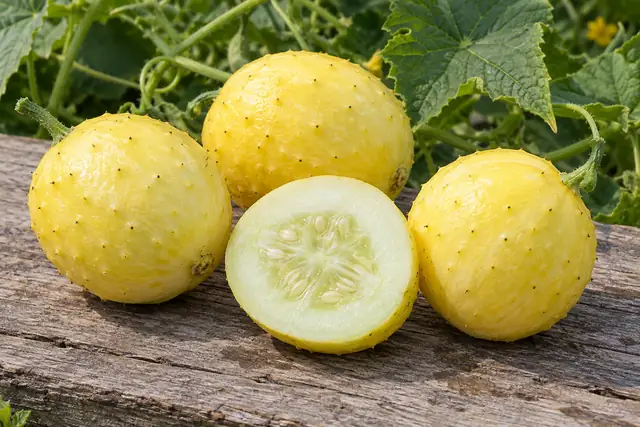
This image was created with AI from described plant characteristics and growing advice. It shows a possible situation and is not a photograph of a verified cultivar.
Lemon
Ronde tot ovale gele komkommers lijken op citroenen, maar blijven botanisch gewone komkommers.
Kies Lemon voor gele ronde vruchten en een verrassende oogstmand, als tegenhanger van lange groene komkommers.
Flavour, kitchen and growing
How does it taste?
De citroennaam beschrijft de vorm en kleur, niet een bewezen citrusaroma. Volgens de aanbieder is de eetkwaliteit goed bij citroengele kleur.
This flavour description applies to the crop; there is no separate tasting result for this variety.In the kitchen
Snijd de ronde vruchten in parten voor een salade of gebruik dunne schijven als afwijkende rauwkostgarnituur.
A space in the garden
Een warme buitenplek of kas is passend. Geef voedzame grond en regelmatig water; dit oude ras blijft vorstgevoelig.
Harvesting
Pluk rond de gewenste jonge citroengele fase, met stevig vruchtvlees. Laat de vruchten niet weken hangen om een donkerdere kleur te krijgen.
Also listed as: Citroenkomkommer.
Read the source notes →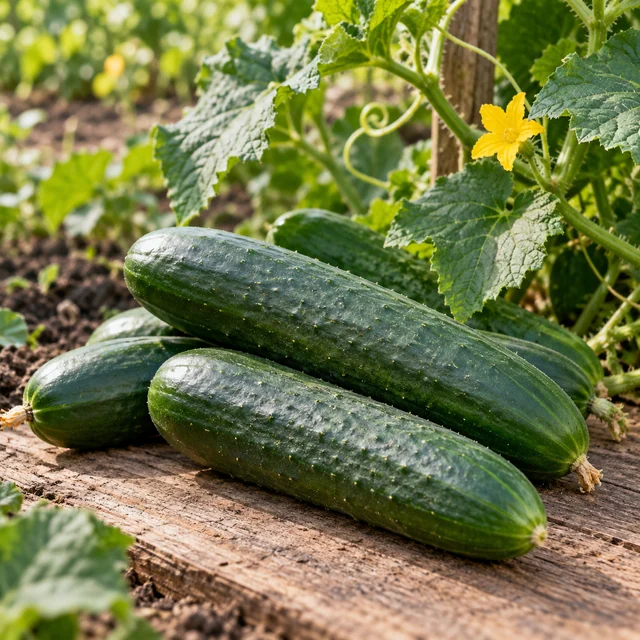
This image was created with AI from described plant characteristics and growing advice. It shows a possible situation and is not a photograph of a verified cultivar.
Marketmore
Een vertrouwd komkommerras voor kas of een zonnige tuinplek, gericht op een regelmatige zomeroogst.
Kies Marketmore wanneer je een bekende tafelkomkommer wilt en vooral regelmatig bruikbare vruchten zoekt.
Flavour, kitchen and growing
How does it taste?
De smaak en textuur worden als fris en knapperig beschreven. Dat past bij rauw gebruik zonder dat een precieze zoetheid wordt beloofd.
In the kitchen
Gebruik de verse oogst in komkommersalade, op brood of als staafjes bij een dip. Houd de bereiding eenvoudig voor de knapperigheid.
A space in the garden
Zaai binnen voor en plant uit na de laatste vorst. Geef een rek of voldoende grondruimte en houd de watervoorziening gelijkmatig.
Harvesting
Pluk regelmatig zodra de vruchten mals en stevig zijn. Laat geen grote rijpende exemplaren tussen het blad zitten.
Read the source notes →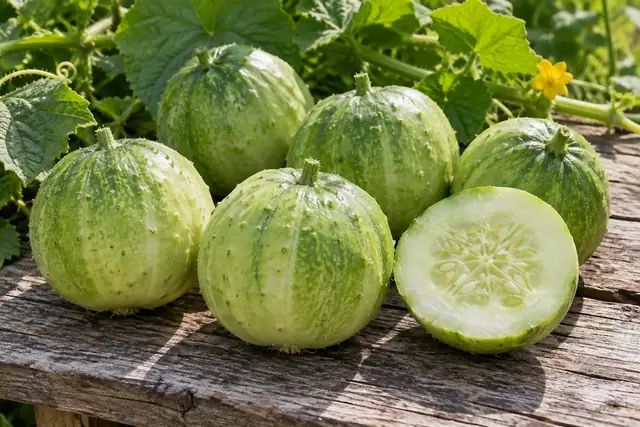
This image was created with AI from described plant characteristics and growing advice. It shows a possible situation and is not a photograph of a verified cultivar.
Richmond Green Apple
Een oud Australisch ras met lichtgroene appelvormige vruchten: rond en handzaam, met een opvallend andere aanblik.
Kies Richmond Green Apple voor ronde groene komkommers, zonder de gele kleur van Lemon af te wachten.
Flavour, kitchen and growing
How does it taste?
Het vruchtvlees is stevig en knapperig met een zachte smaak. De appelnaam slaat op vorm en formaat, niet op een bewezen appelsmaak.
In the kitchen
Snijd partjes voor salade of snack een jonge vrucht. Het appelmodel geeft speels gevormde porties.
A space in the garden
Zaai warm voor en plant na vorst in voedzame grond. Leid ranken in een vochtige tuin langs een rek om vruchten vrij te houden.
Harvesting
Oogst terwijl de schil nog lichtgroen is. Bij volledige rijping wordt hij bruin; voor de jonge eetkwaliteit pluk je eerder.
Read the source notes →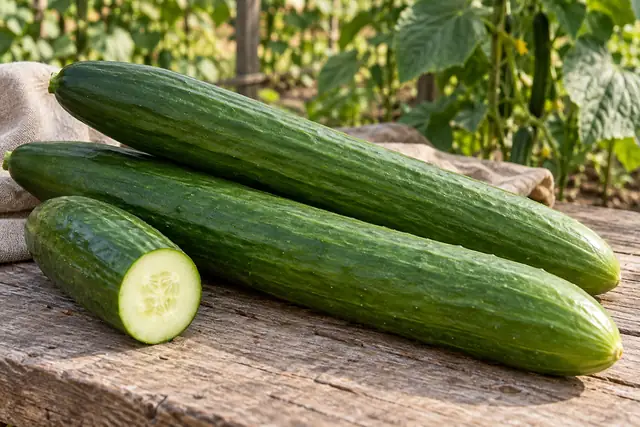
This image was created with AI from described plant characteristics and growing advice. It shows a possible situation and is not a photograph of a verified cultivar.
Satsuki Madori
Lange komkommers van ongeveer 30–40 cm met weinig zaden geven dit Aziatische ras een praktische salade-identiteit.
Kies Satsuki Madori als je lange komkommers met weinig zaden zoekt, in plaats van ronde vruchten of mini-snacks.
Flavour, kitchen and growing
How does it taste?
Zacht vruchtvlees zonder bitterheid wordt beschreven. Dat is een gunstig keukenkenmerk, zonder dat stressvrije teelt daarmee overbodig wordt.
In the kitchen
Maak lange rauwe repen of snijd plakken voor een lichte salade. De beperkte hoeveelheid zaden maakt het snijden overzichtelijk.
A space in the garden
Geef warmte en ondersteuning zodat de lange vruchten vrij kunnen hangen. Plant met intacte kluit en laat de bodem niet sterk uitdrogen.
Harvesting
Pluk lange stevige vruchten vóór vergeling. Controleer ook bovenin het rek; lengte alleen vertelt niet of een vrucht overrijp wordt.
Read the source notes →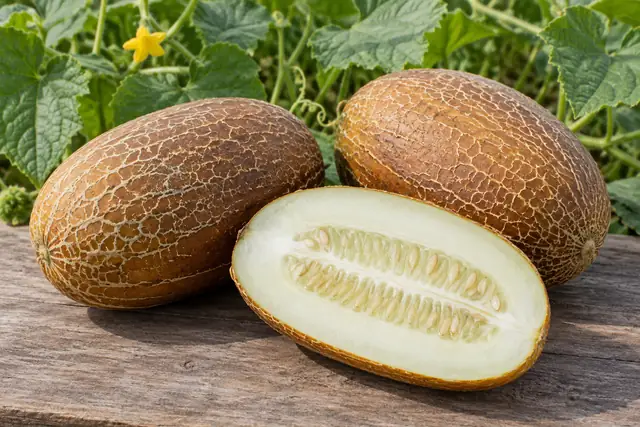
This image was created with AI from described plant characteristics and growing advice. It shows a possible situation and is not a photograph of a verified cultivar.
Sikkim
Een oud Himalaya-ras met ovale vruchten die rijp een dikke bruine netschil krijgen: eerder een ontdekking dan een uniform supermarktras.
Kies Sikkim om een komkommer met afwijkende rijpingskleur en schil te leren kennen, vooral als je graag vergelijkt en noteert.
Flavour, kitchen and growing
How does it taste?
De bron noemt vruchtvlees zonder zuurgraad onder goede bewaaromstandigheden. Dat bewijst geen vaste houdbaarheid in iedere huishoudelijke berging.
This flavour description applies to the crop; there is no separate tasting result for this variety.In the kitchen
Proef jonge en verder rijpe vruchten afzonderlijk; schil een rijpe vrucht en beoordeel zaadzone en textuur voor een salade.
A space in the garden
Geef ranken een warme standplaats en ruimte. Houd een proefvrucht apart om rijping te volgen zonder alle vruchten lang te laten hangen.
Harvesting
Gebruik voor verse jonge oogst een stevige vrucht. Wie bewaarrijp oogsten wil proberen, controleert iedere vrucht en bewaart geen beschadigd exemplaar.
Read the source notes →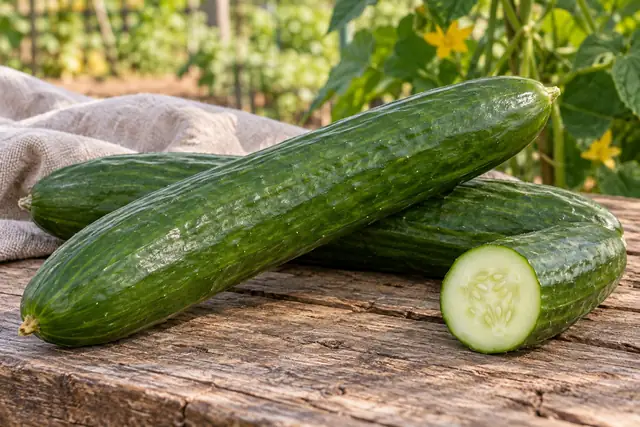
This image was created with AI from described plant characteristics and growing advice. It shows a possible situation and is not a photograph of a verified cultivar.
Vert Long Maraicher
Lange sterk groene, bijna doornloze vruchten aan een krachtige plant: een klassiek lang model met een gladder gevoel.
Kies dit ras voor lange groene komkommers en een beschreven zoete smaak, in plaats van een selectie die vooral op kleur opvalt.
Flavour, kitchen and growing
How does it taste?
Het witte vruchtvlees wordt als stevig, knapperig en zeer zoet omschreven. De echte zoetheid varieert ook met oogstmoment en seizoen.
In the kitchen
Gebruik lange plakjes voor een frisse salade of snijd dunne linten. De knapperige structuur werkt goed bij rauw serveren.
A space in the garden
Teel warm, geef een stevig rek en regelmatig water. Een krachtige plant heeft ook later in het seizoen voldoende wortelruimte nodig.
Harvesting
Oogst jonge stevige vruchten voordat de huid vergeelt. Spoel de schil schoon; bijna doornloos betekent niet dat de vrucht vanzelf schoon blijft.
Read the source notes →Discover all 16 choices
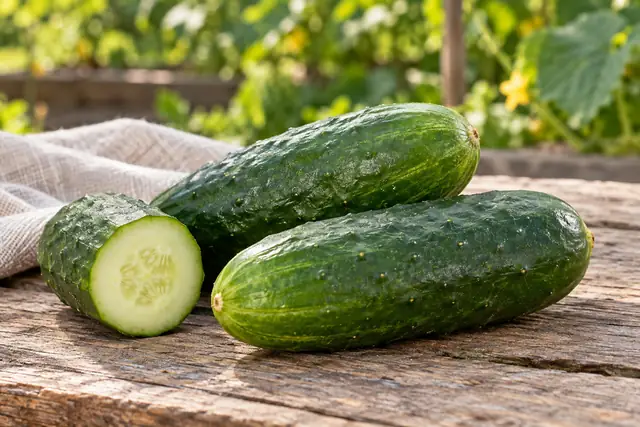
This image was created with AI from described plant characteristics and growing advice. It shows a possible situation and is not a photograph of a verified cultivar.
Antje
Een compacte potkomkommer met korte gelijkmatige vruchten, geselecteerd voor bakken en potten.
Kies Antje als balkon of terras de belangrijkste teeltplek is. Potgeschiktheid is hier het onderbouwde verschil.
Flavour, kitchen and growing
How does it taste?
Een afzonderlijke smaakbeschrijving is niet beschikbaar. De algemene frisse komkommersmaak maakt deze korte vruchten geschikt voor rauwe porties.
This flavour description applies to the crop; there is no separate tasting result for this variety.In the kitchen
Snijd de jonge vruchten in snackstaafjes of gebruik ze in een kleine salade; een compacte oogst past bij direct opeten.
A space in the garden
Zet één plant in een ruime bak met drainage en steun. In pot droogt de grond sneller; controleer water geregeld bij warm weer.
Harvesting
Pluk korte vruchten jong en regelmatig. Kleine groei betekent niet dat vruchten onbeperkt op de plant kunnen blijven hangen.
Read the source notes →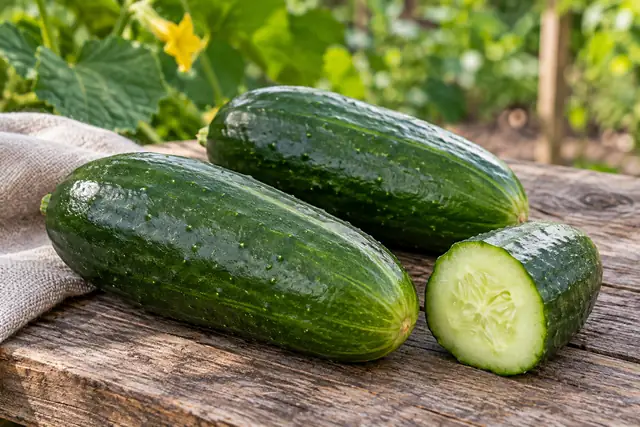
This image was created with AI from described plant characteristics and growing advice. It shows a possible situation and is not a photograph of a verified cultivar.
Bushy
Een zeer vroeg compact ras uit Zuid-Rusland met gladde donkergroene snackvruchten van ongeveer 8–12 cm.
Kies Bushy voor compactere groei en vroege snacks; de aanbeveling voor koelere streken maakt hem nog niet vorstbestendig.
Flavour, kitchen and growing
How does it taste?
Er is geen eigen aroma vastgelegd. Het snackformaat en jonge oogst geven de algemene frisse komkommerervaring in kleine porties.
This flavour description applies to the crop; there is no separate tasting result for this variety.In the kitchen
Gebruik hele jonge vruchtjes of halveer ze voor een snackbord. Voor een salade hoef je geen grote komkommer aan te snijden.
A space in the garden
Teel op een warme beschutte plek en geef voldoende wortelruimte. Houd de plant overzichtelijk zodat de kleine vruchten bereikbaar blijven.
Harvesting
Pluk rond 8–12 cm en kijk geregeld onder het blad. Een korte komkommer kan nog steeds te ver uitgroeien voor een malse snack.
Read the source notes →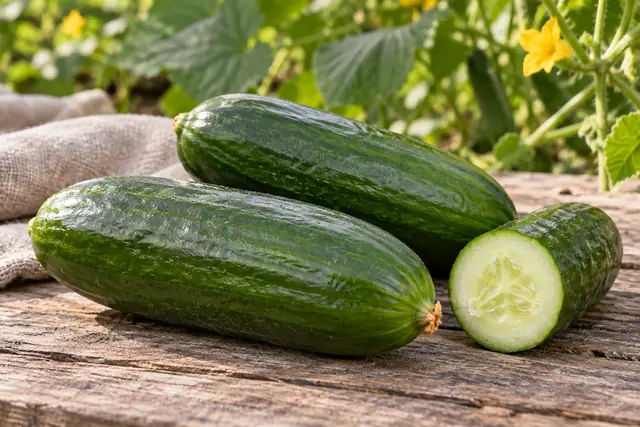
This image was created with AI from described plant characteristics and growing advice. It shows a possible situation and is not a photograph of a verified cultivar.
Kaban
Korte gladde snackkomkommers aan een compacte overzichtelijke plant: een ras voor kleine verse oogstbeurten.
Kies Kaban voor korte gladde snacks en compactere groei in kas, tuin of een grotere pot.
Flavour, kitchen and growing
How does it taste?
Een specifiek aroma is niet beschreven. De frisse gewassmaak van jonge komkommer past bij het snackgebruik waarvoor Kaban wordt aangeboden.
This flavour description applies to the crop; there is no separate tasting result for this variety.In the kitchen
Maak staafjes voor een lunchdoos of kleine halve komkommers met een dip. Gebruik de jonge oogst liefst vers.
A space in the garden
Geef in pot een ruime wortelplek met drainage en stabiele steun. Bescherm jonge planten tegen koude nachten en laat de kluit niet uitdrogen.
Harvesting
Controleer tijdens de zomer vaak op jonge vruchten. Oogst op malsheid en korte snackvorm, zonder een onbekende vaste lengte te beloven.
Read the source notes →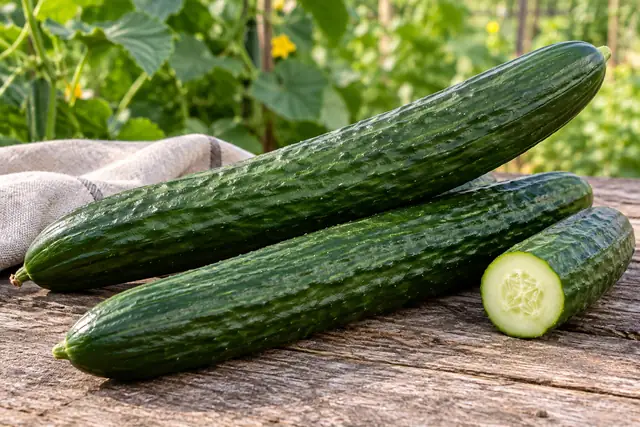
This image was created with AI from described plant characteristics and growing advice. It shows a possible situation and is not a photograph of a verified cultivar.
Soo Yoh Long
Donkergroene geribbelde Chinese komkommers van ongeveer 30–40 cm met een dunne schil en soms een lichte bocht.
Kies Soo Yoh Long wanneer lengte, ribbels en dunne schil aantrekkelijker zijn dan gladde uniforme snacks.
Flavour, kitchen and growing
How does it taste?
Milde smaak, stevig knapperig vruchtvlees en weinig zaden zijn beschreven. De dunne schil hoeft voor verse bereiding doorgaans niet verwijderd te worden.
In the kitchen
Snijd dunne rondjes voor salade of maak lange repen. Met schil blijft de geribbelde buitenkant zichtbaar.
A space in the garden
Geef dit krachtig rankende ras een stevig rek. Vrij hangende vruchten groeien gemakkelijker recht dan vruchten die tegen obstakels steunen.
Harvesting
Oogst wanneer ze donkergroen en stevig zijn. Pluk geregeld, en laat een gebogen vrucht niet hangen omdat hij minder recht is.
Read the source notes →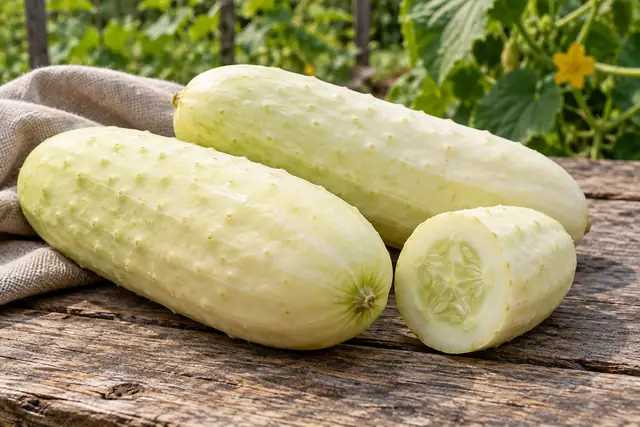
This image was created with AI from described plant characteristics and growing advice. It shows a possible situation and is not a photograph of a verified cultivar.
Blanc
Gedrongen roomwitte komkommers van ongeveer 15–20 cm: een lichtgekleurd tafeltype zonder verder bewezen cultivaridentiteit.
Kies Blanc voor een halflange witte komkommer. Vergelijk hem met het iets langere aanbod wit halflang zonder die twee automatisch gelijk te stellen.
Flavour, kitchen and growing
How does it taste?
Het vruchtvlees wordt als knapperig, zoet en zelden bitter beschreven. Een frisse lichte schil hoort bij dit aanbod.
In the kitchen
Maak plakken voor een salade met groene komkommer als kleurcontrast. Schillen is een keuze op basis van de dikte van je eigen oogst.
A space in the garden
Teel warm in kas of beschutte tuin en geef regelmatig water. Witte kleur betekent geen andere basisbehoefte aan warmte.
Harvesting
Pluk roomwitte vruchten jong en stevig rond het beschreven formaat. Wacht niet tot ze groen worden.
Read the source notes →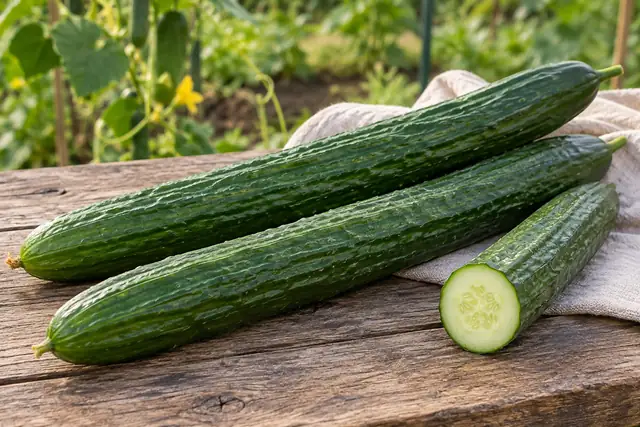
This image was created with AI from described plant characteristics and growing advice. It shows a possible situation and is not a photograph of a verified cultivar.
groen lang uit China/slangenkomkommer
Een Chinees aanbodtype met zeer lange geribbelde vruchten, soms 50 cm of langer; de naam slangenkomkommer beschrijft de vorm.
Kies dit type voor uitgesproken lengte en ribbels. Het is gewone Cucumis sativus, anders dan de komkommermeloen Armenian Painted Serpent.
Flavour, kitchen and growing
How does it taste?
Wit knapperig verfrissend vruchtvlees en weinig zaden zijn beschreven. Dit is geen bewijs dat iedere slangenkomkommer hetzelfde ras is.
This flavour description applies to the crop; there is no separate tasting result for this variety.In the kitchen
Snijd lange repen voor salade of dunne plakjes van een deel van de vrucht. Een grote komkommer geeft snel meerdere porties.
A space in the garden
Een hoog rek met vrije hangruimte is praktisch. Voorkom dat lange vruchten op de grond knikken of tussen dwarslatten vastgroeien.
Harvesting
Pluk op jonge malse textuur; maximale lengte is geen doel voor de keuken. Bekijk de zaadzone wanneer je een grote vrucht aansnijdt.
Read the source notes →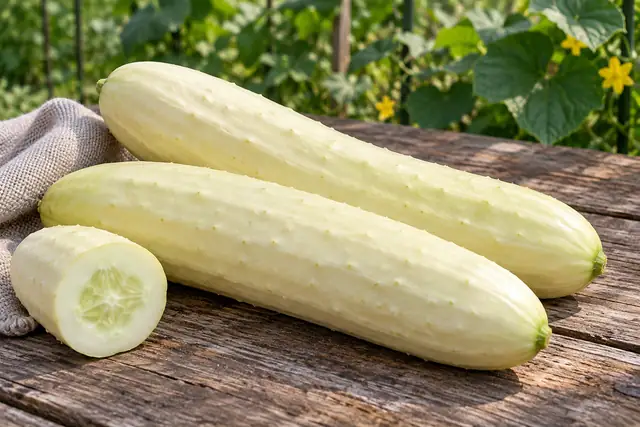
This image was created with AI from described plant characteristics and growing advice. It shows a possible situation and is not a photograph of a verified cultivar.
wit halflang
Roomwitte vruchten van ongeveer 20–25 cm maken dit aanbodtype een lichte, vrij lange tafelkomkommer.
Kies dit aanbod voor roomwitte halflange vruchten. De identiteit is niet bewezen gelijk aan Blanc, dat apart in het assortiment staat.
Flavour, kitchen and growing
How does it taste?
Zoet vruchtvlees zonder bitterheid wordt beschreven. Het echte oogstresultaat blijft afhankelijk van jong plukken en gelijkmatige verzorging.
In the kitchen
Gebruik verse halve maantjes in salade of combineer wit en groen op een rauwkostbord. De vrucht hoeft niet eerst groen te worden.
A space in the garden
Geef warme beschutting en compostrijke grond. Plant de kluit intact en laat het gewas pas na de laatste vorst buiten groeien.
Harvesting
Oogst jonge stevige roomwitte vruchten, vaak bij het beschreven formaat. Laat ze niet verder rijpen om een andere kleur af te wachten.
Read the source notes →Choose your way to grow
From a garden bed to a suitable pot or support: give your plant a place that suits your garden and the care you can provide.
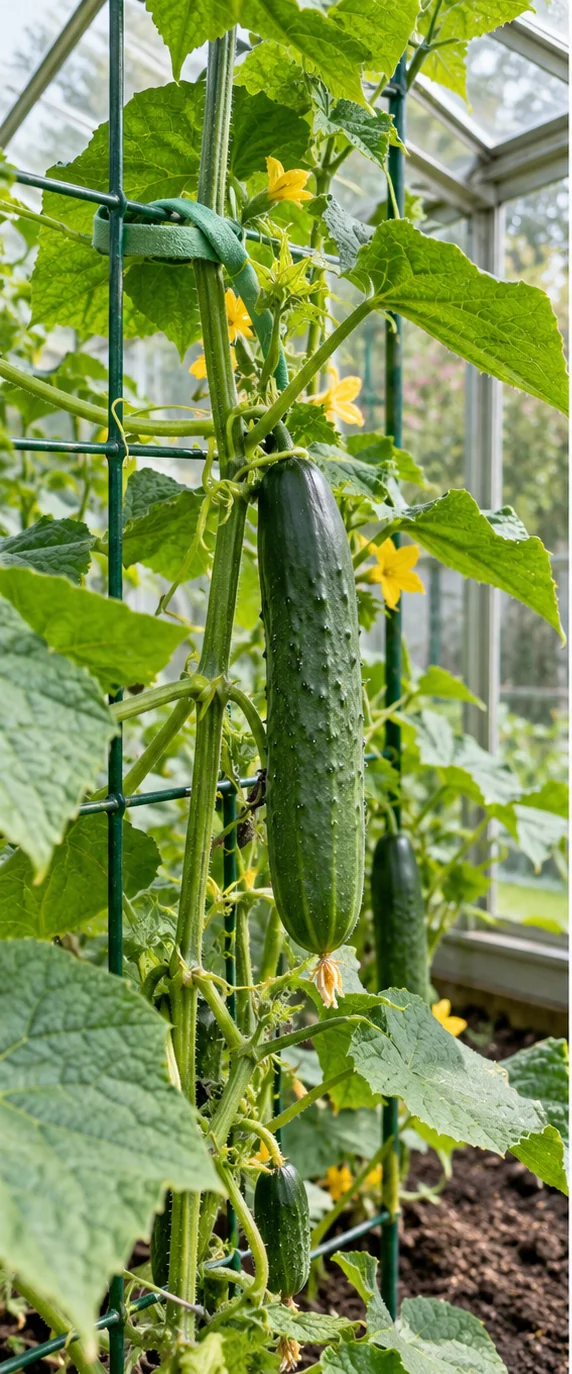
This image was created with AI from described plant characteristics and growing advice. It shows a possible situation and is not a photograph of a verified cultivar.
Langs een rek of kasdraad
Maak van een rankende komkommer een groene wand met bereikbare vruchten.
- Plaats het rek of de gespannen draad voordat de plant groot is.
- Leid de hoofdgroei voorzichtig langs de steun; zet zo nodig een losse zachte lus.
- Controleer bandjes en leid nieuwe ranken zodat ze niet de buurplanten overschaduwen.
Voor rankende kas- of buitenrassen; stem snoei af op het specifieke ras.
Tick off your supplies →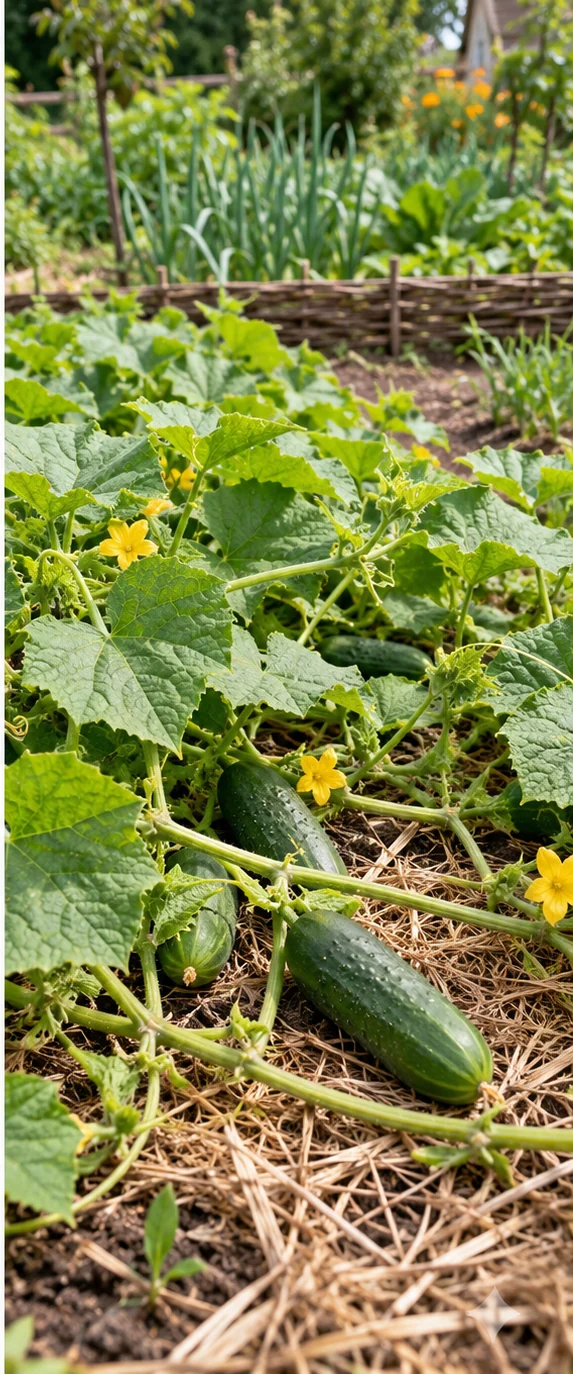
This image was created with AI from described plant characteristics and growing advice. It shows a possible situation and is not a photograph of a verified cultivar.
Een buitenras over het bed
Op een warm, vrij bed kunnen geschikte buitenrassen zonder hoge constructie groeien.
- Kies een buitenras en geef ruimte voor de verwachte ranklengte.
- Maak een schoon, luchtig oppervlak waar vruchten niet voortdurend in natte aarde liggen.
- Til bij elke plukronde blad op en oogst verborgen jonge vruchten.
Voor een beschutte buitenplek met genoeg grondoppervlak en toegang rondom.
Tick off your supplies →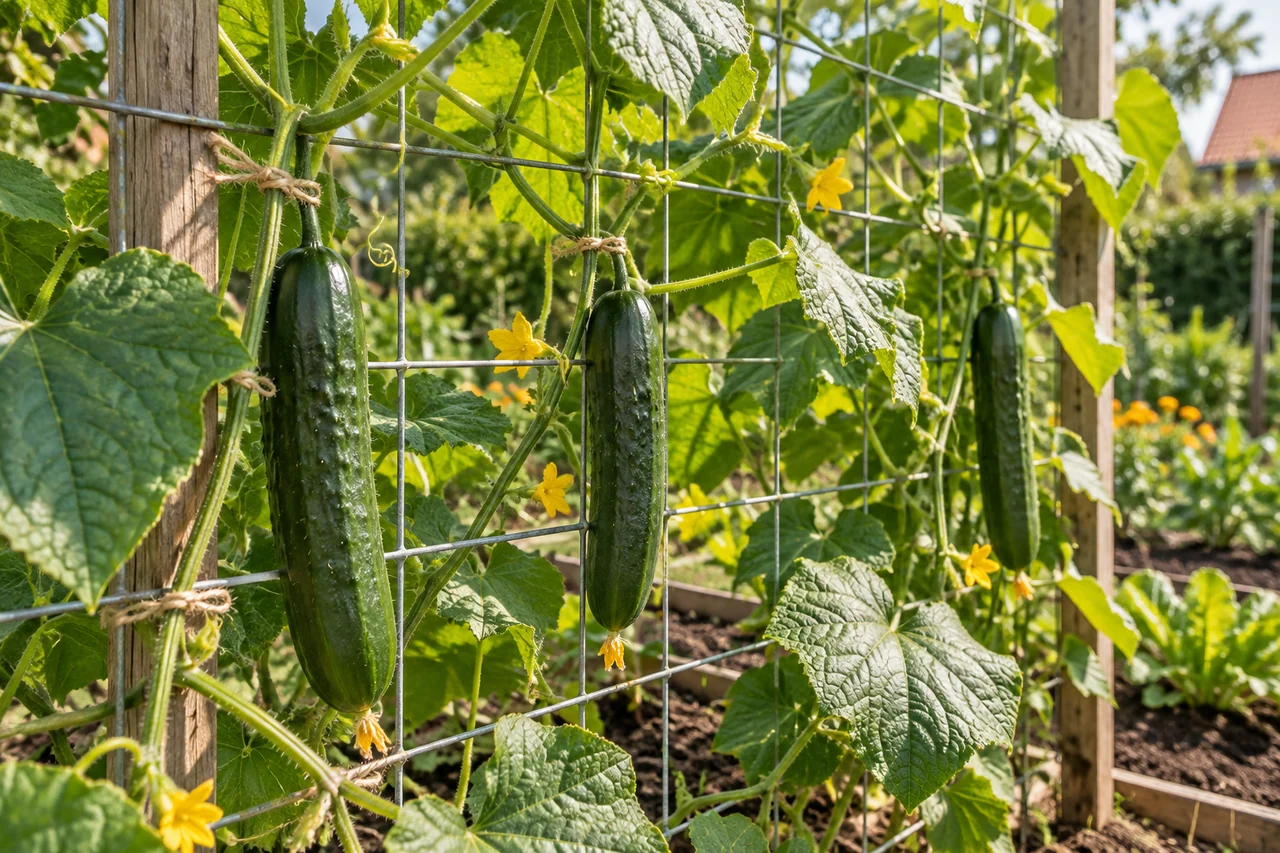
This image was created with AI from described plant characteristics and growing advice. It shows a possible situation and is not a photograph of a verified cultivar.
Let the tendrils find the support
Put a sturdy frame in place before the plant gets large. Gently guide young shoots towards the netting; the tendrils will then grip the support themselves.
View your supplies →Explore the varieties
See the confirmed differences. Characteristics without supporting evidence are left blank.
5 of 5 varieties
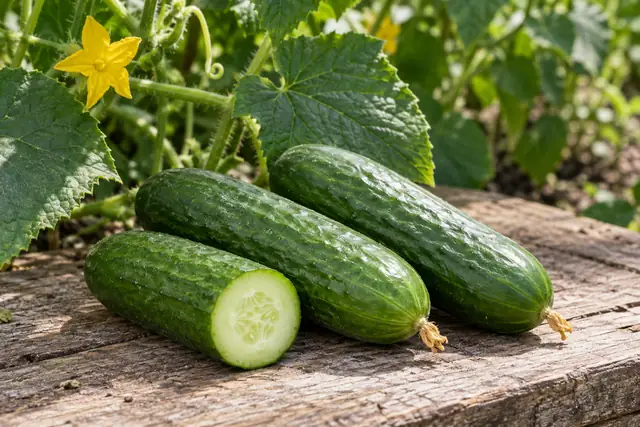
This image was created with AI from described plant characteristics and growing advice. It shows a possible situation and is not a photograph of a verified cultivar.
Amadora
Explore this variety and use the growing guide to choose a place for your plant.
View variety →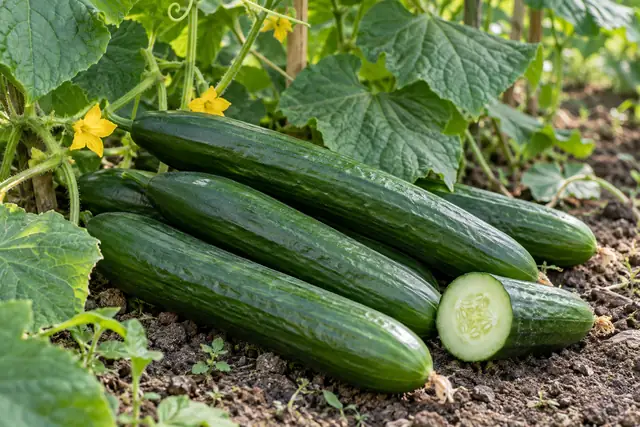
This image was created with AI from described plant characteristics and growing advice. It shows a possible situation and is not a photograph of a verified cultivar.
Carmen
- Geschikt voor kas
- JaVerenigd Koninkrijk
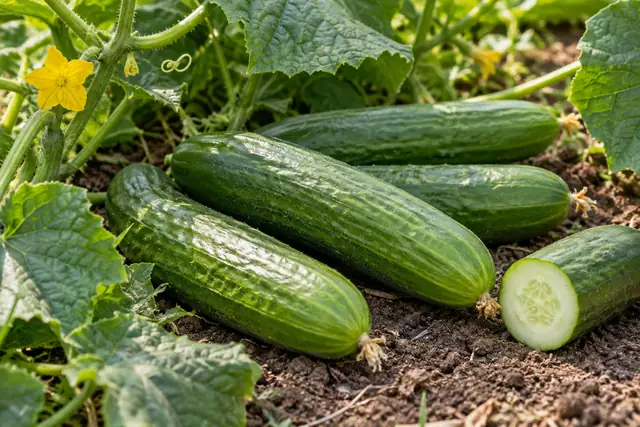
This image was created with AI from described plant characteristics and growing advice. It shows a possible situation and is not a photograph of a verified cultivar.
Delistar
- Structuur
- Dunne schilVerenigd Koninkrijk
- Vruchtgrootte
- MiddelgrootVerenigd Koninkrijk
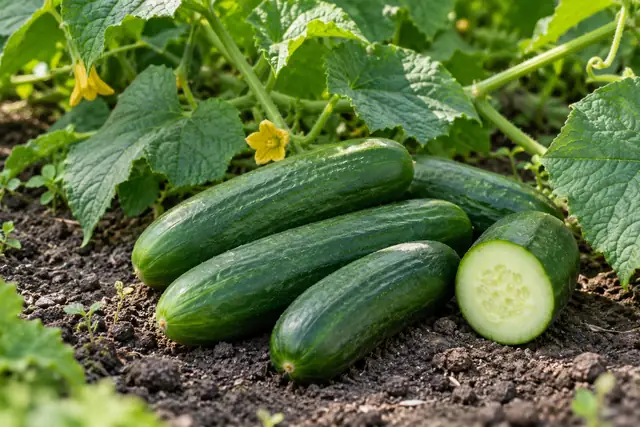
This image was created with AI from described plant characteristics and growing advice. It shows a possible situation and is not a photograph of a verified cultivar.
Emilie
- Structuur
- Gladde schilVerenigd Koninkrijk
- Vruchtgrootte
- MiddelgrootVerenigd Koninkrijk
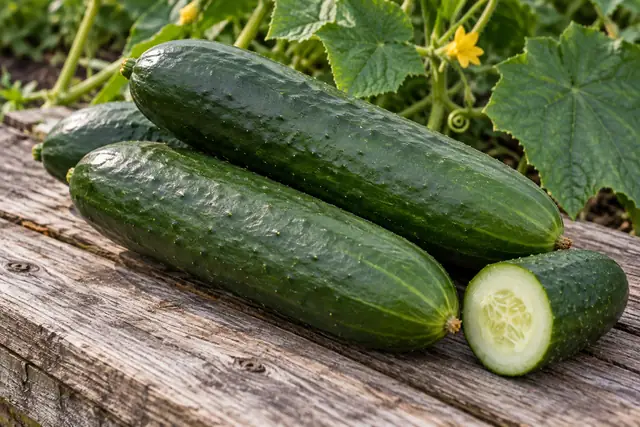
This image was created with AI from described plant characteristics and growing advice. It shows a possible situation and is not a photograph of a verified cultivar.
Lili
- Geschikt voor buiten
- JaVerenigd Koninkrijk
- Geschikt voor kas
- JaVerenigd Koninkrijk
Choose two to four varieties to compare their source data side by side.
Choose by flavour, shape and use
Bodoana: A cucumber with longer, heavier fruits than the Gundel with which the supplier compares it; focused on harvest and distinctive in shape. Cut slices for a salad or make a refreshing cucumber sauce. A larger fruit easily provides several portions.
The described flavour is fresh and balanced. This is therefore a salad profile, without claiming exceptional sweetness for the cultivar.
Early Fortune: An early, old cultivar with dark green fruits about 20 cm long: a manageable classic slicing cucumber. Cut thick, crisp slices for a salad or sticks for a raw vegetable platter.
The flesh is described as firm and without bitterness. Warmth and consistent care remain important for the actual quality of the harvest.
Kaliser Alexander: A dark brown, netted skin develops at full ripeness: a cucumber with a very different exterior from a supermarket type. First cut a young fruit for a salad. With a more mature, thicker skin, you can peel it and assess the seed cavity separately.
The white flesh is described as both tender and crisp. The source praises the flavour without giving a precise sweetness ranking.
Lemon: Round to oval yellow cucumbers resemble lemons but remain ordinary cucumbers botanically. Cut the round fruits into wedges for a salad or use thin discs as an unusual raw garnish.
The lemon name describes the shape and colour, not a proven citrus aroma. According to the supplier, eating quality is good at a lemon-yellow colour.
Start by choosing greenhouse or outdoors
Greenhouse and outdoor cultivars are not interchangeable choices. A greenhouse extends protected growing, while outdoor cucumbers depend on a warm, sheltered spot. Consider fruit size too: a mini cucumber is harvested smaller than a long cultivar. Choose the growing position and cultivar together before sowing.
Sow with room for the rootball
Cucumbers can be direct-sown or planted out as young plants. When starting them under cover, protect the roots during transplanting: damage slows establishment. Let the young plant develop a well-formed rootball. Move it outdoors only when frost risk has passed and the soil is becoming warm enough.
Moist soil without waterlogging
Fertile soil that retains moisture and drains excess water helps the plant through the growing season. Improve the structure with mature compost where necessary. Base feeding on soil conditions; do not copy a dosage from an overseas growing trial into your bed without considering the soil and product.
Give vines sturdy support
A vining cucumber can grow up a frame or wire; more compact bush types also exist. Check your cultivar's growth habit before allocating space. A larger vining plant needs different space from a bush form. Consider the expected mature growth when spacing it from neighbouring plants.
Female flowers and fruit set
Many cucumbers bear separate male and female flowers. Pollinators can move pollen between them. Some cultivars form fruit without pollination: this is called parthenocarpy. The label “female flowering” alone does not prove that characteristic. Read the specific cultivar information before removing flowers or planting a pollinating cultivar alongside.
Keep the root zone evenly moist
A regular water supply matters particularly during fruit formation. Pots dry out faster than open ground. Feel in the root zone and water at the plant's base to keep leaves as dry as possible. An outdoor rain forecast does not tell you how much water a plant in your greenhouse has received.
Resistance concerns a specific disease
A mention of resistance is useful only when the disease concerned is clear. Seed catalogues may use codes for this. Keep the full description with your chosen cultivar. Do not infer protection against every problem from a general term such as “strong”, and keep checking the plant while growing it.
Pick before the fruits become too old
Harvest at the cultivar's intended size while the fruit is young and firm. With further growth, seeds and skin may harden. Avoid lifting or twisting the plant unnecessarily when picking. Check behind the leaves regularly; a hidden cucumber can quickly grow too far.
Use actual conditions as the final check
The RHS and American universities describe different climates and growing systems. Their calendar dates are therefore not fixed timings for every garden in the Netherlands or Flanders. Check night temperatures before planting out and let the plant acclimatise gradually. The RHS uses temperatures consistently above 12 °C as a starting point for safe planting out.
How to make a tie that allows for growth
Use soft material and leave a visible gap between tie and stem. A loop connects the plant to its support; it does not need to press the stem tightly against a stake. Check weekly that the loop is still loose. Add another tie higher up when new growth requires it.
Follow leaves and fruit as a whole
Wilting may relate to dry roots or, conversely, poorly drained soil. Check both before giving more water. Inspect young leaves for aphids and older leaves for discolouration or fungal disease. Keep air between plants, harvest in good time and carefully remove badly affected material. Save a photograph with your crop to follow changes.
What you need
Tick what you already have. The extras depend on how you grow.
0 of 6 ticked off
Your ticks are saved in this browser.
Discover and grow more
More background, sources and image information
SeedSteps editorial team · updated on 11 October 2026. The AI images illustrate species and practical growing situations; they do not prove an exact cultivar, observations from your own garden or yield.
Britse gewasadviezen worden gecombineerd met Nederlandse en Vlaamse informatie waar beschikbaar. Amerikaanse Extension-bronnen ondersteunen plantprincipes en herkenning; hun kalenderdata, lokale plaagdruk, bestrijdingsmiddelen en mestdoseringen worden niet rechtstreeks op Nederland of Vlaanderen toegepast. Vorst, bodemwarmte, standplaats en expliciete rasinformatie blijven de lokale controle. Commerciële bronnen onderbouwen uitsluitend benoemde ras- en plantkenmerken; zij zijn geen affiliate-aanbeveling.
- World Checklist of Vascular Plants — 4 juni 2026Royal Botanic Gardens, Kew · accessed 2026-10-07
- Growing cucumbers in home gardensUniversity of Minnesota Extension · accessed 2026-10-07
- Komkommer Antje — ras- en teeltbeschrijvingFeggies · accessed 2026-10-11
- Komkommer Blanc — ras- en teeltbeschrijvingFeggies · accessed 2026-10-11
- Komkommer Bodoana — ras- en teeltbeschrijvingFeggies · accessed 2026-10-11
- Komkommer Bushy — ras- en teeltbeschrijvingFeggies · accessed 2026-10-11
- Komkommer Early Fortune — ras- en teeltbeschrijvingFeggies · accessed 2026-10-11
- Komkommer groen lang uit China/slangenkomkommer — ras- en teeltbeschrijvingFeggies · accessed 2026-10-11
- Komkommer Kaban — ras- en teeltbeschrijvingFeggies · accessed 2026-10-11
- Komkommer Kaliser Alexander — ras- en teeltbeschrijvingFeggies · accessed 2026-10-11
- Komkommer Lemon — ras- en teeltbeschrijvingFeggies · accessed 2026-10-11
- Komkommer Marketmore — ras- en teeltbeschrijvingFeggies · accessed 2026-10-11
- Komkommer Richmond Green Apple — ras- en teeltbeschrijvingFeggies · accessed 2026-10-11
- Komkommer Satsuki Madori — ras- en teeltbeschrijvingFeggies · accessed 2026-10-11
- Komkommer Sikkim — ras- en teeltbeschrijvingFeggies · accessed 2026-10-11
- Komkommer Soo Yoh Long — ras- en teeltbeschrijvingFeggies · accessed 2026-10-11
- Komkommer Vert Long Maraicher — ras- en teeltbeschrijvingFeggies · accessed 2026-10-11
- Komkommer wit halflang — ras- en teeltbeschrijvingFeggies · accessed 2026-10-11
- Cucumbers kweken — RHSRoyal Horticultural Society · accessed 2026-10-08
- Cucumber in the gardenUtah State University Extension · accessed 2026-10-07
Supporting evidence by chapter: Choose by flavour, shape and use: Feggies, Feggies, Feggies, Feggies. Start by choosing greenhouse or outdoors: Royal Horticultural Society. Sow with room for the rootball: Utah State University Extension. Moist soil without waterlogging: Utah State University Extension. Give vines sturdy support: University of Minnesota Extension. Female flowers and fruit set: University of Minnesota Extension. Keep the root zone evenly moist: Royal Horticultural Society. Resistance concerns a specific disease: University of Minnesota Extension. Pick before the fruits become too old: Utah State University Extension. Use actual conditions as the final check: Royal Horticultural Society. How to make a tie that allows for growth: Royal Horticultural Society, Utah State University Extension, University of Minnesota Extension. Follow leaves and fruit as a whole: Royal Horticultural Society, Utah State University Extension, University of Minnesota Extension.