
Ranunculus: varieties, growing and uses
Ranunculus flowers look like little tissue-paper blooms: layer upon layer forms a round rosette. For the cutting garden, this means Ranunculus asiaticus and its selections. Do not confuse them with the buttercups that grow spontaneously in lawns or ditches. These spring flowers need a different approach from summer bloomers: cool growth, controlled moisture and protection from cold and waterlogged roots determine the result.

This image was created with AI from described plant characteristics and growing advice. It shows a possible situation and is not a photograph of a verified cultivar.
- Use
- Ranunculus flowers are ornamentals and are not offered as edible here. The sap can irritate skin; wear gloves during extensive handling.
- Care
- Use healthy small root tubers or young plants. Soak dry tubers according to the supplier and plant in airy potting compost. Keep growth cool and bright, without a wet, stagnant rootball. Protect Ranunculus asiaticus from frost.
- Harvest and flowering
- Cut for the vase when the flower just starts to open, unless the supplier of a specific line advises otherwise. Use clean scissors and cool water.
Discover varieties and growth habits
This image was created with AI from described plant characteristics and growing advice. It shows a possible situation and is not a photograph of a verified cultivar.
Bloomingdale Rose
Compact pink double flowers.
Use: Ranunculus flowers are ornamentals and are not offered as edible here. The sap can irritate skin; wear gloves during extensive handling.
Use of the species; this selection has been developed around colour, shape or growing characteristics.View growing and harvesting →Place in my garden
This image was created with AI from described plant characteristics and growing advice. It shows a possible situation and is not a photograph of a verified cultivar.
Tecolote Hybrids
Group with richly double flowers.
Use: Ranunculus flowers are ornamentals and are not offered as edible here. The sap can irritate skin; wear gloves during extensive handling.
Use of the species; this selection has been developed around colour, shape or growing characteristics.View growing and harvesting →Place in my garden
This image was created with AI from described plant characteristics and growing advice. It shows a possible situation and is not a photograph of a verified cultivar.
PON PON
Named breeding line for unusual flower form.
Use: Ranunculus flowers are ornamentals and are not offered as edible here. The sap can irritate skin; wear gloves during extensive handling.
Use of the species; this selection has been developed around colour, shape or growing characteristics.View growing and harvesting →Place in my garden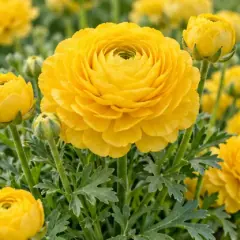
This is a species image. The colour and flower form of this variety may differ.
Cloni Success Hanoi
A named clonal selection; the breeder lists the code Abrochi.
Use: Ranunculus flowers are ornamentals and are not offered as edible here. The sap can irritate skin; wear gloves during extensive handling.
Use of the species; this selection has been developed around colour, shape or growing characteristics.View growing and harvesting →Place in my gardenThis is a species image. The colour and flower form of this variety may differ.
Cloni Success Lady
A named clonal selection; the breeder lists the code Abotso.
Use: Ranunculus flowers are ornamentals and are not offered as edible here. The sap can irritate skin; wear gloves during extensive handling.
Use of the species; this selection has been developed around colour, shape or growing characteristics.View growing and harvesting →Place in my gardenThis is a species image. The colour and flower form of this variety may differ.
Cloni Success Favola
A named clonal selection; the breeder lists the code Abpegaso.
Use: Ranunculus flowers are ornamentals and are not offered as edible here. The sap can irritate skin; wear gloves during extensive handling.
Use of the species; this selection has been developed around colour, shape or growing characteristics.View growing and harvesting →Place in my gardenThis is a species image. The colour and flower form of this variety may differ.
Cloni Success Felicidade
A named clonal selection; the breeder lists the code Abukè.
Use: Ranunculus flowers are ornamentals and are not offered as edible here. The sap can irritate skin; wear gloves during extensive handling.
Use of the species; this selection has been developed around colour, shape or growing characteristics.View growing and harvesting →Place in my gardenThis is a species image. The colour and flower form of this variety may differ.
Cloni Success Nuance
A named clonal selection; the breeder lists the code Abtepeyo.
Use: Ranunculus flowers are ornamentals and are not offered as edible here. The sap can irritate skin; wear gloves during extensive handling.
Use of the species; this selection has been developed around colour, shape or growing characteristics.View growing and harvesting →Place in my gardenThis is a species image. The colour and flower form of this variety may differ.
Cloni Success Fragolino
A named clonal selection; the breeder lists the code Abavesca.
Use: Ranunculus flowers are ornamentals and are not offered as edible here. The sap can irritate skin; wear gloves during extensive handling.
Use of the species; this selection has been developed around colour, shape or growing characteristics.View growing and harvesting →Place in my gardenThis is a species image. The colour and flower form of this variety may differ.
Cloni Success Renoir
A named clonal selection; the breeder lists the code Abizanagi.
Use: Ranunculus flowers are ornamentals and are not offered as edible here. The sap can irritate skin; wear gloves during extensive handling.
Use of the species; this selection has been developed around colour, shape or growing characteristics.View growing and harvesting →Place in my gardenThis is a species image. The colour and flower form of this variety may differ.
Cloni Success Nerone
A named clonal selection; the breeder lists the code Abumbreon.
Use: Ranunculus flowers are ornamentals and are not offered as edible here. The sap can irritate skin; wear gloves during extensive handling.
Use of the species; this selection has been developed around colour, shape or growing characteristics.View growing and harvesting →Place in my gardenThis is a species image. The colour and flower form of this variety may differ.
Cloni Success Nonno Antonio
A named clonal selection; the breeder lists the code Aborione.
Use: Ranunculus flowers are ornamentals and are not offered as edible here. The sap can irritate skin; wear gloves during extensive handling.
Use of the species; this selection has been developed around colour, shape or growing characteristics.View growing and harvesting →Place in my gardenChoose your way to grow

This image was created with AI from described plant characteristics and growing advice. It shows a possible situation and is not a photograph of a verified cultivar.

This image was created with AI from described plant characteristics and growing advice. It shows a possible situation and is not a photograph of a verified cultivar.
Cool pot growing
Keep moisture and protection manageable.
- Use a pot with drainage holes.
- Grow on in cool, light conditions, protected from frost.
- Water when needed and empty the saucer.
Compact Bloomingdale Rose in small quantities.
Sheltered picking row
Make room for separate, straight flower stems.
- Grow healthy planting material under cover.
- Plant out when cold and moisture are sufficiently manageable.
- Install light support and cut flowers while retaining leaves.
Tecolote Hybrids and suitable cutting lines.
Choose flower shape and size
Bloomingdale Rose is compact with pink doubles, suiting pots. Tecolote Hybrids is a group for larger full flowers, not one uniform variety. PON PON is a Biancheri breeding line. Buy by exact colour selection; line names alone do not specify supplied colour.
Raise in cool conditions
Light, cool positions beat warm windowsills causing fast weak growth. Check pots before watering: wet soil needs no more. Allow airflow without hard draughts on stems. Plant outside only when weather matches your protection options.
Harvest without stripping the plant bare
Cut flower stems while leaving healthy leaves. Put immediately in water, remove submerged foliage and use clean vases. Light supports straighten densely planted cutting rows. Ornamental pots need not be stripped continually; leave some flowers.
After the last flower
Do not immediately hide spent plants in dark cupboards while leaves remain green. Dormancy follows later. Keep healthy stock and inspect rot. Record temperatures and watering for first trials to improve next attempts without promising every tuber reblooms for years.
Scent, flavour and use
Ranunculus flowers are ornamentals and are not offered as edible here. The sap can irritate skin; wear gloves during extensive handling.
Care, cutting and harvesting
Use healthy small root tubers or young plants. Soak dry tubers according to the supplier and plant in airy potting compost. Keep growth cool and bright, without a wet, stagnant rootball. Protect Ranunculus asiaticus from frost.
Remove old flowers. After flowering, let the leaves keep working until they naturally yellow. Keeping plants is not always reliable: the RHS describes annual replacement as a practical option.
Cut for the vase when the flower just starts to open, unless the supplier of a specific line advises otherwise. Use clean scissors and cool water.
Cutting, caring and following the season
Remove old flowers. After flowering, let the leaves keep working until they naturally yellow. Keeping plants is not always reliable: the RHS describes annual replacement as a practical option.
Species information and annual cycle
- Space
- Recommended spacing is missing. Check the plant label or seed packet; unknown space does not count as free space.
- Soil
- No pH range supported by sources is included. Test your soil and follow species and variety guidance.
- Season
- An indicative growth estimate is included; actual development still needs checking.
- Care
- 3 species care checks included. This is not a complete list of all possible care.
What you need
Tick what you already have. The extras depend on how you grow.
0 of 6 ticked off
Your ticks are saved in this browser.
Make it your garden
Save your favourite variety or add it to My garden. Your own observations determine the growth stage; care tasks are based on the species.
Add Ranunculus to my gardenExplore more flowersSources and image information
SeedSteps editorial team · checked on 13 October 2026. Flavour descriptions come from the listed sources; ripeness and growing conditions affect flavour. AI images illustrate described characteristics and do not prove cultivar identity.
- World Checklist of Vascular Plants — 4 juni 2026Royal Botanic Gardens, Kew · 2026-10-07
- Cloni Success seasonal catalogueBiancheri Creazioni · 2026-10-22
- How to grow ranunculusRoyal Horticultural Society · 2026-10-13
- Ranunculus Bloomingdale Rose F1Chiltern Seeds · 2026-10-13
- PON PON collectionBiancheri Creazioni · 2026-10-13
- Ranunculus asiaticus Tecolote hybridsRoyal Horticultural Society · 2026-10-13
- Tecolote Ranunculus grown selectionFleur Farm · 2026-10-13
- Ranunculus asiaticus care and toxicityNC State Extension · 2026-10-13