
Red Sun: discover its flavour and how to grow it
Round, red shallot for fresh dishes and storage. Choose Red Sun for a round, red harvest with storage potential. Different sizes from a cluster are useful for small and larger dishes.
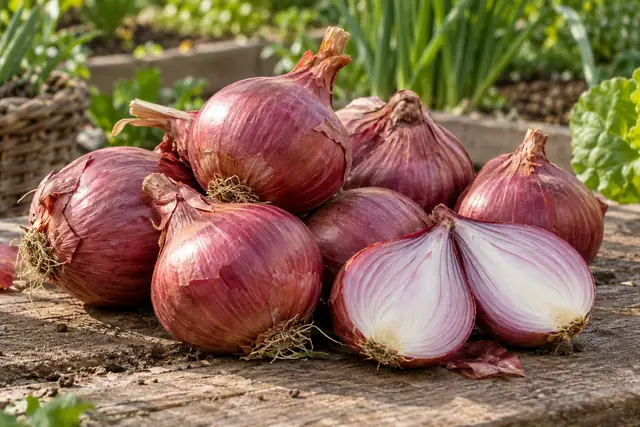
This image was created with AI from described plant characteristics and growing advice. It shows a possible situation and is not a photograph of a verified cultivar.
- Location
- Sun and free-draining soil
- Start
- Shallot sets or seed of a suitable variety
- Space
- Often approximately 15–20 cm between plants; follow variety guidance
- Save
- Only healthy, thoroughly dried bulbs
This growing advice helps you choose. Your variety, growth stage, weather and conditions in your space determine the actual timing.
Sowing under cover and raising seedlings
Usually plant established planting stock · Shallot
March–April; autumn types according to supplierPlant healthy shallots in well-drained soil.
- Germination and temperature
- Germinate under cover, then grow on in good light without excessive warmth.
- After emergence
- Give seedlings light immediately after emergence. A dark loft needs suitable grow lights; warmth alone is insufficient. Ventilate and keep the compost moist without saturating it.
- Pricking out and potting on
- Shallot sets are bulbs: do not prick out. Seed shallots can be raised in modules according to seed guidance.
- Hardening off and planting out
- Plant healthy bulbs directly in workable, well-drained soil. Harden off module-grown seed shallots first and transplant with the root ball.
Plant bulbs for shallot sets; seed shallots follow specific seed guidance.
Sources and use
RHS · uien ↗Britse teeltrichtlijn voor een gematigd klimaat; de genoemde perioden zijn richtlijnen voor Nederland en Vlaanderen.
Royal Horticultural Society · RHS — sjalot kweken ↗Soort- of productgebonden bron; buitenlandse perioden zijn geen vaste Nederlandse zaaidatum.
Utah State University Extension · USU Extension — sjalot in de tuin ↗Soort- of productgebonden bron; buitenlandse perioden zijn geen vaste Nederlandse zaaidatum.
Guideline periods for the Netherlands and Flanders. Check the variety, available light, soil and measured temperatures. Greenhouse heating does not guarantee enough winter light.
What makes Red Sun different?
- Fruit shape
- round
- Main colour
- red
The source context and any limitations are in the background information at the bottom.
Compare with another varietyFlavour and kitchen
Red Sun has the familiar aromatic character of shallot. A proven sweetness difference from Longor is lacking; colour and round shape help with the choice here.
This flavour description applies to the crop; a separate taste test for this variety is not supported by evidence.Use finely chopped shallot in vinaigrette or slowly caramelise halved bulbs. Small, round specimens can also be braised whole.
Why choose it? Choose Red Sun for a round, red harvest with storage potential. Different sizes from a cluster are useful for small and larger dishes.
How to grow shallot
The options below belong to the plant. From these, choose the method that suits your variety's growth habit.
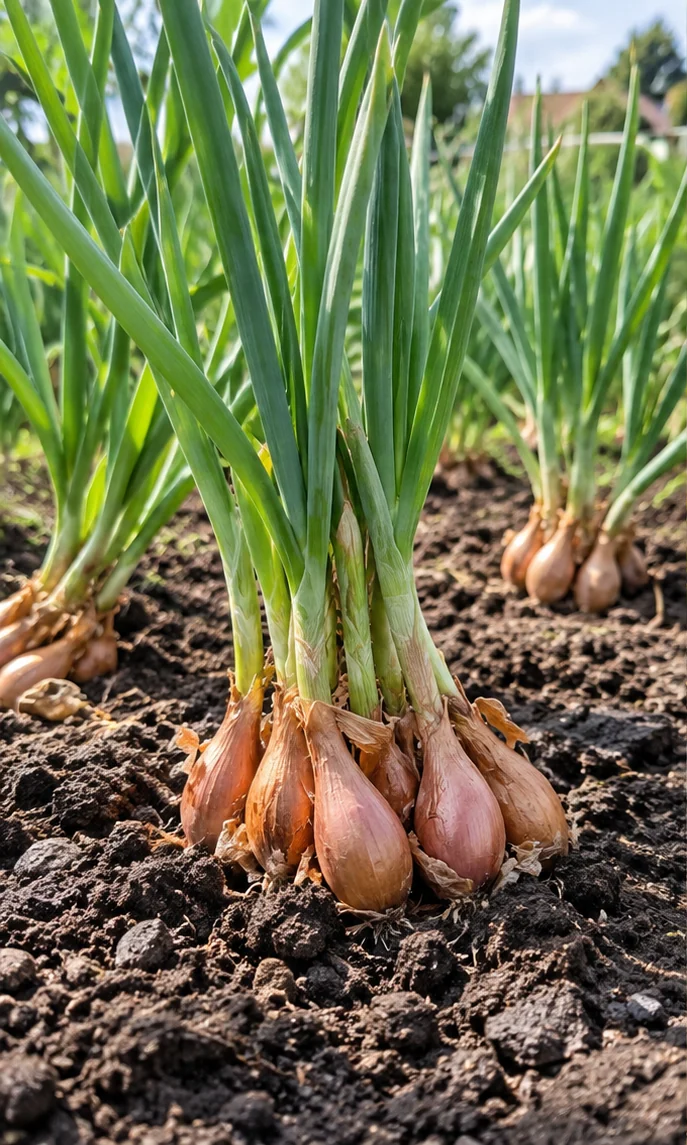
This image was created with AI from described plant characteristics and growing advice. It shows a possible situation and is not a photograph of a verified cultivar.
Shallot sets in a bed
One planting bulb develops a cluster. An open, sunny bed allows room for those bulbs to mature.
- Use healthy shallot sets and prepare a crumbly, weed-free bed.
- Plant the bulb upright with its tip just visible; allow room for the cluster.
- Water in dry weather and weed without damaging bulbs.
- Harvest when foliage naturally yellows and falls, then dry the crop under shelter.
For a simple start and a stock of small bulbs.
Tick off your supplies →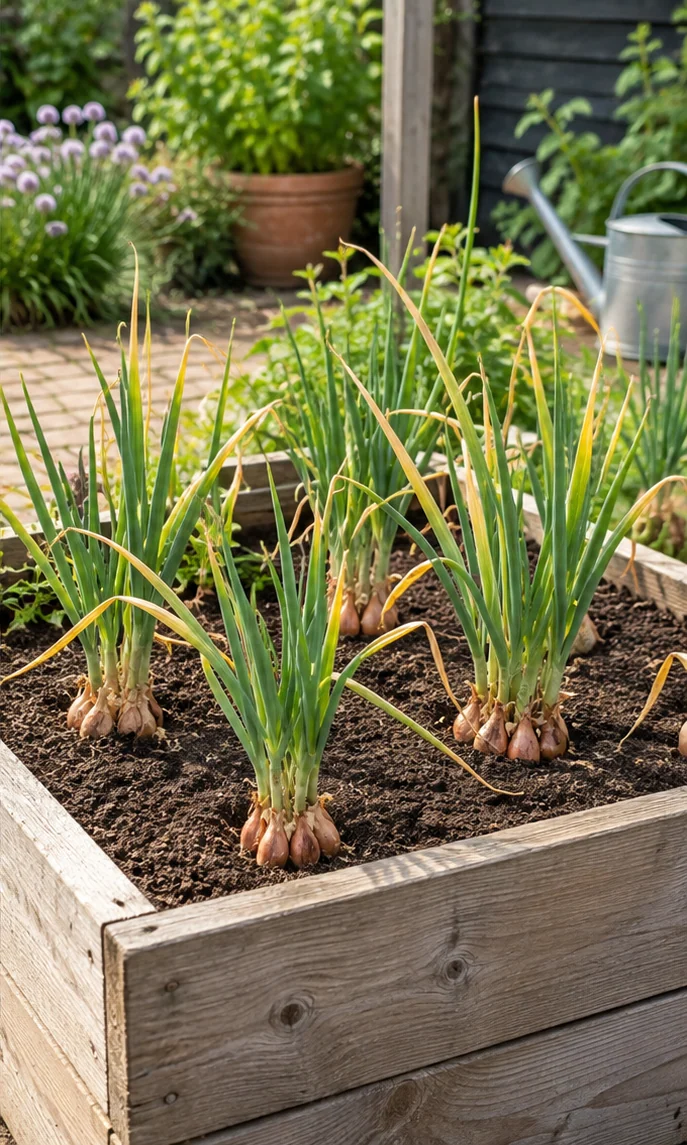
This image was created with AI from described plant characteristics and growing advice. It shows a possible situation and is not a photograph of a verified cultivar.
A wide growing container on the patio
Shallow roots fit a large container if water can drain and each cluster has sufficient space.
- Fill a wide container with airy compost and check drainage.
- Plant at normal spacing; do not fill the entire surface with bulbs.
- Water evenly during growth and avoid persistently wet compost.
- Let foliage mature steadily at the end and dry harvested clusters separately.
For a small personal store and a clear view of growth.
Tick off your supplies →Why grow Red Sun?
Round, red shallot for fresh dishes and storage.
Choose Red Sun for a round, red harvest with storage potential. Different sizes from a cluster are useful for small and larger dishes.
How this choice tastes
Red Sun has the familiar aromatic character of shallot. A proven sweetness difference from Longor is lacking; colour and round shape help with the choice here.
From harvest to kitchen
Use finely chopped shallot in vinaigrette or slowly caramelise halved bulbs. Small, round specimens can also be braised whole.
What needs attention when growing
Plant the intended shallot sets in a sunny, well-drained spring bed. Leave enough room around each bulb, as a cluster of new shallots will form.
Lift after natural maturity in dry weather. Separate and dry the harvest, check stored bulbs for soft spots and process unusual specimens promptly.
Choose by flavour, shape and use
Longor: Long shallot with copper-red skin and a pink-purple core. Slice long shallots into rings for dressing or halve them lengthways for the oven. Equal pieces cook together without drying out quickly.
Shallot flavour is aromatic and onion-like, clearly sharper raw than after cooking. For Longor, the long shape is the main substantiated difference.
Red Sun: Round red shallot for fresh dishes and storage. Use finely chopped shallot in vinaigrette or slowly caramelise halved bulbs. Small, round specimens can also be braised whole.
Red Sun has the familiar aromatic character of shallot. A proven sweetness difference from Longor is lacking; colour and round shape help with the choice here.
Distinguish bulb growing from seed production
Shallot sets are the accessible start: plant a bulb and harvest a cluster. Growing from seed needs a longer process and a variety offered for your conditions. Keep its name: shape, colour and keeping quality differ between selections.
Find sun and airflow for the bulbs
Shallots dislike standing water. Loosen sealed soil or choose a raised bed. Do not add fresh manure just before planting. A clear patch particularly helps young plants because narrow foliage barely covers the soil.
Leave the tip showing above the soil
Spring planting is a useful starting point for many shallot sets; autumn planting needs suitable stock and well-drained soil. Put root base down with the tip just visible. Make a planting hole rather than forcing bulbs into hard earth.
More choice needs more preparation
Sow a suitable shallot variety during its stated period, starting indoors or directly as advised. Keep compost evenly moist. Plant sturdy seedlings with room around each, without automatically expecting the same cluster as from sets.
A cluster needs its own room
The original single bulb divides during growth. Leave forming bulbs undisturbed and weed carefully. Close planting limits room and airflow. Do not routinely remove damaged foliage if the plant otherwise grows healthily.
Water during growth, rest during ripening
Water the root zone during dry periods. Pots need checking more often. When foliage naturally yellows and flops, harvest approaches; do not try turning maturity into new leaf growth with heavy feeding and watering.
Watch for rot and premature flowering
Soft bulbs, rotten roots or basal mould need investigation. Separate affected plants and move the onion family next year. Flower stems can reduce keeping quality: use those bulbs sooner and store only healthy, firm ones.
Lifting, loosening, drying
Loosen soil with a fork and lift the whole cluster. Let bulbs dry somewhere airy, protected from prolonged rain. Separate carefully once dry enough; do not enclose a damp harvest in a container.
Select for storage
Store only intact, dry shallots somewhere cool, dry and ventilated. Check regularly and promptly use soft or damaged bulbs if still suitable. Separate eating supplies and next season's healthy sets so diseased bulbs are not replanted unnoticed.
What you need
Tick what you already have. The extras depend on how you grow.
0 of 5 ticked off
Your ticks are saved in this browser.
Discover and grow more
More background, sources and image information
SeedSteps editorial team · updated on 11 October 2026. The AI images illustrate species and practical growing situations; they do not prove an exact cultivar, observations from your own garden or yield.
Britse gewasadviezen worden gecombineerd met Nederlandse en Vlaamse informatie waar beschikbaar. Amerikaanse Extension-bronnen ondersteunen plantprincipes en herkenning; hun kalenderdata, lokale plaagdruk, bestrijdingsmiddelen en mestdoseringen worden niet rechtstreeks op Nederland of Vlaanderen toegepast. Vorst, bodemwarmte, standplaats en expliciete rasinformatie blijven de lokale controle. Commerciële bronnen onderbouwen uitsluitend benoemde ras- en plantkenmerken; zij zijn geen affiliate-aanbeveling.
- World Checklist of Vascular Plants — 4 juni 2026Royal Botanic Gardens, Kew · accessed 2026-10-07
- Common catalogue of varieties of vegetable species — 27 januari 2023Europese Commissie · accessed 2026-10-07
- Sjalot Red Sun 250G BiologischFeggies · accessed 2026-10-11
- Sjalot Longor 250gram BiologischFeggies · accessed 2026-10-11
- RHS — sjalot kwekenRoyal Horticultural Society · accessed 2026-10-10
- USU Extension — sjalot in de tuinUtah State University Extension · accessed 2026-10-10
Supporting evidence by chapter: Why grow Red Sun?: Feggies. How this choice tastes: Feggies. From harvest to kitchen: Feggies. What needs attention when growing: Feggies. Choose by flavour, shape and use: Feggies, Feggies. Distinguish bulb growing from seed production: Royal Horticultural Society, Utah State University Extension. Find sun and airflow for the bulbs: Royal Horticultural Society, Utah State University Extension. Leave the tip showing above the soil: Royal Horticultural Society, Utah State University Extension. More choice needs more preparation: Royal Horticultural Society, Utah State University Extension. A cluster needs its own room: Royal Horticultural Society, Utah State University Extension. Water during growth, rest during ripening: Royal Horticultural Society, Utah State University Extension. Watch for rot and premature flowering: Royal Horticultural Society, Utah State University Extension. Lifting, loosening, drying: Royal Horticultural Society, Utah State University Extension. Select for storage: Royal Horticultural Society, Utah State University Extension.
Fruit shape: round Beschrijving van de genoemde rasbron; geen eigen tuinwaarneming. Feggies
Main colour: red Beschrijving van de genoemde rasbron; geen eigen tuinwaarneming. Feggies