
Growing Centurion: follow an early onion from planting material to storage
Centurion has bronze-brown skin and creamy-white flesh. Discover what early means in its source context, how the bulb grows and why saved seed does not automatically reproduce the same variety.
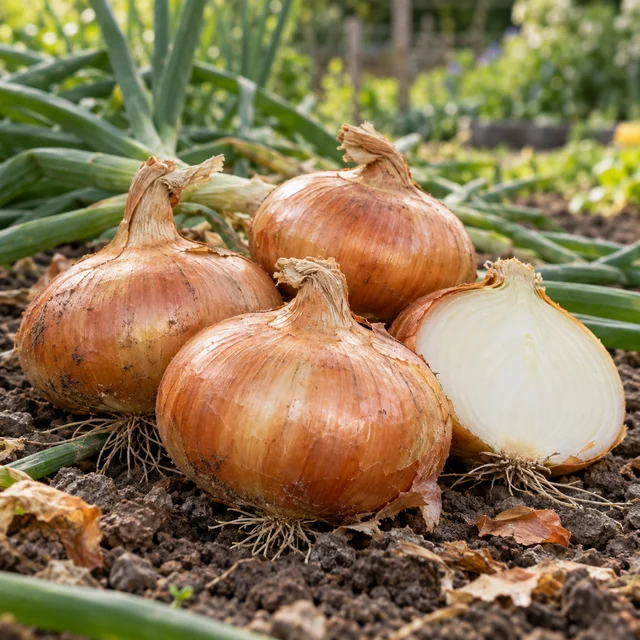
This image was created with AI from described plant characteristics and growing advice. It shows a possible situation and is not a photograph of a verified cultivar.
- Location
- Sunny, airy and free-draining
- Start
- Seed and onion sets have different schedules
- Onion set
- Root base down; tip just visible above the soil
- Harvest
- Foliage naturally yellow and fallen over; then dry carefully
This growing advice helps you choose. Your variety, growth stage, weather and conditions in your space determine the actual timing.
Sowing under cover and raising seedlings
Start under cover in a cool, bright position · Onion
February–March for seed-grown onionsSow lightly in modules or a seed tray and grow on steadily.
- Germination and temperature
- Germinate under cover, then grow on in good light without excessive warmth.
- After emergence
- Give seedlings light immediately after emergence. A dark loft needs suitable grow lights; warmth alone is insufficient. Ventilate and keep the compost moist without saturating it.
- Pricking out and potting on
- Sow in modules or a seed tray. Move young plants with their root ball according to cultivar guidance; a small group of spring onions can stay together.
- Hardening off and planting out
- Gradually acclimatise indoor-raised plants to sun, wind and outdoor temperatures; shelter them again on cold nights. Plant out sturdy young onions at suitable final spacing. Seed-grown onions are plants raised from seed; onion sets are planted directly.
Onion sets and seed-grown onions are different starting routes. Bunching and spring onions are generally harvested young.
Sources and use
Royal Horticultural Society · RHS — ui kweken ↗Soort- of productgebonden bron; buitenlandse perioden zijn geen vaste Nederlandse zaaidatum.
University of Minnesota Extension · UMN Extension — ui in de moestuin ↗Soort- of productgebonden bron; buitenlandse perioden zijn geen vaste Nederlandse zaaidatum.
Guideline periods for the Netherlands and Flanders. Check the variety, available light, soil and measured temperatures. Greenhouse heating does not guarantee enough winter light.
What makes Centurion different?
- Fruit shape
- Flattened globe shapeUnited Kingdom
- Main colour
- Bronze-brownUnited Kingdom
- Early or late
- Early in the British source contextUnited Kingdom
- Secondary colour
- Creamy white fleshUnited Kingdom
- Open-pollinated / F1
- F1-hybrideUnited Kingdom
- Save
- Stores well with suitable harvesting, drying and storageUnited Kingdom
The source context and any limitations are in the background information at the bottom.
Compare with another varietyHow to grow onion
The options below belong to the plant. From these, choose the method that suits your variety's growth habit.
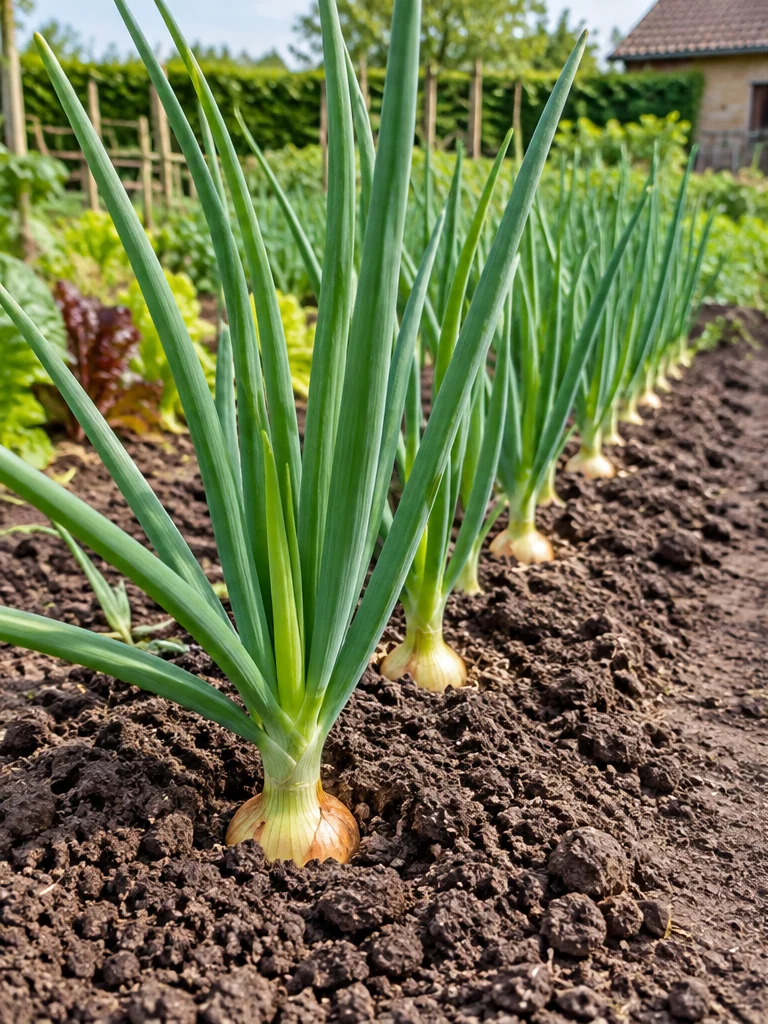
This image was created with AI from described plant characteristics and growing advice. It shows a possible situation and is not a photograph of a verified cultivar.
Onion sets in a manageable bed
Small planting bulbs make an accessible start. The tip stays visible and the root base gets loose soil.
- Choose healthy planting material for the intended season.
- Prepare a clean bed and space bulbs upright according to the variety.
- Leave the tip just above soil; do not press hard into dense ground.
- Weed carefully, check moisture and lift bulbs when foliage matures naturally.
For a simple start and a batch of storage onions.
Tick off your supplies →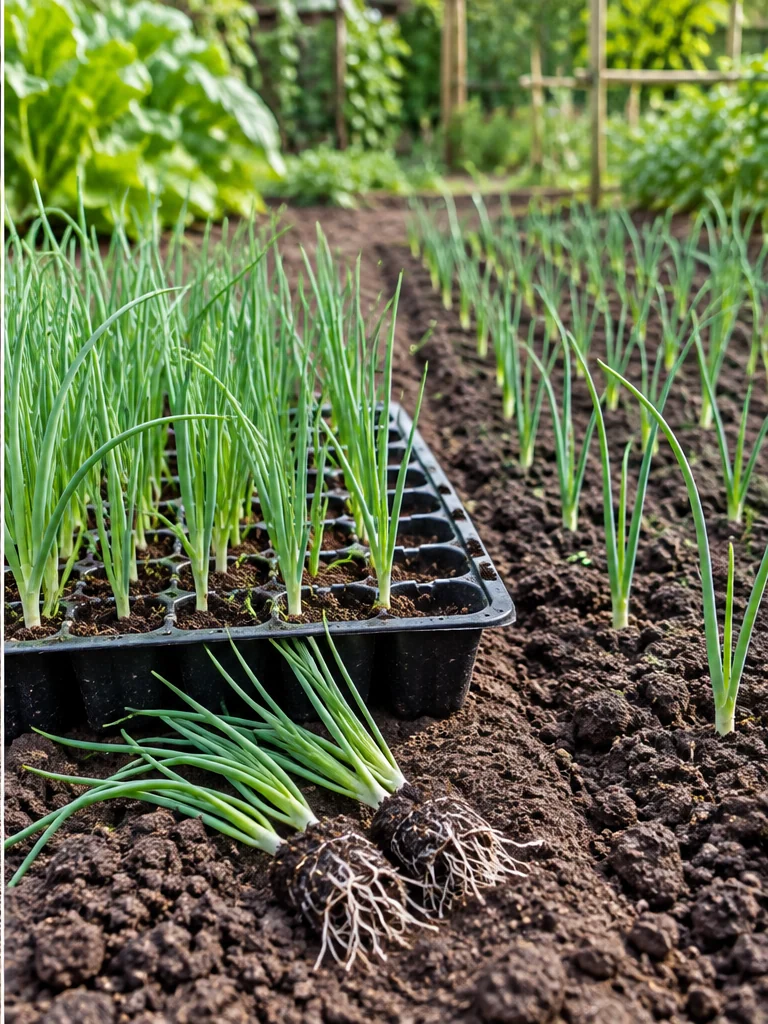
This image was created with AI from described plant characteristics and growing advice. It shows a possible situation and is not a photograph of a verified cultivar.
Onions from seed for greater variety choice
Sowing opens more choice but needs time for young shoots. Start timing must suit variety and intended planting position.
- Sow thinly in modules or a fine seedbed as the variety advises.
- Give plenty of light and keep the young root zone moist.
- Thin or plant sturdy seedlings at the recommended spacing.
- Let bulbs and foliage mature normally and select healthy produce for drying.
For anyone following the whole process with a suitable seed-grown variety.
Tick off your supplies →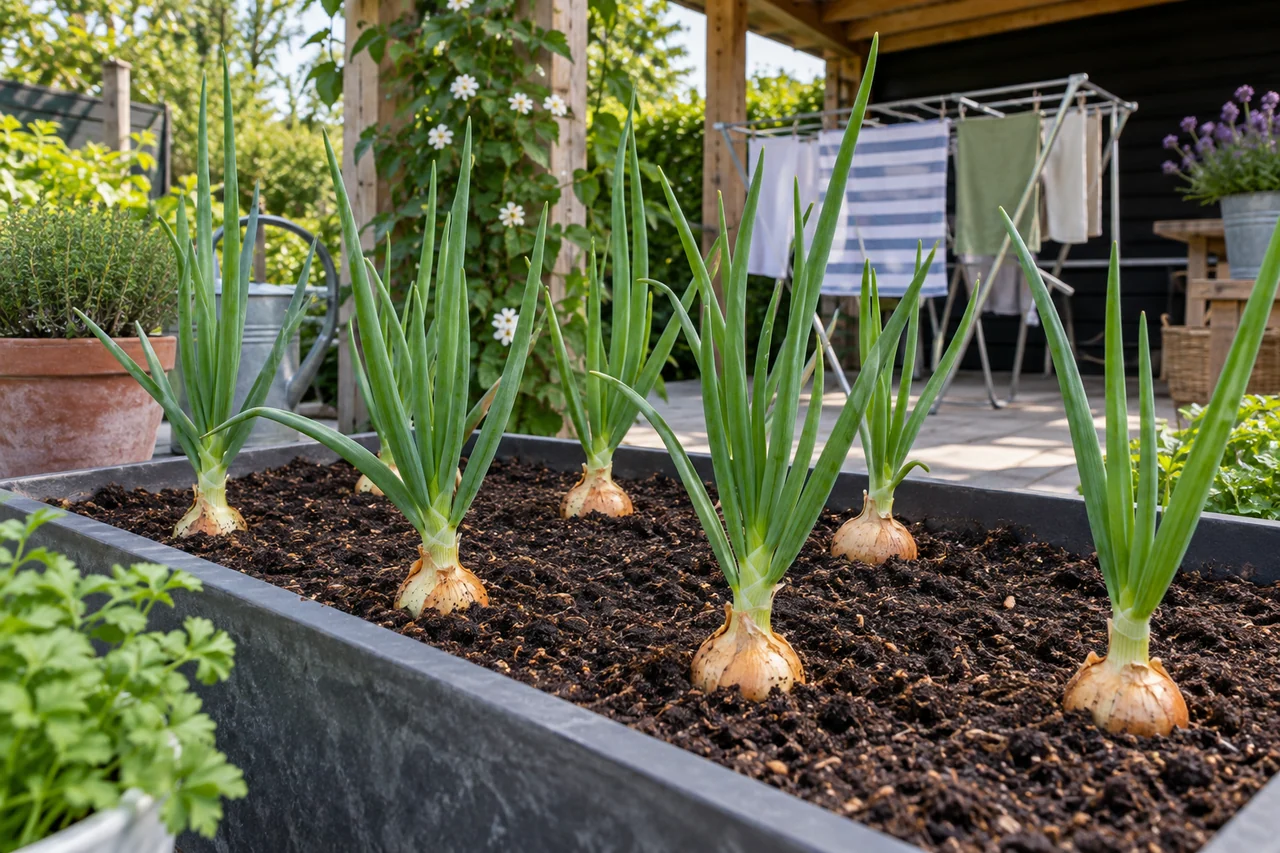
This image was created with AI from described plant characteristics and growing advice. It shows a possible situation and is not a photograph of a verified cultivar.
A smaller stored crop from a wide container
Onions can grow in a broad container if every bulb has enough room. A container makes weeding easy but needs more frequent moisture checks.
- Choose a wide container with unrestricted drainage and airy compost.
- Plant healthy onion sets or seedlings at normal spacing.
- Water evenly during growth and remove weeds early.
- Let foliage fall naturally and dry the harvest away from wet compost.
For a sunny balcony or patio and a limited stored crop.
Tick off your supplies →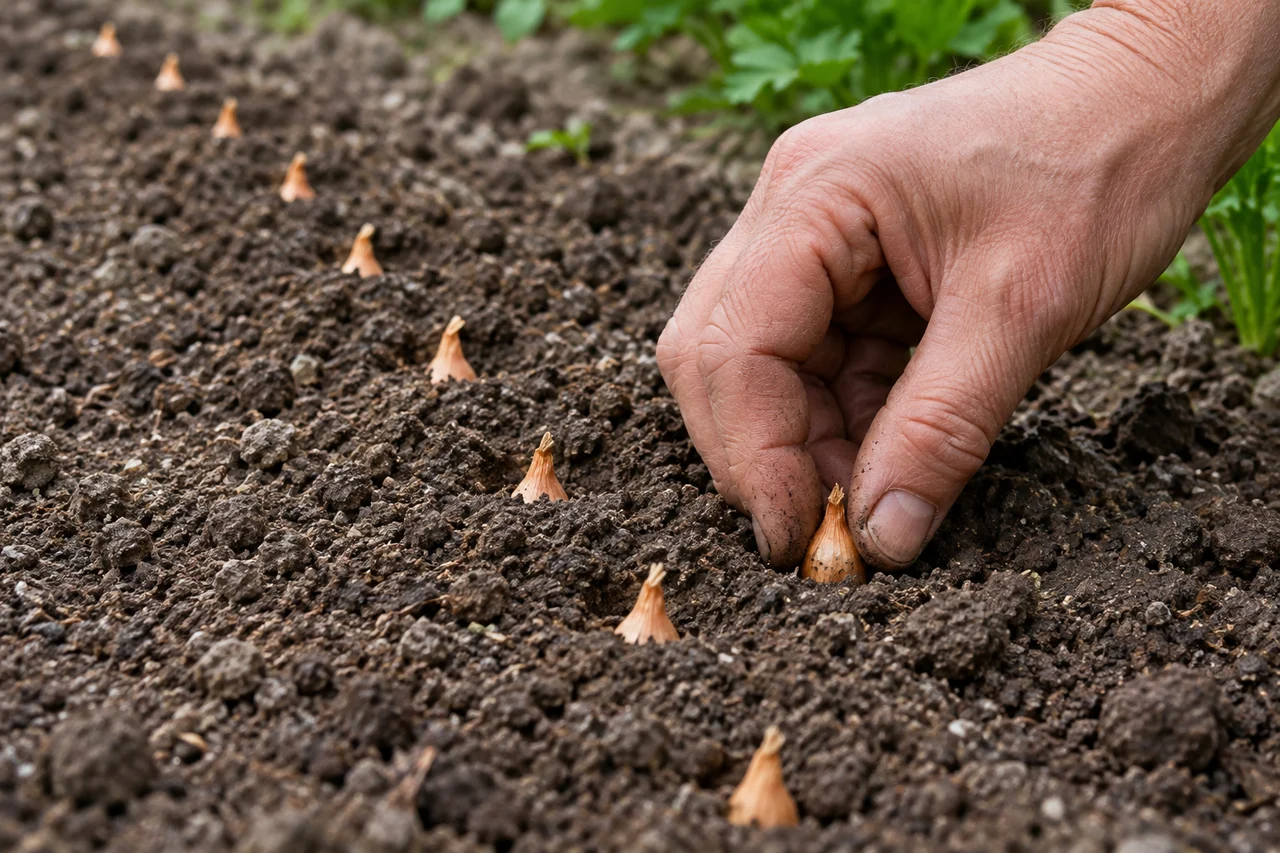
This image was created with AI from described plant characteristics and growing advice. It shows a possible situation and is not a photograph of a verified cultivar.
Leave the tip just visible
Put onion sets into the soil root-end down. The bulb belongs in the soil; only the dry tip stays above the surface.
View your supplies →Early tells you something about harvesting order
The RHS calls Centurion early, bronze-brown skinned and creamy inside. Early is relative to British conditions, not a fixed Dutch or Flemish harvest day. Register beside other onions to observe your actual ripening sequence later.
An old variety description has its own date
The 2011 RHS list describes Centurion as F1 and flattened-globular. This adds historical context. Award or trial years are not introduction years. Retain source dates so old observations do not appear new conclusions about current stock.
A new generation need not be a copy
A hybrid plant can produce seed, but its offspring are not guaranteed to retain the same combination of characteristics. Saving seed does not automatically copy Centurion. To keep comparing the cultivar, start with reliably labelled material. A seed trial can be interesting if recorded as a new experience rather than a proven true-to-type continuation.
Leaves prepare for bulb formation
In general RHS onion guidance, increasing day length plays a part in bulb formation. This makes young plant development relevant before harvest is in sight. Watch how the row develops rather than waiting only for a larger bulb. British sowing dates are not a local instruction here; your starting material and conditions remain part of planning.
Give shallow roots attention
Onions root shallowly. Check reachable soil in drought and weed gently. Short regular rounds track rows without heavy disturbance. Record observations such as beneath-surface moisture so watering means more later than a calendar tick.
Early harvesting starts by observing the plant
For storage onions, use naturally yellowing and falling foliage as the harvest signal. Even an early cultivar must show its own ripening. Do not bend leaves over yourself to meet the calendar. See which bulbs look ready, lift carefully and set damaged ones aside. This maintains the distinction between an early cultivar description and a carefully assessed harvest.
Make the transition to storage carefully
Fresh onions are not automatically dry storage onions. Check papery skins, dry necks and roots while curing. Let air circulate and protect from wet weather. Drying location belongs to crop history: identical-bed harvests may store differently after different drying.
An early harvest has a long follow-on
The source describes Centurion as storing well. Still check your stock and use soft or sprouting bulbs first. Compare how many usable onions remain, rather than only how many you lifted. Bringing cultivar name, starting material, harvest and storage together makes your experience a useful next chapter. You can then assess an early onion on later quality too.
What you need
Tick what you already have. The extras depend on how you grow.
0 of 7 ticked off
Your ticks are saved in this browser.
Discover and grow more
More background, sources and image information
SeedSteps editorial team · updated on 11 October 2026. The AI images illustrate species and practical growing situations; they do not prove an exact cultivar, observations from your own garden or yield.
Britse gewasadviezen worden gecombineerd met Nederlandse en Vlaamse informatie waar beschikbaar. Amerikaanse Extension-bronnen ondersteunen plantprincipes en herkenning; hun kalenderdata, lokale plaagdruk, bestrijdingsmiddelen en mestdoseringen worden niet rechtstreeks op Nederland of Vlaanderen toegepast. Vorst, bodemwarmte, standplaats en expliciete rasinformatie blijven de lokale controle. Commerciële bronnen onderbouwen uitsluitend benoemde ras- en plantkenmerken; zij zijn geen affiliate-aanbeveling.
- World Checklist of Vascular Plants — 4 juni 2026Royal Botanic Gardens, Kew · accessed 2026-10-07
- Common catalogue of varieties of vegetable species — 27 januari 2023Europese Commissie · accessed 2026-10-07
- Uien: zaaien, planten, oogsten en bewarenRoyal Horticultural Society · accessed 2026-10-08
- Uien en knoflook: historische RHS-rasbeschrijvingen uit 2011Royal Horticultural Society · accessed 2026-10-08
- Handboek Schooltuinen: raskeuze en plantuiHandboek Schooltuinen, via Velt · accessed 2026-10-08
- Ajuin doux de Florence ras van Simiane zaden biologischFeggies · accessed 2026-10-11
- Ajuin rood van Abbeville zaden biologischFeggies · accessed 2026-10-11
- Ajuin Stuttgart zaden biologischFeggies · accessed 2026-10-11
- Ui Sturon 500gram BiologischFeggies · accessed 2026-10-11
- Ajuin wit uit Lisboa zaden biologischFeggies · accessed 2026-10-11
- Shakespeare Gele Herfst Ui - 250gr BiologischFeggies · accessed 2026-10-11
- Growing onions: wortels, verzorging en bewaringUniversity of Minnesota Extension · accessed 2026-10-08
- Zelf groentezaad bewaren: open bestoven en hybride rassenUniversity of Minnesota Extension · accessed 2026-10-08
- Onions in the Garden: teelt en oogstUtah State University Extension · accessed 2026-10-08
- Red Baron: Nederlandse zaai- en bewaaraanwijzingenDe Bolster · accessed 2026-10-08
- RHS — ui kwekenRoyal Horticultural Society · accessed 2026-10-10
- UMN Extension — ui in de moestuinUniversity of Minnesota Extension · accessed 2026-10-10
- Fenologische kalender: tuinieren met het seizoenVelt · accessed 2026-10-08
Supporting evidence by chapter: Early tells you something about harvesting order: Royal Horticultural Society. An old variety description has its own date: Royal Horticultural Society. A new generation need not be a copy: University of Minnesota Extension, Royal Horticultural Society. Leaves prepare for bulb formation: Royal Horticultural Society. Give shallow roots attention: University of Minnesota Extension. Early harvesting starts by observing the plant: Royal Horticultural Society. Make the transition to storage carefully: Utah State University Extension, University of Minnesota Extension. An early harvest has a long follow-on: Utah State University Extension, Royal Horticultural Society.
Fruit shape: Flattened globe shape Historische Britse RHS-beschrijving, versie maart 2011. Geen introductiejaar, actuele populariteitsranglijst of Nederlandse teeltkalender. Royal Horticultural Society
Main colour: Bronze-brown Britse RHS-beschrijving; broncontext geldt voor het rasportret, zonder lokale maat-, oogst- of bewaargarantie. Royal Horticultural Society
Early or late: Early in the British source context Britse RHS-beschrijving; broncontext geldt voor het rasportret, zonder lokale maat-, oogst- of bewaargarantie. Royal Horticultural Society
Secondary colour: Creamy white flesh Britse RHS-beschrijving; broncontext geldt voor het rasportret, zonder lokale maat-, oogst- of bewaargarantie. Royal Horticultural Society
Open-pollinated / F1: F1-hybride Historische Britse RHS-beschrijving, versie maart 2011. Geen introductiejaar, actuele populariteitsranglijst of Nederlandse teeltkalender. Royal Horticultural Society
Save: Stores well with suitable harvesting, drying and storage Britse RHS-beschrijving; broncontext geldt voor het rasportret, zonder lokale maat-, oogst- of bewaargarantie. Royal Horticultural Society