
Okra: flowers for the garden, young pods for the pan
Okra combines upright growth with graceful flowers and young edible pods. It is a warmth-loving trial crop: start with a small group of plants in the greenhouse and only try a selected variety outside in your warmest spot.
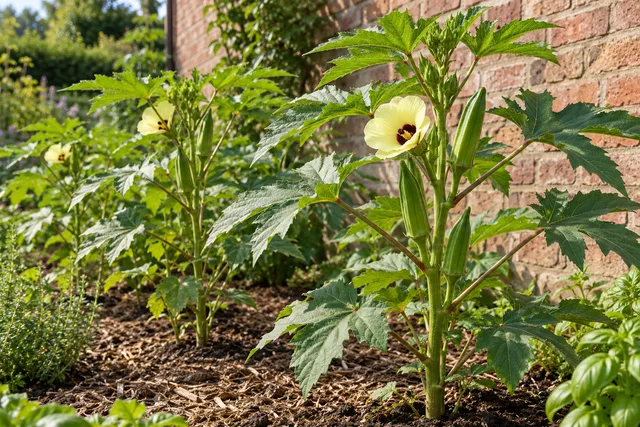
This image was created with AI from described plant characteristics and growing advice. It shows a possible situation and is not a photograph of a verified cultivar.
- Sow
- March–April indoors in warmth
- Plant out
- Late May–June; frost-free and warm
- Harvest
- Young, tender pods; check regularly
- Best chance
- Greenhouse or very warm shelter
This growing advice helps you choose. Your variety, growth stage, weather and conditions in your space determine the actual timing.
Sowing under cover and raising seedlings
Start under cover in warmth · Okra
March–AprilStart indoors in warmth and reserve enough bright space for raising plants.
- Germination and temperature
- Germinate in warmth, preferably above 20 °C according to cultivar instructions.
- After emergence
- Give seedlings light immediately after emergence. A dark loft needs suitable grow lights; warmth alone is insufficient. Ventilate and keep the compost moist without saturating it.
- Pricking out and potting on
- Sow in individual pots or deep modules. Do not prick out bare-rooted; move the whole root ball before the roots become restricted.
- Hardening off and planting out
- Gradually acclimatise indoor-raised plants to sun, wind and outdoor temperatures; shelter them again on cold nights. Late May–June, only with sustained warm conditions. A greenhouse offers more chance in the Netherlands than a cool outdoor bed.
Cold nights can check growth. Sow individually and move the whole root ball.
Sources and use
Royal Horticultural Society · Okra — Britse teeltgids voor beschutte teelt ↗Soort- of productgebonden bron; buitenlandse perioden zijn geen vaste Nederlandse zaaidatum.
Culinaris · Culinaris assortiment 2025 — okra en tomaten ↗Soort- of productgebonden bron; buitenlandse perioden zijn geen vaste Nederlandse zaaidatum.
Guideline periods for the Netherlands and Flanders. Check the variety, available light, soil and measured temperatures. Greenhouse heating does not guarantee enough winter light.
A different flavour, a different harvest.
Choose by more than the name. Discover how these varieties and crop types taste, what you can use them for and what growing them involves.
2 of 2 choices · 2 named varieties
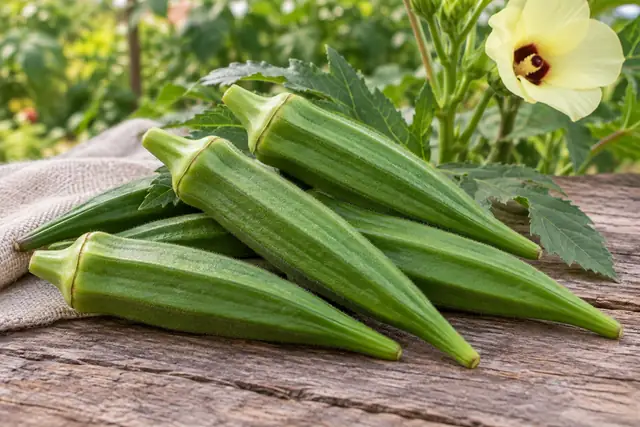
This image was created with AI from described plant characteristics and growing advice. It shows a possible situation and is not a photograph of a verified cultivar.
Santa Cruz
An upright-growing okra selection with attractive flowers and young edible pods; suitable for comparing warm outdoor and greenhouse growing.
Choose Santa Cruz for a documented selection that can also be tried outdoors. The grower expects more vigour and harvest in a greenhouse.
Flavour, kitchen and growing
How does it taste?
The source gives no cultivar difference in aroma. Young okra has the usual crop texture, with a thickening character particularly useful in stews.
This flavour description applies to the crop; there is no separate tasting result for this variety.In the kitchen
Briefly fry young pods or add them cooked to stew. Use young produce to avoid hard, fibrous pods.
A space in the garden
Sow in March–April above 20 °C and plant out in late May or early June once cold passes. Protect the taproot during transplanting.
Harvesting
Pick young pods frequently before they become woody. According to the grower, Santa Cruz has darker fruit than Silver Queen; tenderness determines picking time.
Also listed as: Oker Santa Cruz.
Read the source notes →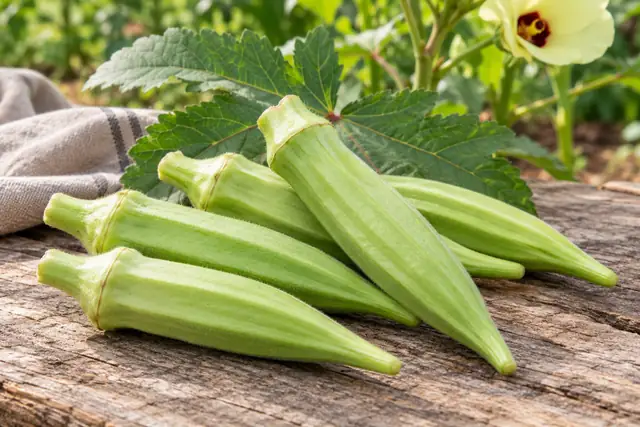
This image was created with AI from described plant characteristics and growing advice. It shows a possible situation and is not a photograph of a verified cultivar.
Silver Queen
An okra selected by Culinaris for outdoor growing, with striking leaves and flowers and paler fruits than Santa Cruz.
Choose Silver Queen alongside Santa Cruz if you want to compare which okra grows best in your warm garden space.
Flavour, kitchen and growing
How does it taste?
A distinct aroma profile has not been established. Fruit colour is the interesting difference; the usual texture of young okra remains the basis for cooking.
This flavour description applies to the crop; there is no separate tasting result for this variety.In the kitchen
Briefly fry young pods or cook through in stew. Harvest small to avoid tough fibres in meals.
A space in the garden
The producer mentions a long taproot and vigorous growth. Start in warmth in individual pots and give the roots an undisturbed start.
Harvesting
Check pods regularly and pick young. Selection for German outdoor growing gives a point of reference, not certainty in a cool Dutch season.
Read the source notes →Choose your way to grow
From a garden bed to a suitable pot or support: give your plant a place that suits your garden and the care you can provide.
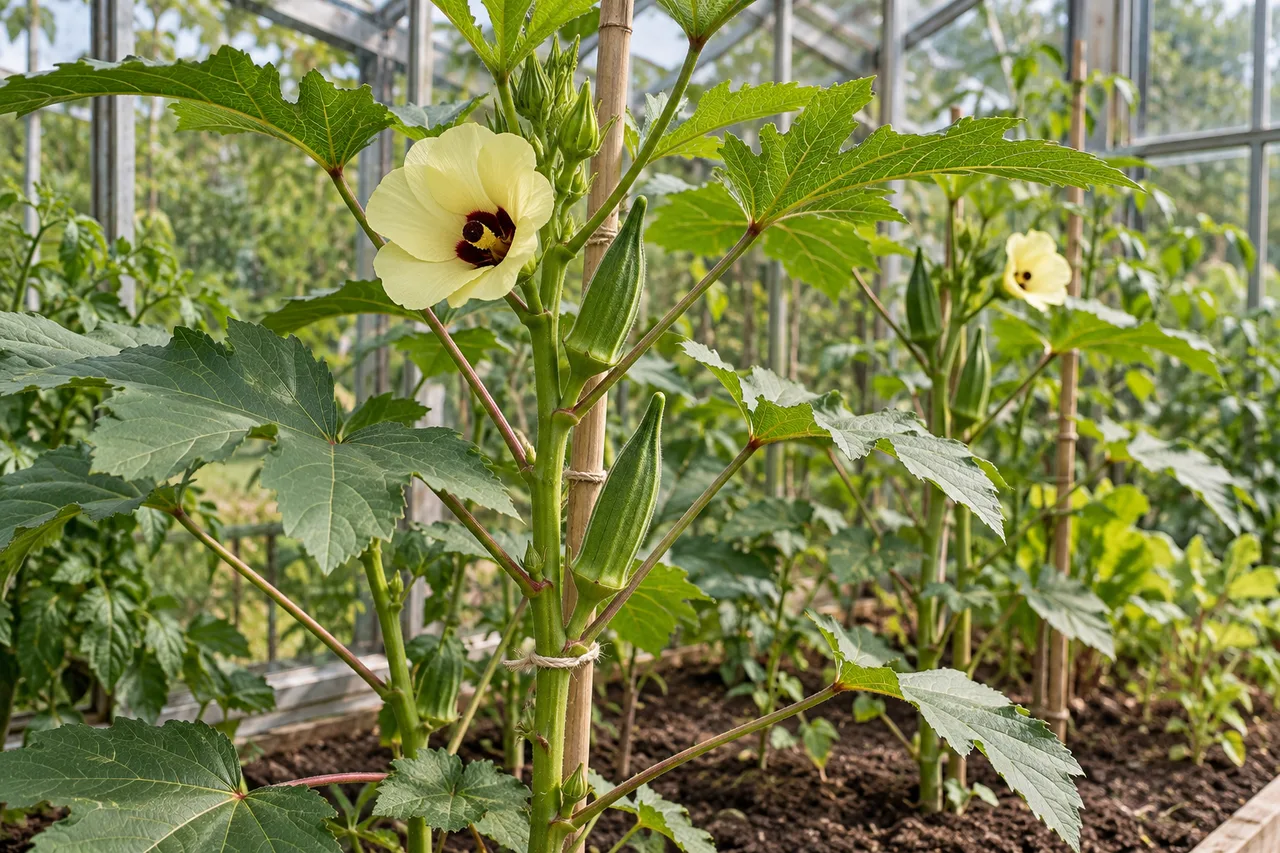
This image was created with AI from described plant characteristics and growing advice. It shows a possible situation and is not a photograph of a verified cultivar.
A small group in the greenhouse
The most promising approach in a cool Dutch season, with room for upright plants.
- Work mature compost into a sunny greenhouse bed and plant intact rootballs at the seed label's spacing.
- Place a bamboo cane beside tall plants and tie the stem loosely with soft material.
- Ventilate in warmth, water regularly at the base and check young pods often.
For a greenhouse, tunnel or sunny, sheltered growing space.
Tick off your supplies →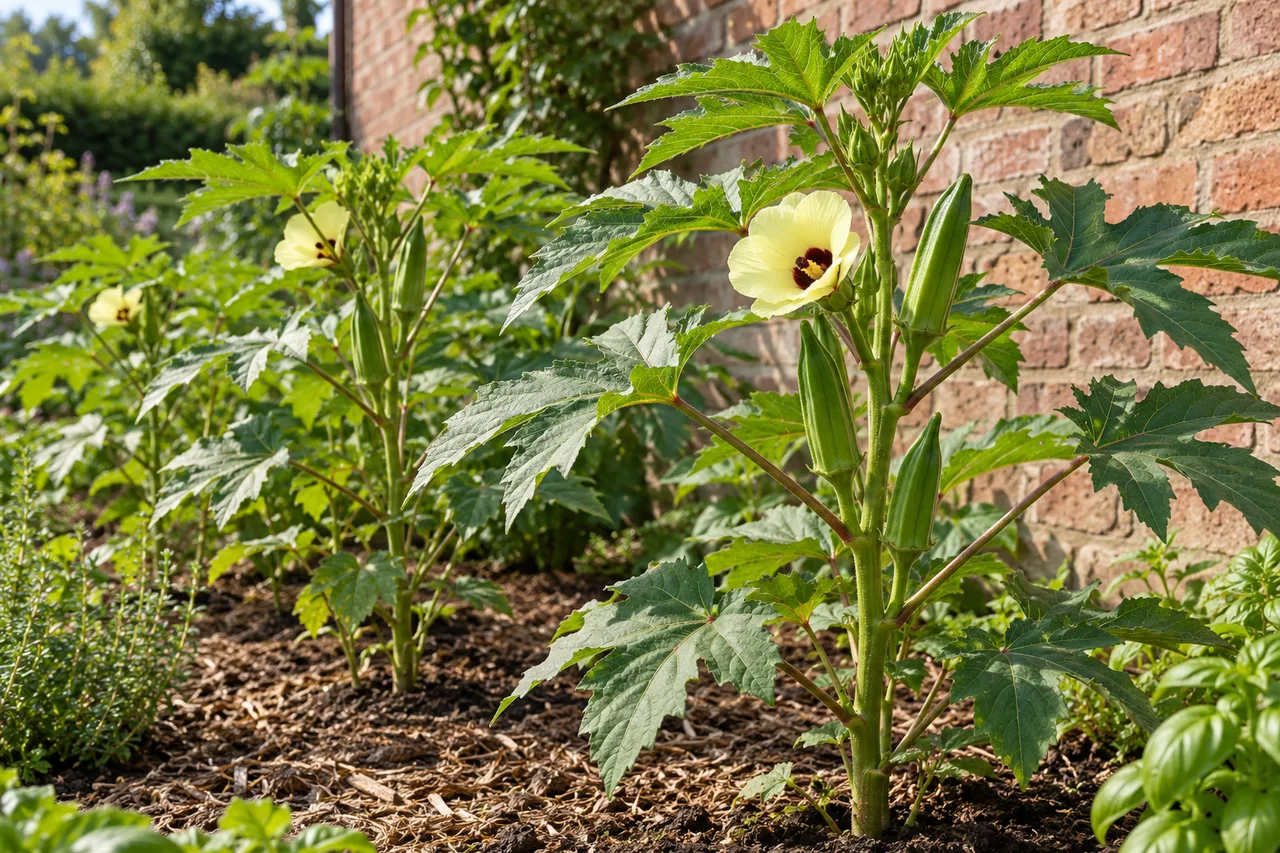
This image was created with AI from described plant characteristics and growing advice. It shows a possible situation and is not a photograph of a verified cultivar.
A warm outdoor bed as a trial
Try an outdoor selection against a sunny wall, paying attention to warm nights and a long season.
- Choose the sunniest sheltered position and let soil warm before planting.
- Harden off gradually and plant the entire rootball without disturbing the taproot.
- Mulch once the crop grows well and continue watering during flowering and pod formation.
For warm, sheltered gardens; a cool summer may limit harvesting.
Tick off your supplies →Explore the varieties
See the confirmed differences. Characteristics without supporting evidence are left blank.
0 of 0 varieties
No matching variety found. Try another name or clear the filters.
Choose two to four varieties to compare their source data side by side.
Choose by flavour, shape and use
Santa Cruz: An upright-growing okra selection with attractive flowers and young edible pods; suitable for comparing warm outdoor and greenhouse growing. Briefly fry young pods or add cooked to stew. Use young harvests to avoid hard, fibrous pods.
The source gives no cultivar difference in aroma. Young okra has the usual crop texture, with a thickening character particularly useful in stews.
Silver Queen: Okra selected by Culinaris for outdoor growing, with striking leaves and flowers and paler fruit than Santa Cruz. Briefly fry young pods or cook in stew. Harvest small to avoid tough fibres.
A distinct aroma profile has not been established. Fruit colour is the interesting difference; the usual texture of young okra remains the basis for cooking.
Start with the warm spot
Okra needs more warmth than a cool leaf crop. In the Netherlands, a greenhouse gives a better starting point because cold nights can slow growth. Use an outdoor bed as a focused trial and record which position produces flowers and young pods quickest.
Two selections side by side
Culinaris gives Santa Cruz and Silver Queen as outdoor possibilities. Santa Cruz has darker fruit and, according to the grower, benefits particularly from greenhouse growing. These are German selection conditions; compare plants locally rather than expecting fixed Dutch yields.
Sow individually for each plant
Sow in separate pots in March or April in warmth. Feggies advises germinating Santa Cruz preferably above 20 °C. Give emerged plants light immediately and water regularly. Separate root balls make later transplanting easier than a dense tray with tangled roots.
Let the cold pass
Plant only when genuinely warm, usually late May or June depending on weather. Gradually acclimatise outdoor plants to wind and sun first. Keep roots intact and plant at roughly existing soil level. Protect young plants from unexpected cold.
Water during growth
The long taproot helps selected okra cope with dry conditions, but does not make watering during growth unnecessary. Keep the root zone evenly moist, especially during flowering and pod growth. Mulch on a warm outdoor bed limits drying. Check a pot more often than open ground.
Support the upright crop
A tall, laden plant may need a stake. Add early, loosely tying the stem with soft material and room for thickening. Support keeps harvests accessible. Recheck later: a forgotten tight loop can damage the stem.
Picking young is the key
The edible harvest consists of young, tender pods. Check frequently after flowering, as a pod can quickly become fibrous. Snip through the stalk without tugging the plant. Gloves and long sleeves are practical if fine hairs irritate your skin. Leave only separate pods for a seed trial.
Choose your dish to suit the texture
Briefly fry young pods or cook in stew. Start with a small portion to learn the crop and separate older, tough pods. Attractive flowers enrich the garden, but kitchen results mainly depend on young harvesting and suitable preparation.
What you need
Tick what you already have. The extras depend on how you grow.
0 of 5 ticked off
Your ticks are saved in this browser.
Discover and grow more
More background, sources and image information
SeedSteps editorial team · updated on 11 October 2026. The AI images illustrate species and practical growing situations; they do not prove an exact cultivar, observations from your own garden or yield.
Britse gewasadviezen worden gecombineerd met Nederlandse en Vlaamse informatie waar beschikbaar. Amerikaanse Extension-bronnen ondersteunen plantprincipes en herkenning; hun kalenderdata, lokale plaagdruk, bestrijdingsmiddelen en mestdoseringen worden niet rechtstreeks op Nederland of Vlaanderen toegepast. Vorst, bodemwarmte, standplaats en expliciete rasinformatie blijven de lokale controle. Commerciële bronnen onderbouwen uitsluitend benoemde ras- en plantkenmerken; zij zijn geen affiliate-aanbeveling.
- Culinaris assortiment 2025 — okra en tomatenCulinaris · accessed 2026-10-11
- Okra Santa Cruz — ras- en teeltbeschrijvingFeggies · accessed 2026-10-11
- Okra — Britse teeltgids voor beschutte teeltRoyal Horticultural Society · accessed 2026-10-11
Supporting evidence by chapter: Choose by flavour, shape and use: Feggies, Culinaris, Royal Horticultural Society. Start with the warm spot: Royal Horticultural Society. Two selections side by side: Culinaris. Sow individually for each plant: Feggies. Let the cold pass: Royal Horticultural Society. Water during growth: Culinaris, Royal Horticultural Society. Support the upright crop: Royal Horticultural Society. Picking young is the key: Royal Horticultural Society. Choose your dish to suit the texture: Feggies, Culinaris.