
Green in Snow: discover its flavour and how to grow it
Green in Snow produces green mustard leaves for repeated picking. The wintry name alone does not guarantee protection against every frost. Choose this selection for green leaves and an emphasis on cooler growing, particularly for regular small cuttings.
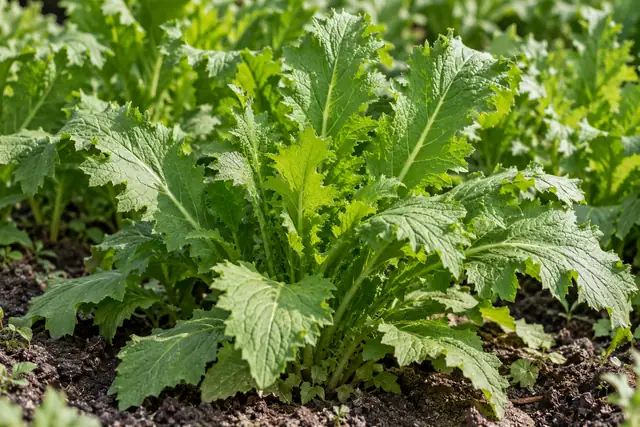
This image was created with AI from described plant characteristics and growing advice. It shows a possible situation and is not a photograph of a verified cultivar.
- Botanical name
- Brassica juncea
- Botanical group
- Brassica juncea
- Use
- Pungent young leaves
- Growing choice
- Cutting crop or loose-leaf plants
This growing advice helps you choose. Your variety, growth stage, weather and conditions in your space determine the actual timing.
Sowing under cover and raising seedlings
Start under cover in cool conditions or sow directly · Mustard greens
July–August for a simple autumn routeStart briefly under cover in modules; provide light and avoid heat.
- Germination and temperature
- Raise in cool to mild conditions; avoid severe cold, heat and drying out.
- After emergence
- Keep emerged lettuce bright and well ventilated; prevent high greenhouse temperatures and drying out.
- Pricking out and potting on
- Sow in modules or prick out manageable seedlings into individual cells. Keep the root ball intact when planting out.
- Hardening off and planting out
- Gradually acclimatise indoor-raised plants to sun, wind and outdoor temperatures; shelter them again on cold nights. Plant out sturdy young plants; keep the growing point clear and protect against slugs and snails.
These leafy crops can bolt under stress or unsuitable day length. Use early sowing only with an appropriate cultivar.
Sources and use
RHS · sla ↗Britse teeltrichtlijn voor een gematigd klimaat; de genoemde perioden zijn richtlijnen voor Nederland en Vlaanderen.
De Bolster · Bladmosterd Golden Frills ↗Nederlandse producent of teeltbron; de rasinstructie blijft leidend.
Feggies · Bladmosterd 'Golden Frills' Biologisch ↗Nederlandse producent of teeltbron; de rasinstructie blijft leidend.
Guideline periods for the Netherlands and Flanders. Check the variety, available light, soil and measured temperatures. Greenhouse heating does not guarantee enough winter light.
What makes Green in Snow different?
- Main colour
- Green
- Flavour
- The source states a sharp mustard flavour. Exact intensity compared with other mustard leaf selections is not substantiated.
The source context and any limitations are in the background information at the bottom.
Compare with another varietyFlavour and kitchen
The source states a sharp mustard flavour. Exact intensity compared with other mustard leaf selections is not substantiated.
Use small amounts raw as a sharp addition. In cooked dishes, mix leaves with gentler leafy vegetables.
Why choose it? Choose this selection for green leaves and an emphasis on cooler growing, particularly for regular small cuttings.
How to grow mustard greens
The options below belong to the plant. From these, choose the method that suits your variety's growth habit.
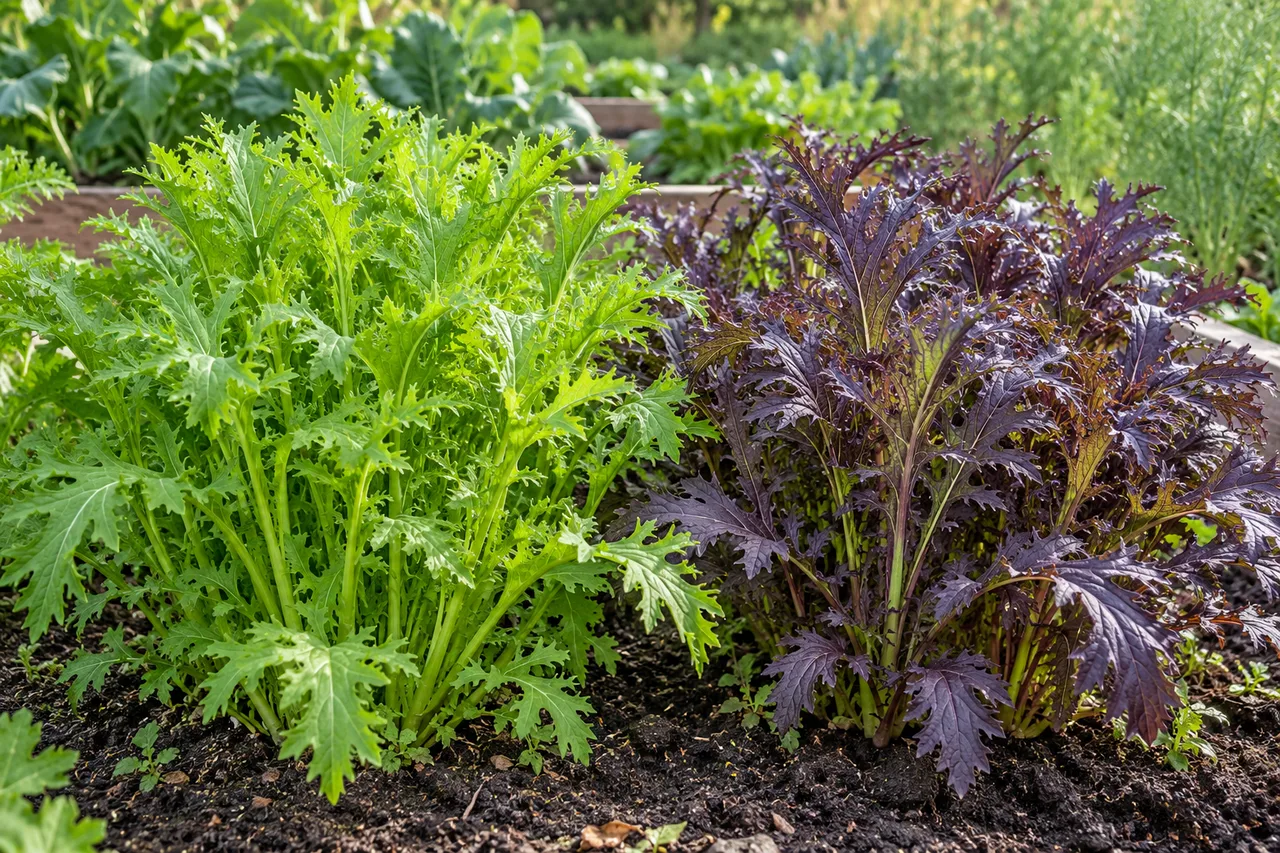
This image was created with AI from described plant characteristics and growing advice. It shows a possible situation and is not a photograph of a verified cultivar.
Mustard leaves in a cool harvesting bed
Sow for a cool growing window; allow space for picking; harvest outer leaves and retain the heart.
- Sow for a cool growing window.
- Allow space for leaf picking.
- Harvest outer leaves and retain the centre.
For loose leaf plants or cutting rows during a cool growing window.
Tick off your supplies →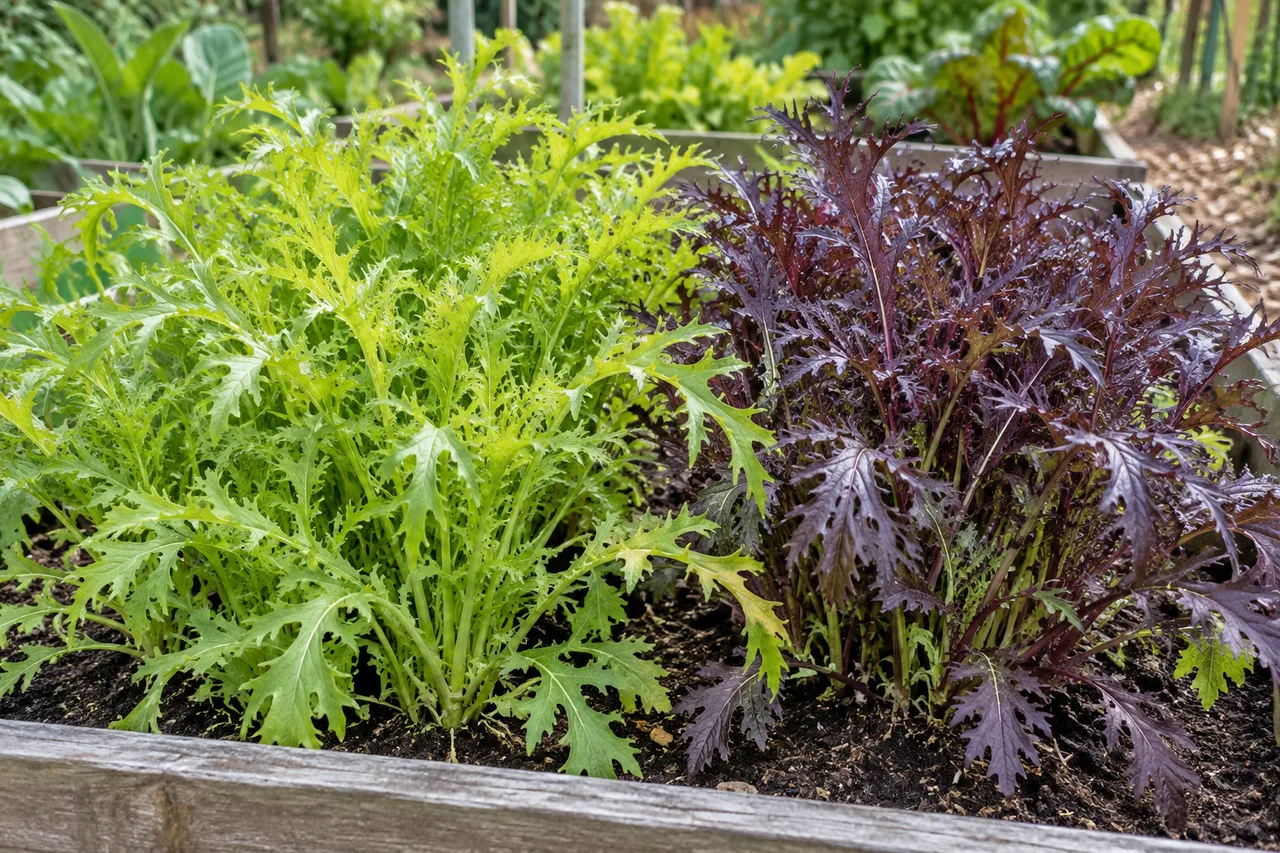
This image was created with AI from described plant characteristics and growing advice. It shows a possible situation and is not a photograph of a verified cultivar.
Spicy leaves from a salad container
Fill a free-draining container; sow a named selection; keep soil moist and cut young leaves.
- Fill a free-draining container.
- Sow a named selection.
- Keep soil moist and cut young leaves.
For small, spicy portions beside other salad crops.
Tick off your supplies →Why grow Green in Snow?
Green in Snow produces green mustard leaves for repeated picking. The wintry name alone does not guarantee protection against every frost.
Choose this selection for green leaves and an emphasis on cooler growing, particularly for regular small cuttings.
How this choice tastes
The source states a sharp mustard flavour. Exact intensity compared with other mustard leaf selections is not substantiated.
From harvest to kitchen
Use small amounts raw as a sharp addition. In cooked dishes, mix leaves with gentler leafy vegetables.
What needs attention when growing
Keep the sowing evenly moist and choose short, cool days as a favourable growing window. Check winter protection against the local weather.
Cut leaves and retain the heart for repeat harvests. Harvest before bolting flower stems displace tender leaf formation.
A pungent leafy vegetable
Mustard greens here means Brassica juncea, with selections such as Golden Frills and Purple Frills. Leaf shape and colour offer an initial guide; pungency belongs to the crop and the described offering. Expect loose leaves with their own markings. This is a different choice from sowing yellow mustard for ground cover or growing mustard cress on a tray.
Making use of a cool period
The producer describes Golden Frills as particularly suited to cool growing conditions. A sunny leaf bed or container can serve this purpose. Warm summer growing makes bolting more likely. Place different leaf colours side by side for comparison, but keep cultivar labels visible. Without labels, a beautiful colour mix is difficult to trace back to a seed choice later.
First choose between baby leaves and a full plant
Dense sowing produces young cutting leaves; wider thinning gives individual plants room to grow on. Choose one of these aims for the first trial. Sow thinly and keep the surface moist. Follow the packet for the chosen cultivar and system, because a cutting row and a full-sized plant need different spacing.
An accessible salad container
Prepare a level, well-drained bed or use a planter that lets water escape. Label each sowing separately and leave part of the edge clear for watering. This is especially useful for finely divided foliage: you will not need to keep reaching through the plants to get to the soil.
Observe development and feeding damage
Check young leaves regularly and watch for a flower stalk. Delay the next sowing or move it to a cooler season if the crop bolts very quickly. In a container, remember the difference between dry compost and warm air: extra watering alone does not automatically change an unsuitable growing time.
Leaf bed or salad container
In a cool bed, you can compare short rows of different selections. A salad container makes small, fresh portions easy to reach. Use that proximity to your advantage: taste at different ages and record when the pungency is pleasant. A container does not require a new cultivar; the same selection can be followed in both growing systems.
Pick a little and reassess
Take young leaves for a first harvest and leave enough plant if you want to observe further development. For a cutting crop, a small test cut is useful before harvesting everything. Lay young and older leaves out separately. This lets you see the effect of harvest stage without inventing an unproven flavour difference between cultivars.
Using pungency in moderation
Add a small amount of mustard greens to a salad or cook briefly in a hot dish. Combine a first portion with mild leaves so the mustard note does not dominate. Golden Frills has fine green leaves; Purple Frills adds purple colour. Colour choice and the desired amount of heat are two separate decisions.
What you need
Tick what you already have. The extras depend on how you grow.
0 of 5 ticked off
Your ticks are saved in this browser.
Discover and grow more
More background, sources and image information
SeedSteps editorial team · updated on 11 October 2026. The AI images illustrate species and practical growing situations; they do not prove an exact cultivar, observations from your own garden or yield.
Britse gewasadviezen worden gecombineerd met Nederlandse en Vlaamse informatie waar beschikbaar. Amerikaanse Extension-bronnen ondersteunen plantprincipes en herkenning; hun kalenderdata, lokale plaagdruk, bestrijdingsmiddelen en mestdoseringen worden niet rechtstreeks op Nederland of Vlaanderen toegepast. Vorst, bodemwarmte, standplaats en expliciete rasinformatie blijven de lokale controle. Commerciële bronnen onderbouwen uitsluitend benoemde ras- en plantkenmerken; zij zijn geen affiliate-aanbeveling.
- Bruine mosterd Green in snow uit China zaden biologischFeggies · accessed 2026-10-11
- Bladmosterd 'Golden Frills' BiologischFeggies · accessed 2026-10-11
- Bladmosterd ‘Purple Frills’ BiologischFeggies · accessed 2026-10-11
- Mosterd rood Chinese Red Giant zaden biologischFeggies · accessed 2026-10-11
- Bladmosterd Golden FrillsDe Bolster · accessed 2026-10-11
Supporting evidence by chapter: Why grow Green in Snow?: Feggies. How this choice tastes: Feggies. From harvest to kitchen: Feggies. What needs attention when growing: Feggies. A pungent leafy vegetable: Feggies, De Bolster, Feggies. Making use of a cool period: Feggies, De Bolster. First choose between baby leaves and a full plant: Feggies, De Bolster. An accessible salad container: Feggies, De Bolster. Observe development and feeding damage: Feggies, De Bolster. Leaf bed or salad container: Feggies, De Bolster, Feggies. Pick a little and reassess: Feggies, De Bolster. Using pungency in moderation: Feggies, De Bolster, Feggies.
Main colour: Green Beschrijving van de genoemde rasbron; geen eigen tuinwaarneming. Feggies
Flavour: The source states a sharp mustard flavour. Exact intensity compared with other mustard leaf selections is not substantiated. Smaakbeschrijving van de rasbron, vertaald naar eigen woorden. Rijpheid, teelt en bereiding beïnvloeden de smaak. Feggies