
Christmas: discover its flavour and how to grow it
Large, marbled lima beans on a vigorous climber. Choose Christmas for large white and reddish-brown marbled beans and a tall climbing crop. The unusual bean shape suits a small trial patch with warmth and enough season.
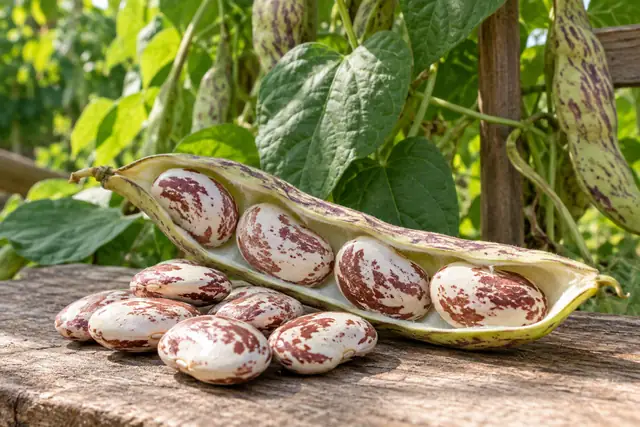
This image was created with AI from described plant characteristics and growing advice. It shows a possible situation and is not a photograph of a verified cultivar.
- Crop
- Phaseolus lunatus
- Start
- After frost, once soil warms
- Harvested part
- Shelled seeds, thoroughly cooked
- Support
- Tall sturdy frame for climbing types
This growing advice helps you choose. Your variety, growth stage, weather and conditions in your space determine the actual timing.
Sowing under cover and raising seedlings
Start briefly under cover or sow directly · Lima beans
Late April–MayStart briefly under cover in individual pots. Ensure you can plant out into warmth after a few weeks.
- Germination and temperature
- Sow in warmth; cold, persistently wet soil increases the risk of failure.
- After emergence
- Give seedlings light immediately after emergence. A dark loft needs suitable grow lights; warmth alone is insufficient. Ventilate and keep the compost moist without saturating it.
- Pricking out and potting on
- Sow in individual pots or deep modules. Do not prick out bare-rooted; move the whole root ball before the roots become restricted.
- Hardening off and planting out
- Gradually acclimatise indoor-raised plants to sun, wind and outdoor temperatures; shelter them again on cold nights. Plant out after the last frost with the whole root ball; install supports beforehand for climbing types.
Choose a cultivar suited to the short Dutch season. Lima beans need plenty of warmth; a cool summer can limit ripening.
Sources and use
RHS · bonen ↗Britse teeltrichtlijn voor een gematigd klimaat; de genoemde perioden zijn richtlijnen voor Nederland en Vlaanderen.
Feggies · Klimmende Limabonen - Christmas Biologisch ↗Nederlandse producent of teeltbron; de rasinstructie blijft leidend.
University of Minnesota Extension · Growing beans in home gardens ↗Soort- of productgebonden bron; buitenlandse perioden zijn geen vaste Nederlandse zaaidatum.
Guideline periods for the Netherlands and Flanders. Check the variety, available light, soil and measured temperatures. Greenhouse heating does not guarantee enough winter light.
What makes Christmas different?
- Fruit shape
- large, flat beans
- Growth habit
- climbing
- Main colour
- white with reddish-brown marbling
- Flavour
- The supplier describes Christmas as having a chestnut-like aroma and sweet-potato-like texture. Use this as a tasting direction for thoroughly cooked beans without guaranteeing the same flavour every harvest.
The source context and any limitations are in the background information at the bottom.
Compare with another varietyFlavour and kitchen
The supplier describes Christmas as having a chestnut-like aroma and sweet-potato-like texture. Use this as a tasting direction for thoroughly cooked beans without guaranteeing the same flavour every harvest.
Shell the large beans and cook them thoroughly for a creamy stew. Soak dried storage beans first; the pod wall is not intended for use as a slicing bean.
Why choose it? Choose Christmas for large white and reddish-brown marbled beans and a tall climbing crop. The unusual bean shape suits a small trial patch with warmth and enough season.
How to grow lima bean
The options below belong to the plant. From these, choose the method that suits your variety's growth habit.
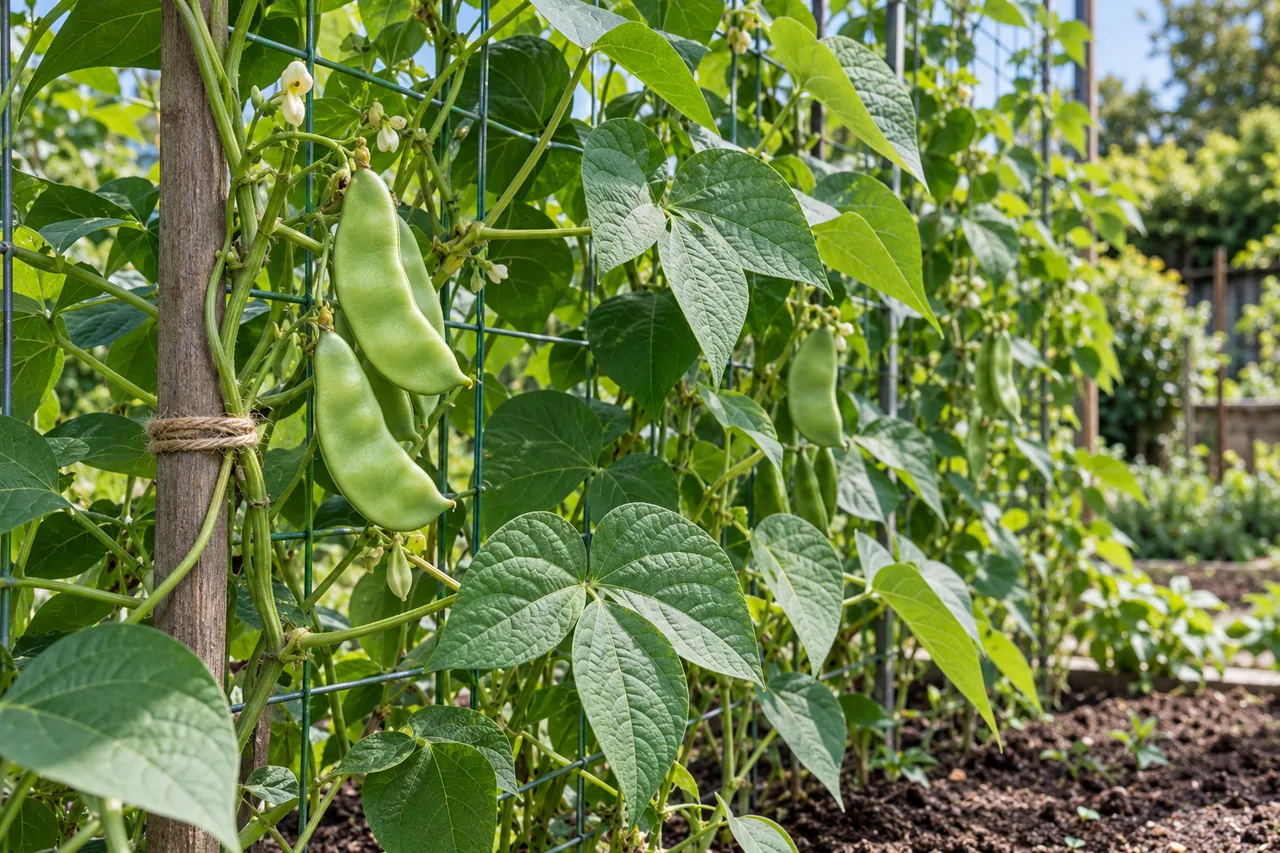
This image was created with AI from described plant characteristics and growing advice. It shows a possible situation and is not a photograph of a verified cultivar.
A sheltered position with a climbing frame
Use a warm, sunny corner and give the climber strong support.
- Install a tall, sturdy frame in a sheltered, sunny position.
- Sow in warm soil after frost or plant out plants briefly started in warmth.
- Guide young vines loosely to support and check moisture during pod filling.
For a warm garden as a small trial crop, without guaranteed dry stores.
Tick off your supplies →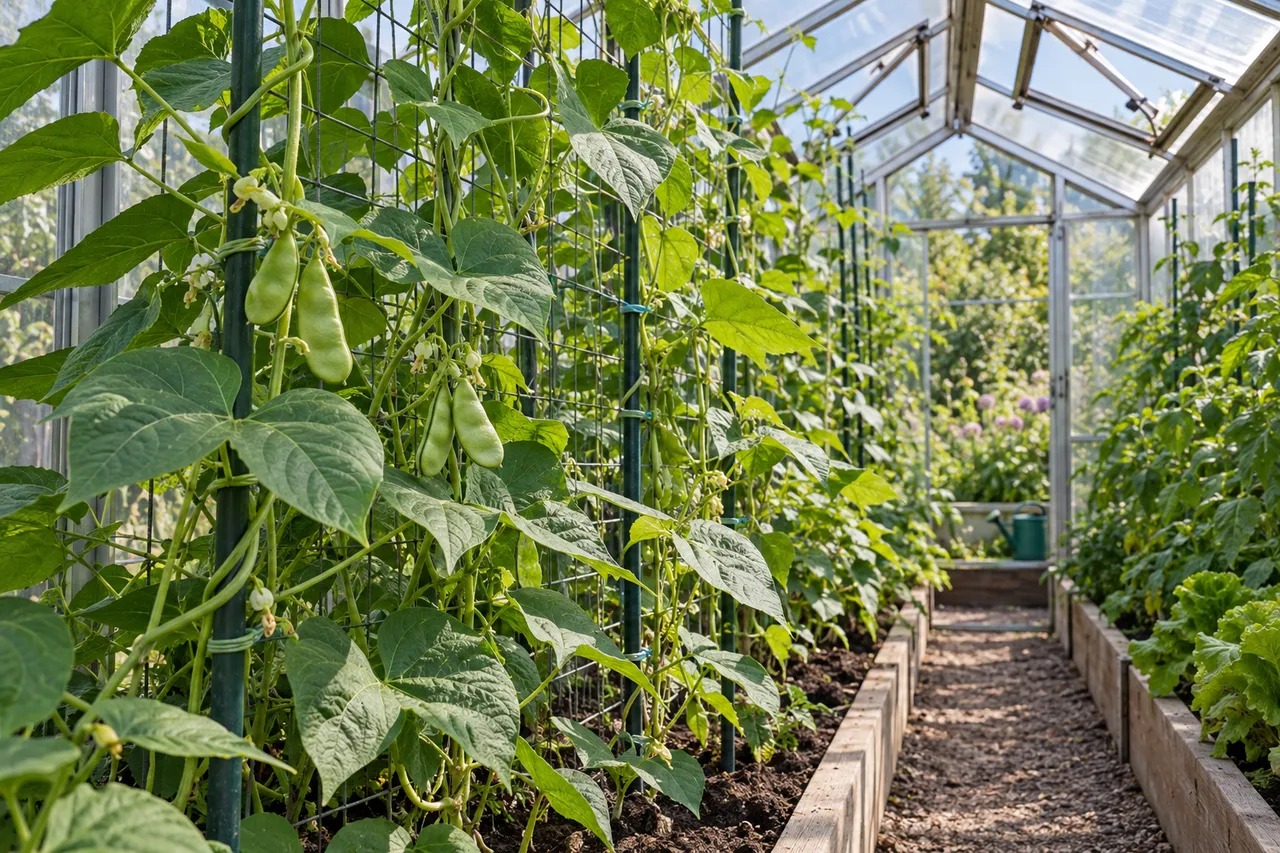
This image was created with AI from described plant characteristics and growing advice. It shows a possible situation and is not a photograph of a verified cultivar.
Along support in a ventilated greenhouse
Try extra warmth where outdoor ripening is uncertain.
- Install climbing support without damaging the greenhouse structure.
- Plant with root space and ventilate the greenhouse well every day.
- Check water and filled pods; leave a small part to ripen further for a growing trial.
For a greenhouse with sufficient height; yield depends on variety, season and care.
Tick off your supplies →Why grow Christmas?
Large, marbled lima beans on a vigorous climber.
Choose Christmas for large white and reddish-brown marbled beans and a tall climbing crop. The unusual bean shape suits a small trial patch with warmth and enough season.
How this choice tastes
The supplier describes Christmas as having a chestnut-like aroma and sweet-potato-like texture. Use this as a tasting direction for thoroughly cooked beans without guaranteeing the same flavour every harvest.
From harvest to kitchen
Shell the large beans and cook them thoroughly for a creamy stew. Soak dried storage beans first; the pod wall is not intended for use as a slicing bean.
What needs attention when growing
This crop needs more warmth than ordinary spring pod crops. Sow after frost in warm soil or start briefly in warmth; install a sturdy, tall frame before planting out.
Harvest well-filled pods for fresh shelling or let some dry completely. Foreign maturity days are no Dutch guarantee; sheltered warmth can improve ripening.
A different bean for cooking
Lima bean is Phaseolus lunatus, grown for beans, not ordinary slicing-bean pod walls. Dwarf and climbing forms exist; Christmas offered here climbs vigorously. Large, flat beans are white with red-brown marbling, making shelling distinctive.
Warmth determines your approach
Start with a small trial in the warmest sheltered position. Minnesota stresses warm sowing soil; its calendar and commercial maturity days reflect different conditions. Cool Dutch summers can delay filling. Sheltered outdoors and ventilated greenhouses offer different chances to assess this.
Sow without a cold, wet start
Wait outdoors until the last frost has passed and soil truly warmed. Sow in loose, draining soil according to packaging. Brief warm starting in separate pots allows intact-root-ball planting. Long indoor raising in undersized pots creates needless stress.
Put up the frame first
Install support before sowing or planting to avoid later root damage. Allow for a tall vigorous climber. Guide young vines with loose soft loops, leaving thickening room. Inspect ties regularly, especially where stems rub fixed edges.
Water while filling out
An airy crop and sufficiently moist root zone help pods grow. During drought, water directly at the soil rather than making watering a daily wet-leaf ritual. Nitrogen-rich overfeeding is unnecessary for beans. In a greenhouse, warmth also calls for ventilation; extreme heat and stagnant moisture are not automatic advantages.
Look at the growth stage
Check young plants for slugs and avoid seed in cold, wet soil. If pods stay small, assess warmth, remaining growing time and moisture first. Record flowering and filling starts; these help next trials more than fixed foreign day counts.
Shell fresh or store dry
For fresh shelling, harvest well-filled pods before they dry completely. For storage, wait for pods and seeds to ripen dry. Approaching wet autumn weather may require further drying under an airy roof. Keep both harvests clearly separate and seal stored seed only when fully dry.
Cook until the bean is tender
Shell beans and cook fully. Purdue advises soaking dried lima beans first; follow reliable cooking and check softness. Christmas's chestnut-like flavour offers tasting direction. Serve simply in creamy vegetable stew; wet or immature beans are no dry storage supply.
What you need
Tick what you already have. The extras depend on how you grow.
0 of 4 ticked off
Your ticks are saved in this browser.
Discover and grow more
More background, sources and image information
SeedSteps editorial team · updated on 11 October 2026. The AI images illustrate species and practical growing situations; they do not prove an exact cultivar, observations from your own garden or yield.
Britse gewasadviezen worden gecombineerd met Nederlandse en Vlaamse informatie waar beschikbaar. Amerikaanse Extension-bronnen ondersteunen plantprincipes en herkenning; hun kalenderdata, lokale plaagdruk, bestrijdingsmiddelen en mestdoseringen worden niet rechtstreeks op Nederland of Vlaanderen toegepast. Vorst, bodemwarmte, standplaats en expliciete rasinformatie blijven de lokale controle. Commerciële bronnen onderbouwen uitsluitend benoemde ras- en plantkenmerken; zij zijn geen affiliate-aanbeveling.
- Plants of the World Online — Phaseolus lunatus L.Royal Botanic Gardens, Kew · accessed 2026-10-11
- World Checklist of Vascular Plants — 4 juni 2026Royal Botanic Gardens, Kew · accessed 2026-10-07
- Klimmende Limabonen - Christmas BiologischFeggies · accessed 2026-10-11
- Lima bean: bereiding en typenPurdue Extension · accessed 2026-10-11
- Growing beans in home gardensUniversity of Minnesota Extension · accessed 2026-10-11
Supporting evidence by chapter: Why grow Christmas?: Feggies, Purdue Extension. How this choice tastes: Feggies, Purdue Extension. From harvest to kitchen: Feggies, Purdue Extension. What needs attention when growing: Feggies, Purdue Extension. A different bean for cooking: Feggies, Purdue Extension. Warmth determines your approach: University of Minnesota Extension, Feggies. Sow without a cold, wet start: University of Minnesota Extension, Feggies. Put up the frame first: Feggies, University of Minnesota Extension. Water while filling out: University of Minnesota Extension, Feggies. Look at the growth stage: University of Minnesota Extension. Shell fresh or store dry: University of Minnesota Extension, Feggies. Cook until the bean is tender: Purdue Extension, Feggies.
Fruit shape: large, flat beans Beschrijving van de genoemde rasbron; geen eigen tuinwaarneming. Feggies, Purdue Extension
Growth habit: climbing Beschrijving van de genoemde rasbron; geen eigen tuinwaarneming. Feggies, Purdue Extension
Main colour: white with reddish-brown marbling Beschrijving van de genoemde rasbron; geen eigen tuinwaarneming. Feggies, Purdue Extension
Flavour: The supplier describes Christmas as having a chestnut-like aroma and sweet-potato-like texture. Use this as a tasting direction for thoroughly cooked beans without guaranteeing the same flavour every harvest. Smaakbeschrijving van de rasbron, vertaald naar eigen woorden. Rijpheid, teelt en bereiding beïnvloeden de smaak. Feggies, Purdue Extension