
Jolant: een plek in jouw tuin
Ontdek Jolant en kies hoe je prei wilt kweken. Hieronder staan de bevestigde rasgegevens en de praktische teeltgids voor deze groente.
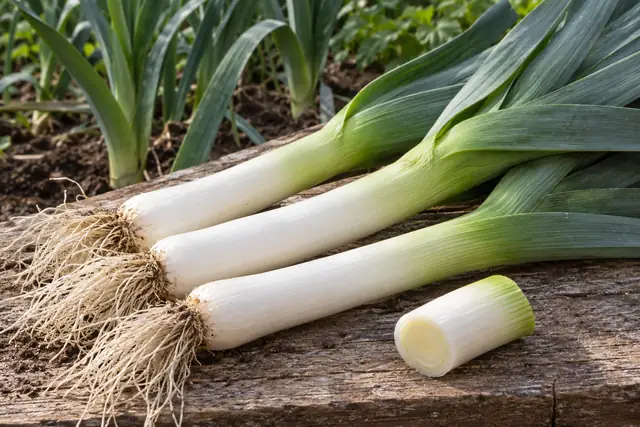
This image was created with AI from described plant characteristics and growing advice. It shows a possible situation and is not a photograph of a verified cultivar.
- Location
- Sun; moisture-retentive soil with good drainage
- Start
- Sow indoors or use young plants; variety determines harvest season
- Space
- Usually 15–20 cm between mature plants, approximately 30 cm between rows
- Harvest
- Young as baby leeks, or later at full thickness
This growing advice helps you choose. Your variety, growth stage, weather and conditions in your space determine the actual timing.
Sowing under cover and raising seedlings
Start under cover in a cool, bright position · Leek
February–April, depending on harvest typeStart in good light without excessive warmth; follow cultivar guidance for early leek.
- Germination and temperature
- Germinate under cover, then grow on in good light without excessive warmth.
- After emergence
- Give seedlings light immediately after emergence. A dark loft needs suitable grow lights; warmth alone is insufficient. Ventilate and keep the compost moist without saturating it.
- Pricking out and potting on
- Sow in a deep container, modules or a seedbed. Let plants grow on until sturdy enough to plant out.
- Hardening off and planting out
- Gradually acclimatise indoor-raised plants to sun, wind and outdoor temperatures; shelter them again on cold nights. Plant out sturdy young leeks, generally in late spring or summer; harvest type and cultivar determine planning.
Summer, autumn and winter leeks follow different schedules. Do not sow all leeks in the same month.
Sources and use
Royal Horticultural Society · How to grow leeks ↗Soort- of productgebonden bron; buitenlandse perioden zijn geen vaste Nederlandse zaaidatum.
Utah State University Extension · How to grow leeks in your garden ↗Soort- of productgebonden bron; buitenlandse perioden zijn geen vaste Nederlandse zaaidatum.
Guideline periods for the Netherlands and Flanders. Check the variety, available light, soil and measured temperatures. Greenhouse heating does not guarantee enough winter light.
How to grow leek
The options below belong to the plant. From these, choose the method that suits your variety's growth habit.
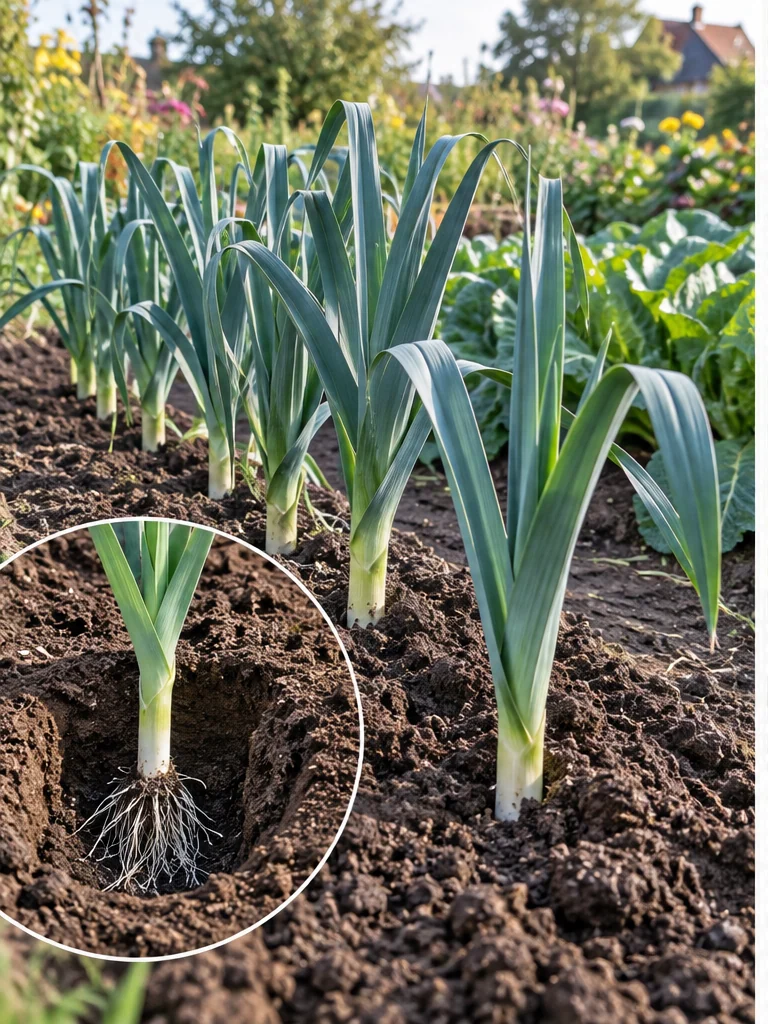
This image was created with AI from described plant characteristics and growing advice. It shows a possible situation and is not a photograph of a verified cultivar.
Plant deeply in the vegetable bed
A row of leeks provides an autumn or winter harvest without daily picking. Choose a winter variety if the plants need to remain outdoors.
- Sow thinly in a tray or separate seedbed and let plants strengthen.
- For pencil-thick plants, make loose holes approximately 15 cm deep; adjust depth to plant length.
- Place one plant per hole, keep its green heart above soil and water the hole.
- Let soil wash in gradually and earth up carefully later without pushing soil between the leaves.
For a generous harvest and varieties suited to autumn or winter.
Tick off your supplies →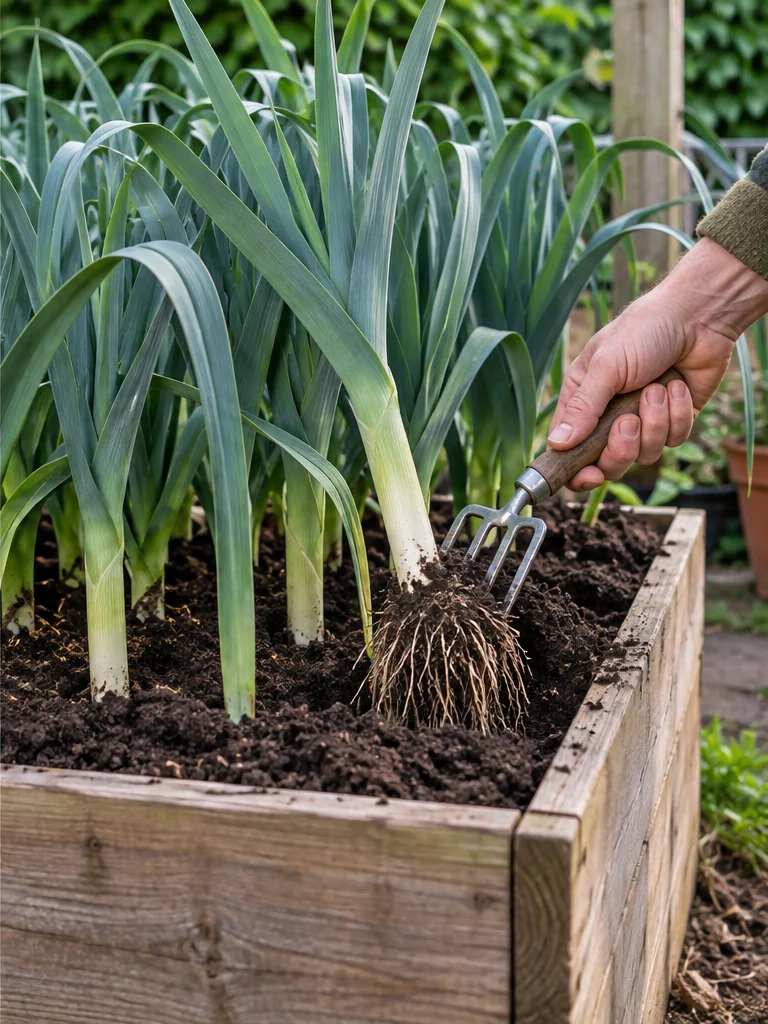
This image was created with AI from described plant characteristics and growing advice. It shows a possible situation and is not a photograph of a verified cultivar.
Baby leeks in a deep container
Young leeks need not have a thick white shank to be usable. A deep container makes growth manageable and looks attractive beside other kitchen vegetables.
- Use a deep container with free drainage and airy compost.
- Sow thinly or plant sturdy young leeks; give them room to thicken.
- Check moisture more often than in open ground and remove weeds early.
- Harvest a few young leeks to make room for the rest.
For patios and small portions; full size needs more soil volume.
Tick off your supplies →Choose by flavour, shape and use
Herfstreuzen: Herfstreuzen is intended for a late autumn crop. The name emphasises timing, but does not guarantee an exceptional size in every bed. Slice the shank into rings for soup or cook longer pieces gently. Wash away any soil left between the leaf layers.
A distinct aroma profile for this selection is lacking. Mild onion-like use is given as general leek information.
St Victor: St Victor is a winter-focused leek with upright blue-purple leaves. The source describes a half-long shaft and compact winter development. Use the shaft in soup or a slowly cooked dish. Healthy green leaves can be included in a stock base.
The product source gives no specific St Victor aroma. Leaf colour says nothing about a proven difference in sweetness.
Jaune du Poitou: Early, fast-growing summer leek with blond-green leaves. The source emphasises relatively broad shanks. Cook young shanks in longer pieces or use rings in a summer vegetable dish. Harvesting tender provides several possible uses.
A distinct cultivar aroma is not described. The summer growing window offers a more reliable reason for choosing it than an unproven flavour difference.
Start with the desired harvest time
Summer, autumn and winter leeks follow different growing paths. An early leek is not an automatic replacement for a winter cultivar. Read the sowing time on the packet and first choose when to harvest; then optionally divide two cultivars across the bed.
From thin shoot to sturdy plant
Sow thinly in fine seed compost in spring, about 1–1.5 cm deep. Keep the surface slightly moist and provide light. A seedbed saves main-bed space, while starting in pots makes germination and care more visible.
Make room for the white shaft
Transplant once sturdy enough to handle. Ease roots apart carefully and do not let them dry. Plant deeper than in the seed tray, keeping the growing point free. Watering settles loose soil around roots without firm pressing.
Feeding without wet soil
Work mature compost into the bed or use a well-rotted surface layer. Leeks stay in place for a long time and benefit from cared-for soil. Avoid standing water and rotate the onion family with other crops in following years.
Keep the young row open
Narrow foliage barely covers soil. Weed regularly, by hand near shanks. Water soil generously during prolonged drought. Containers hold less: even in cool weather, check whether the root zone is drying.
Blanch without sand in the heart
For a longer white portion, draw loose soil against the lower shaft in several small stages. Do not fill the leaf heart. A large heap at once increases the chance of soil between leaves; a shorter white portion is perfectly usable too.
Rust, feeding damage and a flower stalk
Orange patches can indicate leek rust; airy spacing and soil-level watering reduce wet foliage. Shank tunnels or damage may indicate insects. Consider closed mesh and remove badly affected plants. Bolting toughens the centre: harvest promptly.
Lift only what you will use
Loosen soil beside the row with a fork, then ease leeks upwards. Harvest alternately if remaining plants can grow. Only suitable winter varieties should stay outside long; frozen ground can temporarily prevent harvesting.
Use the healthy greens too
Rinse carefully between leaf layers after harvest. Both white and healthy green parts are usable, although firm greens often need longer cooking. Store leeks cool and use damaged ones first. Record shaft thickness and harvest period to improve next year’s cultivar choice.
What you need
Tick what you already have. The extras depend on how you grow.
0 of 6 ticked off
Your ticks are saved in this browser.
Discover and grow more
More background, sources and image information
SeedSteps editorial team · updated on 11 October 2026. The AI images illustrate species and practical growing situations; they do not prove an exact cultivar, observations from your own garden or yield.
Britse gewasadviezen worden gecombineerd met Nederlandse en Vlaamse informatie waar beschikbaar. Amerikaanse Extension-bronnen ondersteunen plantprincipes en herkenning; hun kalenderdata, lokale plaagdruk, bestrijdingsmiddelen en mestdoseringen worden niet rechtstreeks op Nederland of Vlaanderen toegepast. Vorst, bodemwarmte, standplaats en expliciete rasinformatie blijven de lokale controle. Commerciële bronnen onderbouwen uitsluitend benoemde ras- en plantkenmerken; zij zijn geen affiliate-aanbeveling.
- World Checklist of Vascular Plants — 4 juni 2026Royal Botanic Gardens, Kew · accessed 2026-10-07
- Common catalogue of varieties of vegetable species — 27 januari 2023Europese Commissie · accessed 2026-10-07
- Prei herfstreuzen zaden organicFeggies · accessed 2026-10-11
- Prei St Victor zadenFeggies · accessed 2026-10-11
- Zomer prei Jaune du Poitou zadenFeggies · accessed 2026-10-11
- How to grow leeksRoyal Horticultural Society · accessed 2026-10-10
- How to grow leeks in your gardenUtah State University Extension · accessed 2026-10-10
Supporting evidence by chapter: Choose by flavour, shape and use: Feggies, Feggies, Feggies. Start with the desired harvest time: Royal Horticultural Society, Utah State University Extension. From thin shoot to sturdy plant: Royal Horticultural Society, Utah State University Extension. Make room for the white shaft: Royal Horticultural Society, Utah State University Extension. Feeding without wet soil: Royal Horticultural Society, Utah State University Extension. Keep the young row open: Royal Horticultural Society, Utah State University Extension. Blanch without sand in the heart: Royal Horticultural Society, Utah State University Extension. Rust, feeding damage and a flower stalk: Royal Horticultural Society, Utah State University Extension. Lift only what you will use: Royal Horticultural Society, Utah State University Extension. Use the healthy greens too: Royal Horticultural Society, Utah State University Extension.