
Leaf celery
Leaf celery
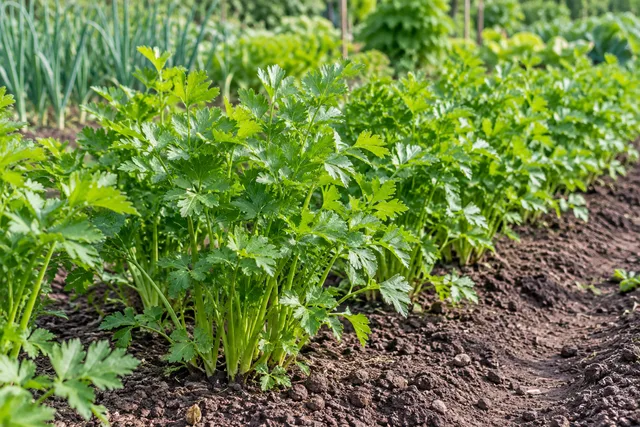
This image was created with AI from described plant characteristics and growing advice. It shows a possible situation and is not a photograph of a verified cultivar.
- Botanical name
- Apium graveolens
- Botanical group
- Apium graveolens; leafy crop
- Position
- Sun or partial shade
- Harvest
- Repeated small leaf cuttings
This growing advice helps you choose. Your variety, growth stage, weather and conditions in your space determine the actual timing.
Sowing under cover and raising seedlings
Start early indoors · Leaf celery
March; celery mid-March–early AprilStart indoors in good light and prevent a cold-induced growth check in young plants.
- Germination and temperature
- Germinate in warm, bright conditions according to species guidance. Protect young plants from prolonged cold; keep celeriac above about 10 °C.
- After emergence
- Give seedlings light immediately after emergence. A dark loft needs suitable grow lights; warmth alone is insufficient. Ventilate and keep the compost moist without saturating it.
- Pricking out and potting on
- Sow fine seed shallowly according to the packet; prick out manageable seedlings into individual modules.
- Hardening off and planting out
- Gradually acclimatise indoor-raised plants to sun, wind and outdoor temperatures; shelter them again on cold nights. Plant in late spring or early summer during milder weather. Keep the heart of celeriac above ground.
Celeriac has a long season. Celery and leaf celery have different harvest aims; use their own cultivar instructions.
Sources and use
RHS · knolselderij ↗Britse teeltrichtlijn voor een gematigd klimaat; de genoemde perioden zijn richtlijnen voor Nederland en Vlaanderen.
De Bolster · Snijselderij Gewone Snij ↗Nederlandse producent of teeltbron; de rasinstructie blijft leidend.
Feggies · Snijselderij 'Gewone Snij' Biologisch ↗Nederlandse producent of teeltbron; de rasinstructie blijft leidend.
Guideline periods for the Netherlands and Flanders. Check the variety, available light, soil and measured temperatures. Greenhouse heating does not guarantee enough winter light.
A different flavour, a different harvest.
Choose by more than the name. Discover how these varieties and crop types taste, what you can use them for and what growing them involves.
1 of 1 choices · 1 named varieties
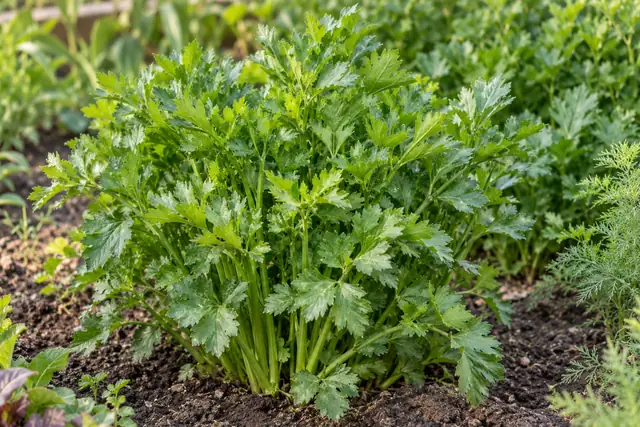
This image was created with AI from described plant characteristics and growing advice. It shows a possible situation and is not a photograph of a verified cultivar.
Gewone Snij
Gewone Snij is celery for repeated leaf harvests. The source describes somewhat coarser leaves and lower susceptibility to leaf spot disease.
Choose this variety for frequent small pickings near the kitchen. It can also grow in a position with some shade.
Flavour, kitchen and growing
How does it taste?
Celery flavour is crop information; the source does not substantiate a special aroma for Gewone Snij. Lower disease susceptibility also does not mean immunity.
This flavour description applies to the crop; there is no separate tasting result for this variety.In the kitchen
Cut a small portion for soup, stock or a vegetable base. You use the green celery leaves, not a swollen root or broad blanched ribs.
A space in the garden
Sow shallowly and allow emergence time in cool conditions. Germination speeds up as soil warms.
Harvesting
Cut healthy leaves above the growing base and let the plant recover. Regrowth lets you take several small portions from the same plants.
Read the source notes →Choose your way to grow
From a garden bed to a suitable pot or support: give your plant a place that suits your garden and the care you can provide.
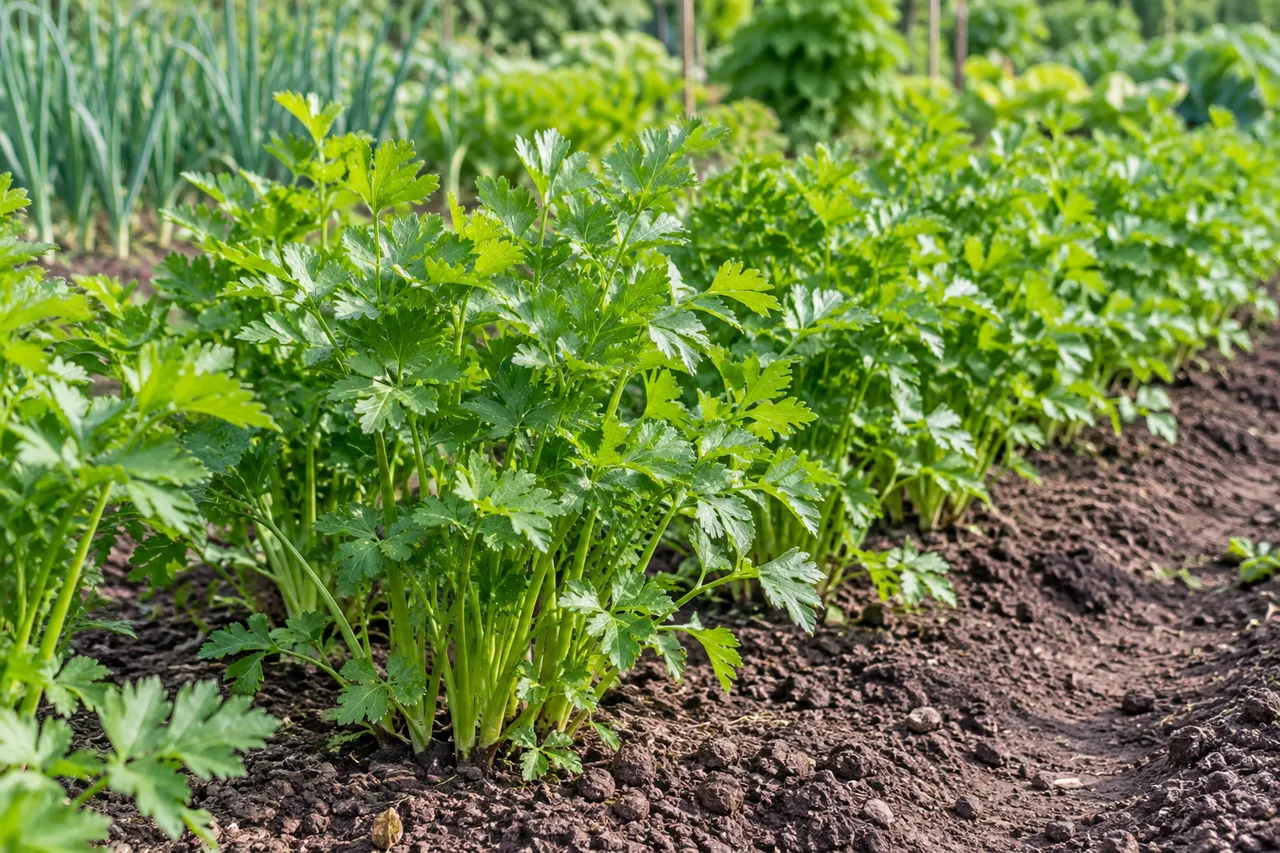
This image was created with AI from described plant characteristics and growing advice. It shows a possible situation and is not a photograph of a verified cultivar.
Repeated cut harvests in rows
Sow shallowly and allow germination time; keep young roots moist; cut healthy leaves above the growing point.
- Sow shallowly and allow germination time.
- Keep the young root zone moist.
- Cut healthy leaves above the growing point.
For repeated small leaf cuts in an identifiable vegetable row.
Tick off your supplies →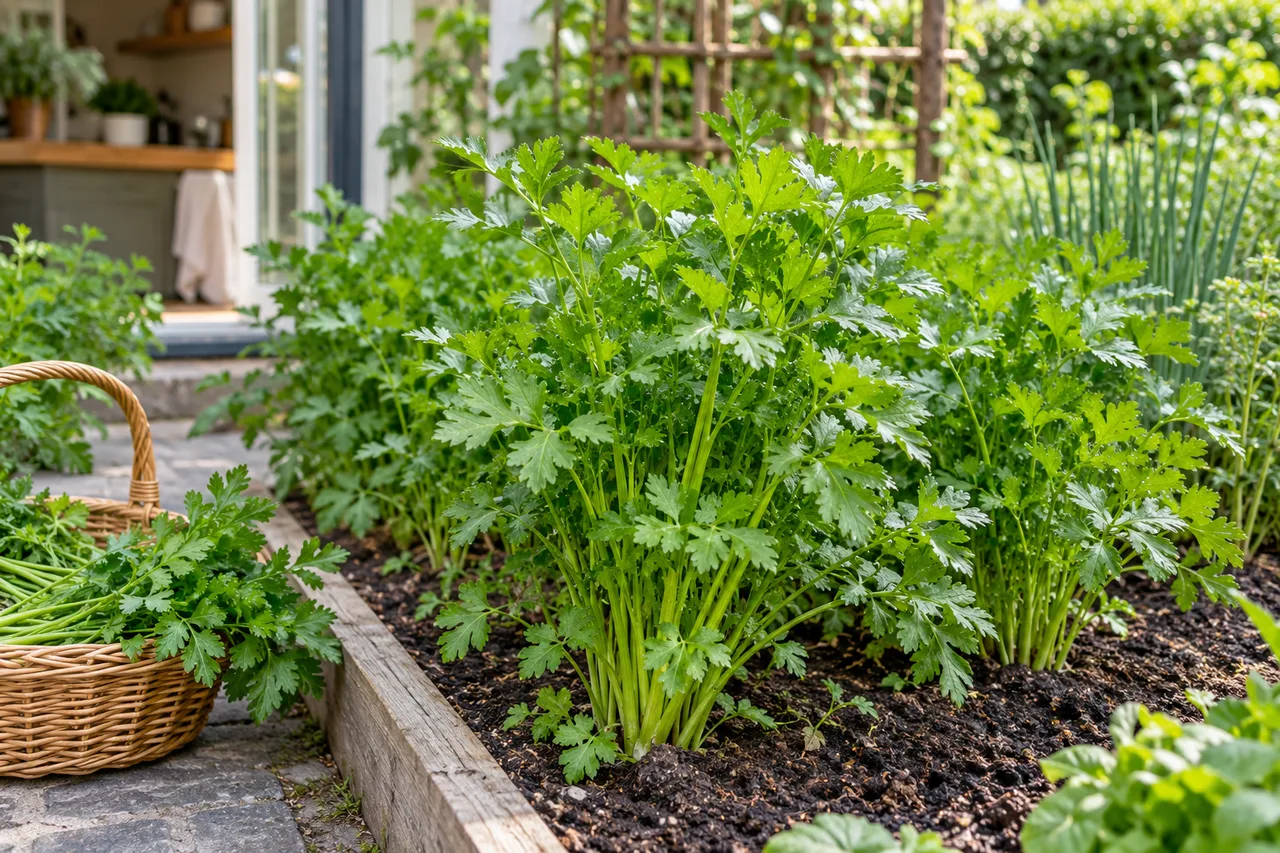
This image was created with AI from described plant characteristics and growing advice. It shows a possible situation and is not a photograph of a verified cultivar.
Leaf celery beside the kitchen
Fill a free-draining container; sow thinly for regular picking; harvest a little and let the base keep growing.
- Fill a free-draining container.
- Sow thinly for regular leaf picking.
- Harvest a small amount and let the base keep growing.
For fresh portions of aromatic leaves near the kitchen.
Tick off your supplies →Explore the varieties
See the confirmed differences. Characteristics without supporting evidence are left blank.
0 of 0 varieties
No matching variety found. Try another name or clear the filters.
Choose two to four varieties to compare their source data side by side.
Choose by flavour, shape and use
Gewone Snij: Gewone Snij is celery for repeated leaf harvests. The source describes somewhat coarser leaves and lower susceptibility to leaf spot disease. Cut a small portion for soup, stock or a vegetable base. You use the green celery leaves, not a swollen root or broad blanched ribs.
Celery flavour is crop information; the source does not substantiate a special aroma for Gewone Snij. Lower disease susceptibility also does not mean immunity.
Celery for leaves
Leaf celery is Apium graveolens grown for aromatic leaves and thin stems, not celery's thick ribs or celeriac's swollen root. The producer gives Gewone Snij somewhat coarser leaves. This aids recognition without changing the aim: small fresh kitchen portions.
Light or partial shade
De Bolster describes leaf celery for sun and partial shade. Choose an accessible row or container near the kitchen for regular small leaf harvests. Behind large crops, identical soil may exist but daily picking becomes much harder.
Patience with early sowing
Leaf celery can be sown from spring, but low soil temperatures slow germination. Warmth speeds starts. Follow packets for seed choice and label. Assess emergence before resowing apparently empty beds to avoid unintended mixed successive crops.
A clearly marked row or container
Level the surface and keep starts moist without standing water. The producer describes narrow, densely occupied rows for cutting. Containers need drainage and reachable watering. Use little for first trials to observe rows well after cutting.
New growth after a small cut
Leaf celery can be cut several times. After harvesting, look for where young leaves reappear and leave enough plant to follow that process. Gewone Snij is described as less susceptible to leaf spot; this does not mean complete resistance. Keep inspecting the leaves during care and do not treat damaged leaves as an example of normal growth.
Leaf crop row or herb container
Leaf rows fit ordinary layouts and repeated short cuts. Herb containers offer little harvests among reachable kitchen herbs. Label and give separate sections. Mixed-herb photos help only if thin-stemmed leaf celery can actually be identified.
A portion for the dish
Cut or pick only what you need for the dish and watch how plants recover afterwards. Keep a first harvest small. This develops a useful routine between picking and further growth without promising a fixed amount per plant. Harvest the next portion based on visible new leaves, not just a calendar date.
Use aroma as a finishing touch
Use fresh leaves in soup, sauce or dishes needing celery notes. Start small and taste before adding. Gewone Snij's coarser leaves are confirmed appearance, not a substantiated sweetness or aroma comparison against all leaf celery varieties.
What you need
Tick what you already have. The extras depend on how you grow.
0 of 5 ticked off
Your ticks are saved in this browser.
Discover and grow more
More background, sources and image information
SeedSteps editorial team · updated on 11 October 2026. The AI images illustrate species and practical growing situations; they do not prove an exact cultivar, observations from your own garden or yield.
Britse gewasadviezen worden gecombineerd met Nederlandse en Vlaamse informatie waar beschikbaar. Amerikaanse Extension-bronnen ondersteunen plantprincipes en herkenning; hun kalenderdata, lokale plaagdruk, bestrijdingsmiddelen en mestdoseringen worden niet rechtstreeks op Nederland of Vlaanderen toegepast. Vorst, bodemwarmte, standplaats en expliciete rasinformatie blijven de lokale controle. Commerciële bronnen onderbouwen uitsluitend benoemde ras- en plantkenmerken; zij zijn geen affiliate-aanbeveling.
- World Checklist of Vascular Plants — 4 juni 2026Royal Botanic Gardens, Kew · accessed 2026-10-07
- Snijselderij 'Gewone Snij' BiologischFeggies · accessed 2026-10-11
- Snijselderij Gewone SnijDe Bolster · accessed 2026-10-11
Supporting evidence by chapter: Choose by flavour, shape and use: Feggies. Celery for leaves: Feggies, De Bolster. Light or partial shade: Feggies, De Bolster. Patience with early sowing: Feggies, De Bolster. A clearly marked row or container: Feggies, De Bolster. New growth after a small cut: Feggies, De Bolster. Leaf crop row or herb container: Feggies, De Bolster. A portion for the dish: Feggies, De Bolster. Use aroma as a finishing touch: Feggies, De Bolster.