
Growing Dior: yellow pods on a manageable, low plant
Dior is a low-growing wax bean with yellow, straight pods. Follow the variety from a warm start to first picking and discover how pod position helps your harvest round.
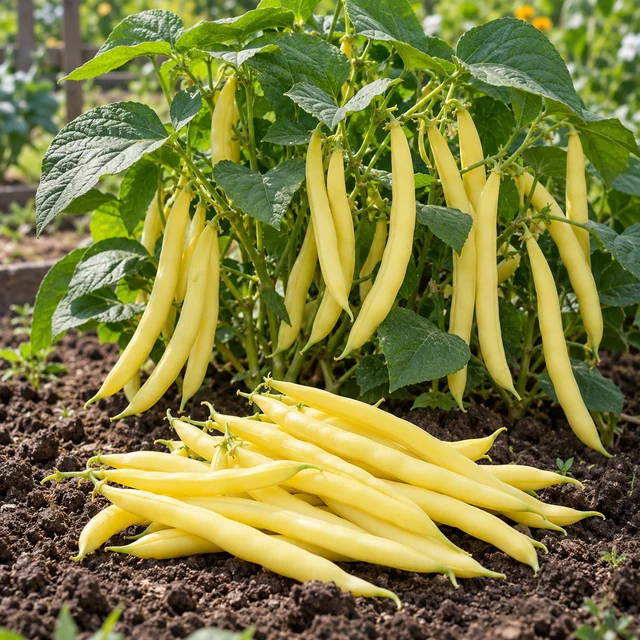
This image was created with AI from described plant characteristics and growing advice. It shows a possible situation and is not a photograph of a verified cultivar.
- Sowing
- After frost, in sufficiently warm soil
- Location
- Sun and good drainage
- Support
- No tall trellis for a true bush variety
- Harvesting
- Follow your variety’s use: young pod or mature bean
This growing advice helps you choose. Your variety, growth stage, weather and conditions in your space determine the actual timing.
Sowing under cover and raising seedlings
Start briefly under cover or sow directly · Dwarf bean
Late April–MayStart briefly under cover in individual pots. Ensure you can plant out into warmth after a few weeks.
- Germination and temperature
- Sow in warmth; cold, persistently wet soil increases the risk of failure.
- After emergence
- Give seedlings light immediately after emergence. A dark loft needs suitable grow lights; warmth alone is insufficient. Ventilate and keep the compost moist without saturating it.
- Pricking out and potting on
- Sow in individual pots or deep modules. Do not prick out bare-rooted; move the whole root ball before the roots become restricted.
- Hardening off and planting out
- Gradually acclimatise indoor-raised plants to sun, wind and outdoor temperatures; shelter them again on cold nights. Plant out after the last frost with the whole root ball; install supports beforehand for climbing types.
Do not start outdoor plants months too early. Beans grow quickly and do not tolerate frost.
Sources and use
Royal Horticultural Society · RHS — boon kweken ↗Soort- of productgebonden bron; buitenlandse perioden zijn geen vaste Nederlandse zaaidatum.
University of Minnesota Extension · UMN Extension — boon in de moestuin ↗Soort- of productgebonden bron; buitenlandse perioden zijn geen vaste Nederlandse zaaidatum.
Guideline periods for the Netherlands and Flanders. Check the variety, available light, soil and measured temperatures. Greenhouse heating does not guarantee enough winter light.
What makes Dior different?
- Fruit size
- 13-14 cm long; 8-9 mm thickNetherlands
- Variety type
- Wax bean for young podsNetherlands
- Growth habit
- Low-growing French bean; pods around the plant's outsideNetherlands
- Height
- 40-60 cmNetherlands
- Light
- Full sunNetherlands
- Main colour
- Yellow podsNetherlands
- Open-pollinated / F1
- Open-pollinatedNetherlands
- Plant spacing
- 45 × 10 cmNetherlands
- Flavour
- Mild flavourNetherlands
The source context and any limitations are in the background information at the bottom.
Compare with another varietyHow to grow dwarf bean
The options below belong to the plant. From these, choose the method that suits your variety's growth habit.
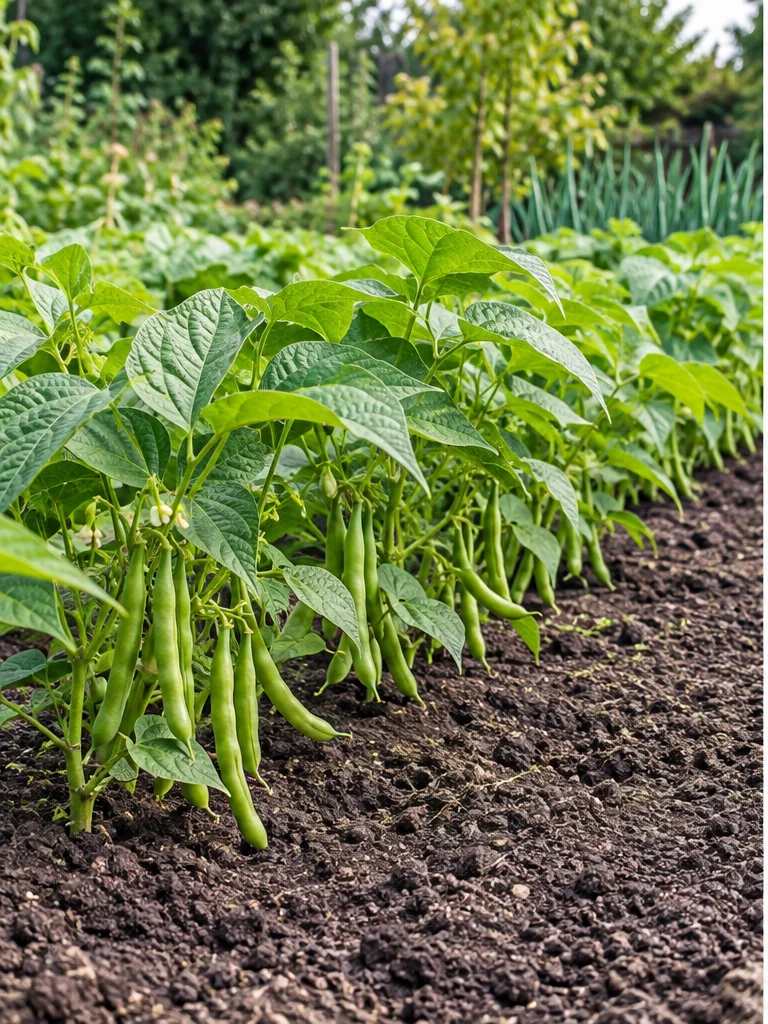
This image was created with AI from described plant characteristics and growing advice. It shows a possible situation and is not a photograph of a verified cultivar.
A short row in a bed
A low row needs no tall support. Clear weeds and leave enough room to pick under the foliage. Plan two small sowings rather than one large harvest peak.
- Prepare a fine, warm seedbed.
- Sow at the variety's recommended spacing.
- Check emergence, root moisture and young pods.
For anyone with a sunny outdoor bed.
Tick off your supplies →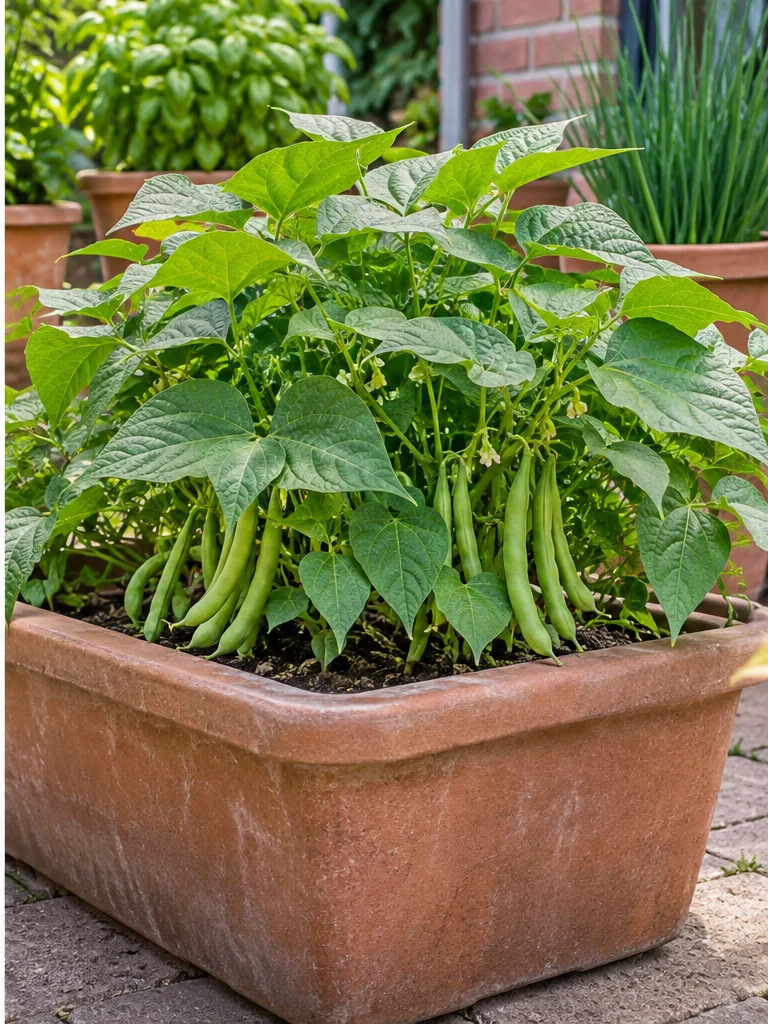
This image was created with AI from described plant characteristics and growing advice. It shows a possible situation and is not a photograph of a verified cultivar.
Compact growth in a pot
A compact bush variety fits a wide pot with drainage holes. Less soil means more frequent watering checks than in a bed.
- Choose a compact, low-growing variety.
- Use suitable potting compost with unrestricted drainage.
- Pick carefully and feel the soil daily in warmth.
For a sheltered balcony or patio with room for the chosen growth habit.
Tick off your supplies →Yellow belongs to this variety profile
The Dutch supplier describes Dior as a wax bean with yellow, straight pods and gentle flavour. Yellow is the stated pod colour. At harvest, assess seed development and pod form too. Colour alone does not fully describe the stage found.
A low-growing plant changes the layout
The current source gives 40 to 60 centimetres height; its text says about 50. This fits the dwarf French bean. Prioritise row access: tall climbing frames do not define it, but you still need to work the full row during harvest.
Start with conditions around the seed
General Dutch guidance links outdoor sowing to warm soil after frost risk. Also follow Dior's current packet. Label and note starts to relate first greenery to starting conditions rather than explaining everything with fixed dates.
Give the pods an accessible route
The source places Dior pods on the plant's exterior, useful when arranging rows. Imagine your picking position and the side visible from the path. An organised row makes repeated attentive inspection easier.
Observe the soil as the plant fills out
Work carefully and shallowly when weeding around beans. The side roots just below the surface need protection. Also check how to keep the bed accessible. A small change to the path or label can save searching later; note your changes so you understand why the layout works better for you.
Let the first pods guide your garden round
Check roots during drought, particularly pod formation. Look beneath the surface for actual moisture. Follow flowers becoming pods and record observations. This tracks seasons without assuming every flower immediately becomes a harvestable bean.
A distinct pod size needs its own assessment
Dior's description gives pods 13 to 14 centimetres long and 8 to 9 millimetres thick. Compare source sizes with your pods but also judge youth. For fresh beans, pick before strong seed bulging. Search foliage and check the row from both sides.
Turn the low row into an experience worth keeping
Bush beans generally crop for less time than climbers. Record Dior's first and final pickings and quantities against visits. Were external pods truly accessible? This helps choose next year's layout or another sowing following current packets.
What you need
Tick what you already have. The extras depend on how you grow.
0 of 4 ticked off
Your ticks are saved in this browser.
Discover and grow more
More background, sources and image information
SeedSteps editorial team · updated on 11 October 2026. The AI images illustrate species and practical growing situations; they do not prove an exact cultivar, observations from your own garden or yield.
Britse gewasadviezen worden gecombineerd met Nederlandse en Vlaamse informatie waar beschikbaar. Amerikaanse Extension-bronnen ondersteunen plantprincipes en herkenning; hun kalenderdata, lokale plaagdruk, bestrijdingsmiddelen en mestdoseringen worden niet rechtstreeks op Nederland of Vlaanderen toegepast. Vorst, bodemwarmte, standplaats en expliciete rasinformatie blijven de lokale controle. Commerciële bronnen onderbouwen uitsluitend benoemde ras- en plantkenmerken; zij zijn geen affiliate-aanbeveling.
- World Checklist of Vascular Plants — 4 juni 2026Royal Botanic Gardens, Kew · accessed 2026-10-07
- Common catalogue of varieties of vegetable species — 27 januari 2023Europese Commissie · accessed 2026-10-07
- Dior: gele peulen aan een lage plantDe Bolster · accessed 2026-10-08
- Boter-Stamslaboon (prinsessenboon) Helios zaden biologischFeggies · accessed 2026-10-11
- Organic Stamslabonen Maxi zadenFeggies · accessed 2026-10-11
- Cannellini Dwergdopboon BiologischFeggies · accessed 2026-10-11
- Kidneyboon Rognon de Coq BiologischFeggies · accessed 2026-10-11
- Stamdroogboon Borlotto zadenFeggies · accessed 2026-10-11
- Stamdroogboon Starazagorsky Yin Yang BiologischFeggies · accessed 2026-10-11
- Stam(struik)peulboon Calvy zadenFeggies · accessed 2026-10-11
- Stamslaboon (prinsessenboon) La Victoire zadenFeggies · accessed 2026-10-11
- Stamslaboon (prinsessenboon) Purple Teepee zadenFeggies · accessed 2026-10-11
- Stamslaboon (prinsessenboon) Reine des Pourpres zadenFeggies · accessed 2026-10-11
- Stamslaboon Red Swan BiologischFeggies · accessed 2026-10-11
- Growing Beans in a Home GardenUniversity of Maryland Extension · accessed 2026-10-11
- Sperziebonen: warmte, water en jong plukkenDe Bolster · accessed 2026-10-08
- Stam- en stokslabonen: groei en oogstRoyal Horticultural Society · accessed 2026-10-08
- Bonen: groeivormen en verzorgingUniversity of Maryland Extension · accessed 2026-10-08
- Bonen: bodem, plukstadium en bewarenUniversity of Minnesota Extension · accessed 2026-10-08
- Bonen kiezen: groeivorm en oogstdoelDe Bolster · accessed 2026-10-08
- RHS — boon kwekenRoyal Horticultural Society · accessed 2026-10-10
- UMD Extension — bonen kwekenUniversity of Maryland Extension · accessed 2026-10-10
- UMN Extension — boon in de moestuinUniversity of Minnesota Extension · accessed 2026-10-10
- Handboek Schooltuinen: raskeuze en plantuiHandboek Schooltuinen, via Velt · accessed 2026-10-08
Supporting evidence by chapter: Yellow belongs to this variety profile: De Bolster. A low-growing plant changes the layout: De Bolster. Start with conditions around the seed: De Bolster. Give the pods an accessible route: De Bolster. Observe the soil as the plant fills out: University of Minnesota Extension. Let the first pods guide your garden round: University of Maryland Extension. A distinct pod size needs its own assessment: De Bolster, University of Minnesota Extension. Turn the low row into an experience worth keeping: Royal Horticultural Society.
Fruit size: 13-14 cm long; 8-9 mm thick Actuele Nederlandse leveranciersbeschrijving; rasmaat en profiel, geen onafhankelijke proef of oogstgarantie. De Bolster
Variety type: Wax bean for young pods Actuele Nederlandse leveranciersbeschrijving; rasmaat en profiel, geen onafhankelijke proef of oogstgarantie. De Bolster
Growth habit: Low-growing French bean; pods around the plant's outside Actuele Nederlandse leveranciersbeschrijving; rasmaat en profiel, geen onafhankelijke proef of oogstgarantie. De Bolster
Height: 40-60 cm Actuele Nederlandse leveranciersbeschrijving; rasmaat en profiel, geen onafhankelijke proef of oogstgarantie. De Bolster
Light: Full sun Actuele Nederlandse leveranciersbeschrijving; rasmaat en profiel, geen onafhankelijke proef of oogstgarantie. De Bolster
Main colour: Yellow pods Actuele Nederlandse leveranciersbeschrijving; rasmaat en profiel, geen onafhankelijke proef of oogstgarantie. De Bolster
Open-pollinated / F1: Open-pollinated Actuele Nederlandse leveranciersbeschrijving; rasmaat en profiel, geen onafhankelijke proef of oogstgarantie. De Bolster
Plant spacing: 45 × 10 cm Actuele Nederlandse leveranciersbeschrijving; rasmaat en profiel, geen onafhankelijke proef of oogstgarantie. De Bolster
Flavour: Mild flavour Actuele Nederlandse leveranciersbeschrijving; rasmaat en profiel, geen onafhankelijke proef of oogstgarantie. De Bolster