
Cardinal: een plek in jouw tuin
Ontdek Cardinal en kies hoe je broccoli wilt kweken. Hieronder staan de bevestigde rasgegevens en de praktische teeltgids voor deze groente.
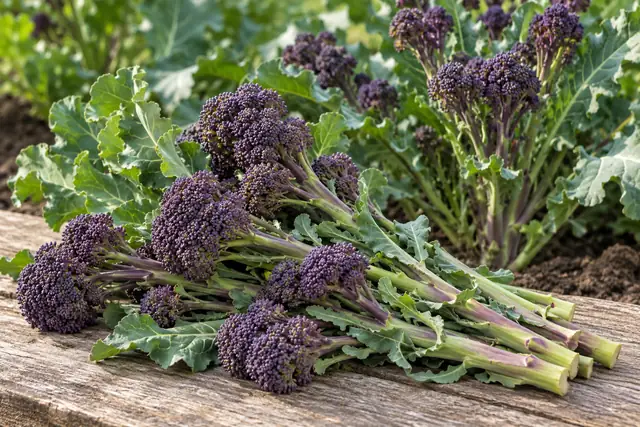
This image was created with AI from described plant characteristics and growing advice. It shows a possible situation and is not a photograph of a verified cultivar.
- Harvested part
- Flower buds still closed
- Type
- Calabrese or sprouting broccoli
- Location
- Fertile, well-drained
- Harvest
- Before flowers open
This growing advice helps you choose. Your variety, growth stage, weather and conditions in your space determine the actual timing.
Sowing under cover and raising seedlings
Start under cover in cool conditions in modules or a seedbed · Broccoli
March–May, only for a suitable harvest typeSow somewhere cool and bright and avoid long, weak growth.
- Germination and temperature
- Germinate under cover, then grow on in cool, bright, well-ventilated conditions; avoid a hot growing space.
- After emergence
- Give seedlings light immediately after emergence. A dark loft needs suitable grow lights; warmth alone is insufficient. Ventilate and keep the compost moist without saturating it.
- Pricking out and potting on
- Sow in modules or prick out manageable young plants. Let the root ball firm up without a check in growth.
- Hardening off and planting out
- Gradually acclimatise indoor-raised plants to sun, wind and outdoor temperatures; shelter them again on cold nights. Plant out sturdy young brassicas and protect against cabbage root fly and caterpillars where needed.
Early, summer, autumn and winter cultivars have their own windows. The spring period shown is a basic route; use cultivar guidance for overwintering and winter cauliflower.
Sources and use
RHS · kolen ↗Britse teeltrichtlijn voor een gematigd klimaat; de genoemde perioden zijn richtlijnen voor Nederland en Vlaanderen.
Feggies · Broccoli 'Bobby' Biologisch ↗Nederlandse producent of teeltbron; de rasinstructie blijft leidend.
Feggies · Broccoli calabrese – biologische groentezaden (doorplukker) ↗Nederlandse producent of teeltbron; de rasinstructie blijft leidend.
Guideline periods for the Netherlands and Flanders. Check the variety, available light, soil and measured temperatures. Greenhouse heating does not guarantee enough winter light.
How to grow broccoli
The options below belong to the plant. From these, choose the method that suits your variety's growth habit.
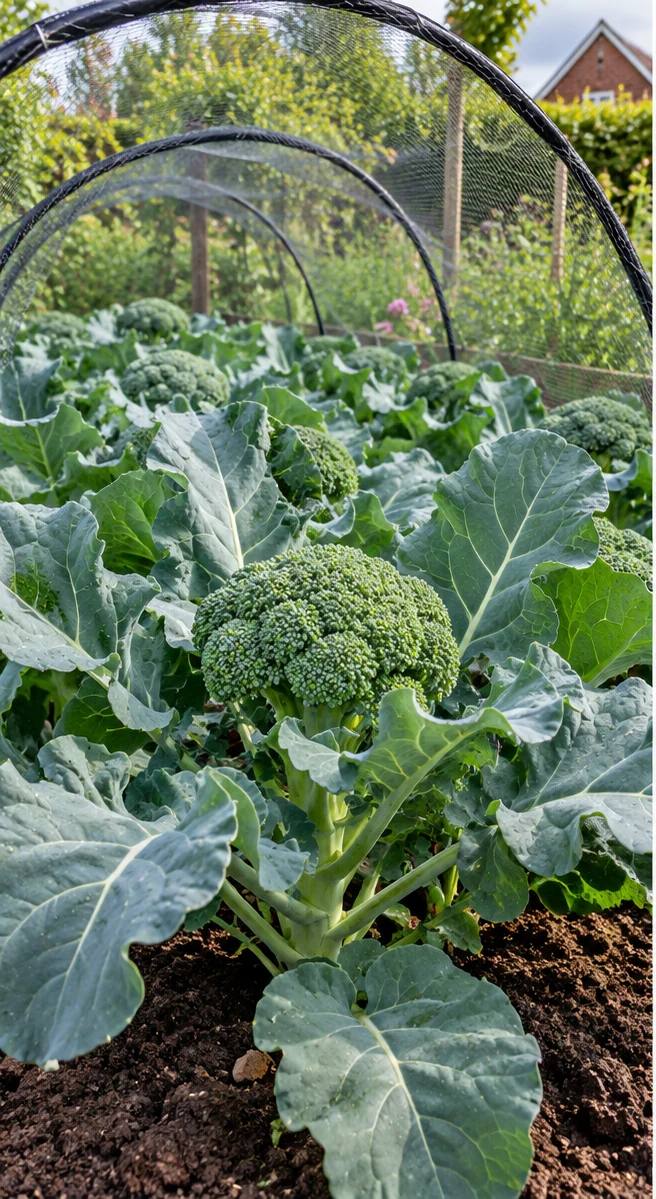
This image was created with AI from described plant characteristics and growing advice. It shows a possible situation and is not a photograph of a verified cultivar.
Summer broccoli under mesh
A bed of healthy young plants gives manageable central heads.
- Plant at the variety's recommended spacing.
- Cover with mesh on sufficiently tall hoops.
- Cut the main head, then monitor side shoots.
For a distinct summer or autumn harvest.
Tick off your supplies →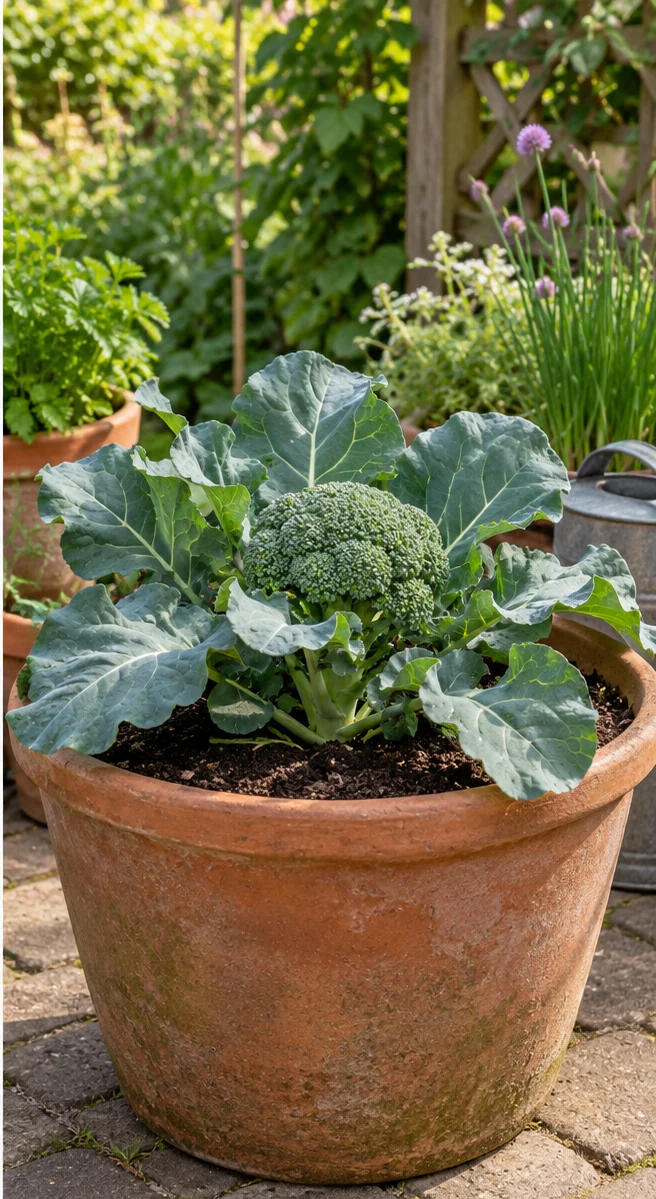
This image was created with AI from described plant characteristics and growing advice. It shows a possible situation and is not a photograph of a verified cultivar.
A compact variety in a large container
A suitable small variety can be tried for a limited harvest.
- Check your variety's documented compactness.
- Provide a large container with drainage and suitable potting compost.
- Keep growth and moisture steady and harvest closed buds.
For limited bed space; open ground remains more practical for larger plants.
Tick off your supplies →Choose by flavour, shape and use
Bobby: Bobby is an early green broccoli with a relatively long stem, described for summer to autumn harvests. Cook tender peeled stems as well as florets to use more of the harvested plant.
The product source lacks a specific flavour profile for Bobby. Green appearance and earliness are concrete selection traits.
Calabrese: Calabrese and Vert Calabrais are grouped here as names of the green Calabrese type. Plants also produce smaller side heads. Use the main head for a meal and later shoots in quick stir-fries. The stem need not automatically be discarded.
The usual broccoli character suits this type. The two retail names provide no substantiated evidence of a separate flavour difference.
Purple sprouting: This broccoli type forms small purple buds along side branches. Growing may include overwintering for spring harvests. Briefly cook young shoots with buds. Small portions suit repeated picking.
The source does not specify a distinct aroma profile for a variety name. The flavour description therefore remains that of sprouting broccoli as a type.
Check what kind of harvest your variety produces first
British gardening books often call broccoli with a large green central head calabrese. Sprouting broccoli forms smaller groups of buds on different shoots. Both names occur under broccoli but describe different development. Read the cultivar profile before planting. One large supermarket head is not a good benchmark for every broccoli in the garden.
An early choice helps later with the bed
Read the seed description of the variety and choose a space that suits the plants. British growing guidance distinguishes compact and larger forms, among others. Write down your harvest type alongside the variety name. If the bed later seems to consist mainly of leaves, that little label helps you keep track of the part of the plant you are waiting for.
The bud starts with soil and roots
Nutrient-rich soil retaining moisture while draining supports growth. Assess fast-drying and persistently wet areas beforehand. Testing supports targeted feed choices. Other-region recommendations do not justify copying fertiliser or lime quantities without assessment.
Move the young plant with a gentle start for its roots
Gradually acclimatise indoor broccoli outdoors and minimise root disturbance. Inspect root balls and follow packet stage and spacing. Note transition weather too to review starts if plants later differ from neighbours.
A care round continues beneath the leaves too
Follow roots in drought and continue as buds form. Dark surface colour alone reveals little below. Weed carefully around relatively shallow roots. These two small actions connect you to real conditions without turning every visit into automatic watering.
Let the crop grow under accessible protection
Mesh on hoops or poles can protect against insect and bird feeding. Close it well and retain growth room. Inspect damage before choosing causes. Leaves and buds also respond to environment; holes or discolouration alone do not identify the right action.
Flower buds signal harvesting time
Harvest central buds while useful and closed, before flowers open. Warmth changes stages quickly, so inspect close during rounds. Follow actual buds; general diameter or day counts must not outweigh your variety and growth stage.
After the main head, observe what the plant still does
After cutting main heads, leave plants if following sideshoots. Smaller heads can give another picking. Inspect again before flowers open and record actual variety performance. Keep broccoli cool if not using immediately; the story continues from plant to kitchen.
Summer broccoli and sprouting broccoli need separate schedules
Ordinary summer broccoli can be raised for harvest within the same growing period. Overwintered sprouting broccoli stays much longer and needs a suitable variety and winter site. Buy or sow with the harvest window in mind to avoid calling healthy leafy plants failures too soon.
Avoid an interrupted start
Small loose heads can follow cold raising, overgrown plants, drought or other stress. Keep roots appropriately housed and transition outdoors gradually. Yellow flowers on heads are no reason to wait: harvest usable parts and inspect possible new sideshoots.
What you need
Tick what you already have. The extras depend on how you grow.
0 of 6 ticked off
Your ticks are saved in this browser.
Discover and grow more
More background, sources and image information
SeedSteps editorial team · updated on 11 October 2026. The AI images illustrate species and practical growing situations; they do not prove an exact cultivar, observations from your own garden or yield.
Britse gewasadviezen worden gecombineerd met Nederlandse en Vlaamse informatie waar beschikbaar. Amerikaanse Extension-bronnen ondersteunen plantprincipes en herkenning; hun kalenderdata, lokale plaagdruk, bestrijdingsmiddelen en mestdoseringen worden niet rechtstreeks op Nederland of Vlaanderen toegepast. Vorst, bodemwarmte, standplaats en expliciete rasinformatie blijven de lokale controle. Commerciële bronnen onderbouwen uitsluitend benoemde ras- en plantkenmerken; zij zijn geen affiliate-aanbeveling.
- World Checklist of Vascular Plants — 4 juni 2026Royal Botanic Gardens, Kew · accessed 2026-10-07
- Common catalogue of varieties of vegetable species — 27 januari 2023Europese Commissie · accessed 2026-10-07
- Broccoli 'Bobby' BiologischFeggies · accessed 2026-10-11
- Broccoli calabrese – biologische groentezaden (doorplukker)Feggies · accessed 2026-10-11
- Broccoli met paarse spruiten zaden biologischFeggies · accessed 2026-10-11
- Broccoli Vert Calabrais zaden biologischFeggies · accessed 2026-10-11
- Calabrese: hoofdknoppen en zijscheutenRoyal Horticultural Society · accessed 2026-10-08
- Broccoli: blad, knoppen, verzorgen en bewarenUniversity of Maryland Extension · accessed 2026-10-08
- Broccoli: wortelvocht, hoofdknop en volgende plukUniversity of Minnesota Extension · accessed 2026-10-08
Supporting evidence by chapter: Choose by flavour, shape and use: Feggies, Feggies, Feggies, Feggies. Check what kind of harvest your variety produces first: Royal Horticultural Society, University of Maryland Extension. An early choice helps later with the bed: Royal Horticultural Society. The bud starts with soil and roots: University of Minnesota Extension. Move the young plant with a gentle start for its roots: Royal Horticultural Society. A care round continues beneath the leaves too: University of Maryland Extension, University of Minnesota Extension. Let the crop grow under accessible protection: Royal Horticultural Society, University of Minnesota Extension. Flower buds signal harvesting time: University of Maryland Extension. After the main head, observe what the plant still does: University of Minnesota Extension, University of Maryland Extension. Summer broccoli and sprouting broccoli need separate schedules: Royal Horticultural Society, University of Minnesota Extension, University of Maryland Extension. Avoid an interrupted start: Royal Horticultural Society, University of Minnesota Extension, University of Maryland Extension.