
Tortarello Barese: discover its flavour and how to grow it
Deep green, lightly hairy, elongated fruits about 45 cm long; a vigorous cucumber melon variety from the Italian tradition. Choose Tortarello if both a long salad fruit and its changes during ripening appeal.
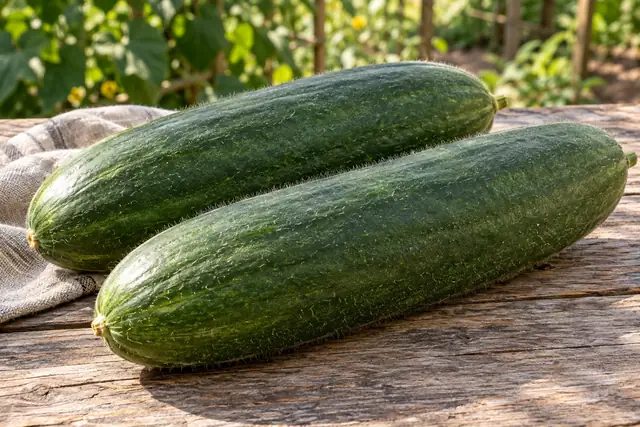
This image was created with AI from described plant characteristics and growing advice. It shows a possible situation and is not a photograph of a verified cultivar.
- Species
- Cucumis melo; young salad fruit
- Start
- Sow in warmth, transplant the entire root ball
- Position
- Greenhouse or very warm sheltered garden
- Harvest
- Young, before large seeds and coarse texture develop
This growing advice helps you choose. Your variety, growth stage, weather and conditions in your space determine the actual timing.
Sowing under cover and raising seedlings
Start under cover in warmth · Armenian cucumber
Mid-April–mid-MayStart indoors in warmth and reserve enough bright space for raising plants.
- Germination and temperature
- Germinate in warmth; for melon, at least about 18 °C. Follow the packet for watermelon and cucumber melon.
- After emergence
- Give seedlings light immediately after emergence. A dark loft needs suitable grow lights; warmth alone is insufficient. Ventilate and keep the compost moist without saturating it.
- Pricking out and potting on
- Sow in individual pots or deep modules. Do not prick out bare-rooted; move the whole root ball before the roots become restricted.
- Hardening off and planting out
- Gradually acclimatise indoor-raised plants to sun, wind and outdoor temperatures; shelter them again on cold nights. In a warm greenhouse or very sheltered warm position, with the root ball intact. Plant out only once cold nights are over.
Dutch outdoor growing is uncertain in a cool summer. Choose a suitable early type; do not confuse cucumber melon with an ordinary cucumber.
Sources and use
RHS · meloen ↗Britse teeltrichtlijn voor een gematigd klimaat; de genoemde perioden zijn richtlijnen voor Nederland en Vlaanderen.
Association Kokopelli · Carosello Scopatizzo Barese — soort en warmtemethode ↗Soort- of productgebonden bron; buitenlandse perioden zijn geen vaste Nederlandse zaaidatum.
Royal Horticultural Society · Warmteminnende groenten in de kas — Britse gids ↗Soort- of productgebonden bron; buitenlandse perioden zijn geen vaste Nederlandse zaaidatum.
Guideline periods for the Netherlands and Flanders. Check the variety, available light, soil and measured temperatures. Greenhouse heating does not guarantee enough winter light.
What makes Tortarello Barese different?
- Fruit shape
- elongated, approximately 45 cm
- Main colour
- deep green, later light yellow
- Flavour
- When young, the flesh is crisp without bitterness. When riper, the source describes a slightly sweet flavour with a note between lemon and melon.
The source context and any limitations are in the background information at the bottom.
Compare with another varietyFlavour and kitchen
When young, the flesh is crisp without bitterness. When riper, the source describes a slightly sweet flavour with a note between lemon and melon.
Use young, green fruits raw in salad. Taste a separate, riper fruit to discover the flavour difference.
Why choose it? Choose Tortarello if both a long salad fruit and its changes during ripening appeal.
How to grow armenian cucumber
The options below belong to the plant. From these, choose the method that suits your variety's growth habit.
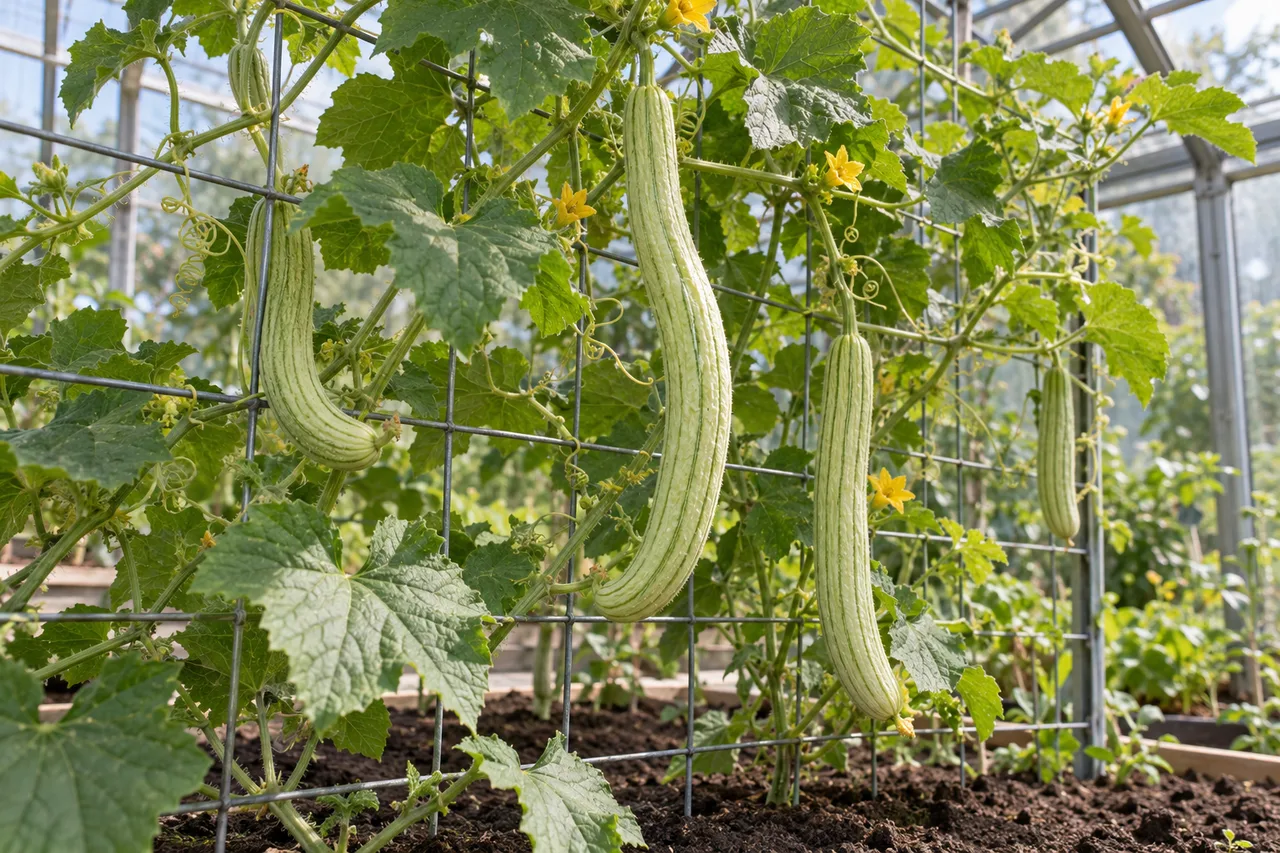
This image was created with AI from described plant characteristics and growing advice. It shows a possible situation and is not a photograph of a verified cultivar.
Long fruits on a frame
A sturdy frame makes long Armenian Painted Serpent fruits manageable and keeps them off the ground.
- Install a sturdy frame in a warm, sheltered position before planting the seedling.
- Guide young vines along mesh gradually and tie loosely only where necessary.
- Let young fruits hang freely, check obstacles and pick before maximum length.
For a greenhouse or warm, sheltered bed with vertical space.
Tick off your supplies →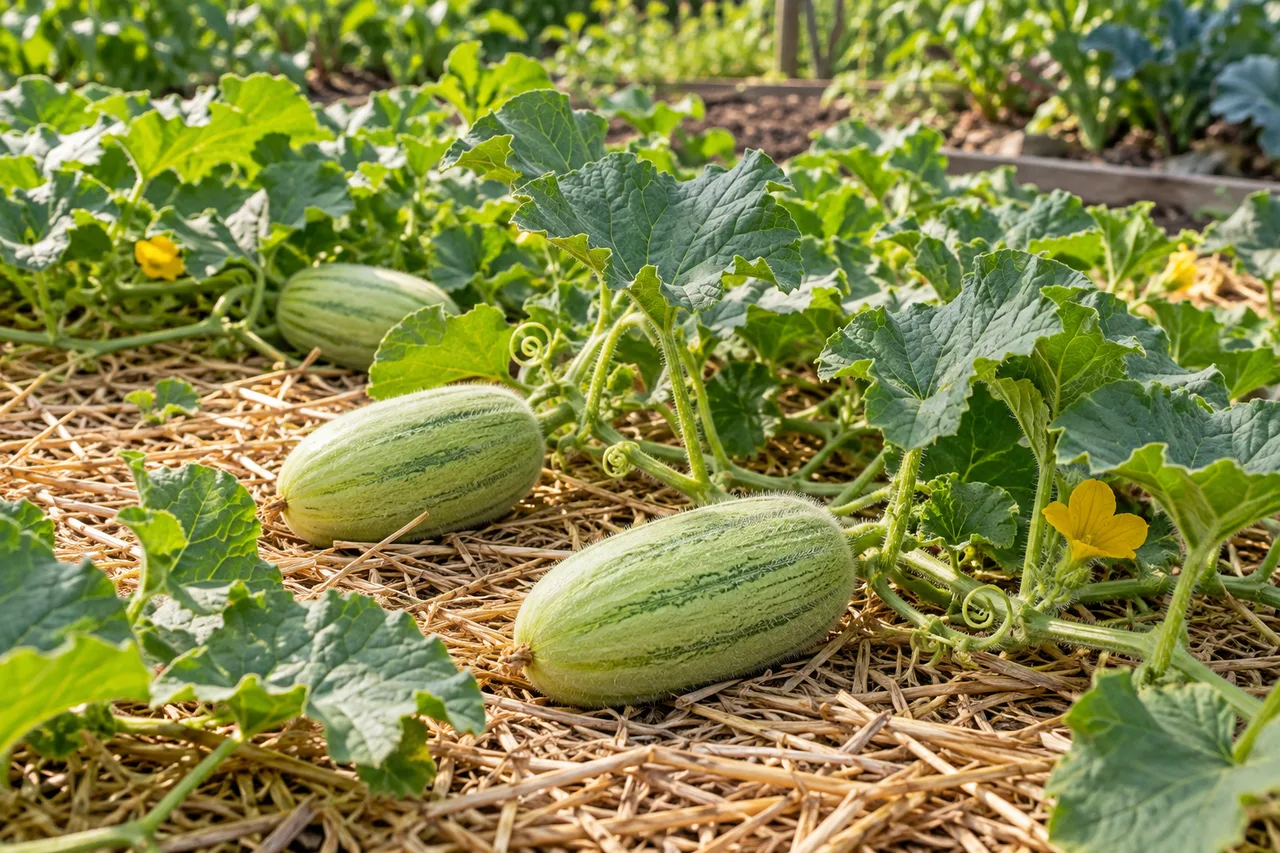
This image was created with AI from described plant characteristics and growing advice. It shows a possible situation and is not a photograph of a verified cultivar.
Spread over a warm bed
Short Carosello fruits from a spacious bed, with straw beneath fruit and free space between vines.
- Prepare a sunny bed with mature compost and sufficient room around the plant.
- Plant after frost with intact rootballs and let vines spread gently across the bed.
- Lay clean, dry straw beneath fruits and look under leaves regularly.
For warm greenhouse soil or very sheltered open ground with plenty of space.
Tick off your supplies →Why grow Tortarello Barese?
Deep green, lightly hairy, elongated fruits about 45 cm long; a vigorous cucumber melon variety from the Italian tradition.
Choose Tortarello if both a long salad fruit and its changes during ripening appeal.
How this choice tastes
When young, the flesh is crisp without bitterness. When riper, the source describes a slightly sweet flavour with a note between lemon and melon.
From harvest to kitchen
Use young, green fruits raw in salad. Taste a separate, riper fruit to discover the flavour difference.
What needs attention when growing
Give vines a warm bed or greenhouse position and sufficient support. Keep fruits free so hard edges do not deform their length.
For cucumber use, harvest young and green. As it ripens further, the skin turns light yellow; that stage has a different flavour use.
Melon as a salad fruit
Cucumber melon practically groups Cucumis melo selections used young as cucumber. Kokopelli confirms Carosello Scopatizzo Barese as Cucumis melo. Not every fruit becomes sweet dessert melon. Choose named selections for clear shape and described eating stage.
Choose to suit your space
Carosello has short, grooved, pale green fruit with fine hairs. Armenian Painted Serpent can grow very long and benefits from free space. Tortarello Barese has long, deep green, lightly hairy fruit. Match shape to your bed, frame and desired salad portions rather than treating every type alike.
A warm start
Sow individually in warmth under cover. Kokopelli specifies around 20–25 °C for Carosello and later planting out with the whole root ball. Give germinated plants plenty of light and do not leave roots restricted in an undersized pot for long. Plan backwards from a genuinely warm, frost-free planting period.
Shelter makes a difference
A greenhouse helps a warmth-loving melon type through cool Dutch nights. Outdoors, choose the sunniest sheltered spot and wait for warm soil. For direct outdoor sowing of Carosello, the producer specifies no nights below about 15 °C. This is a useful warmth threshold, not a calendar guarantee for mid-May.
Make fruit accessible
A frame keeps long fruits clear and makes checking and picking easier. Guide vines along supports without sharp bends and use loose, soft ties where needed. On the ground, leave room for growth and keep fruit off wet soil. Check especially for hidden fruits beneath leaves.
Keep the root zone stable
Work mature compost into the bed and water the roots regularly. A vigorous vine can form many leaves and several fruits at once. Look at soil moisture rather than automatically giving the same amount every day. In a greenhouse, combine watering with ventilation on warm days.
Do not wait for a record
Pick young fruit for fresh salads. With Painted Serpent, its maximum possible length is not the desired everyday harvest size. Cut open a test fruit to check texture, skin and seed cavity. For Tortarello, the source also describes a later pale yellow stage with a slightly sweet flavour: keep that separate from the young green harvest.
Compare two ripening stages
Slice young fruit into rounds, strips or half-moons for raw salad. Rinse fine hairs thoroughly and assess peeling. Give each variety a simple-seasoned tasting portion. Note your preferred young size so the next harvest suits your kitchen.
What you need
Tick what you already have. The extras depend on how you grow.
0 of 5 ticked off
Your ticks are saved in this browser.
Discover and grow more
More background, sources and image information
SeedSteps editorial team · updated on 11 October 2026. The AI images illustrate species and practical growing situations; they do not prove an exact cultivar, observations from your own garden or yield.
Britse gewasadviezen worden gecombineerd met Nederlandse en Vlaamse informatie waar beschikbaar. Amerikaanse Extension-bronnen ondersteunen plantprincipes en herkenning; hun kalenderdata, lokale plaagdruk, bestrijdingsmiddelen en mestdoseringen worden niet rechtstreeks op Nederland of Vlaanderen toegepast. Vorst, bodemwarmte, standplaats en expliciete rasinformatie blijven de lokale controle. Commerciële bronnen onderbouwen uitsluitend benoemde ras- en plantkenmerken; zij zijn geen affiliate-aanbeveling.
- World Checklist of Vascular Plants — 4 juni 2026Royal Botanic Gardens, Kew · accessed 2026-10-07
- Komkommermeloen Tortarello Barese — ras- en teeltbeschrijvingFeggies · accessed 2026-10-11
- Komkommermeloen Armenian Painted Serpent — ras- en teeltbeschrijvingFeggies · accessed 2026-10-11
- Komkommermeloen Carosello Scopatizzo Barese — ras- en teeltbeschrijvingFeggies · accessed 2026-10-11
- Carosello Scopatizzo Barese — soort en warmtemethodeAssociation Kokopelli · accessed 2026-10-11
- Warmteminnende groenten in de kas — Britse gidsRoyal Horticultural Society · accessed 2026-10-11
Supporting evidence by chapter: Why grow Tortarello Barese?: Feggies. How this choice tastes: Feggies. From harvest to kitchen: Feggies. What needs attention when growing: Feggies. Melon as a salad fruit: Association Kokopelli. Choose to suit your space: Feggies, Feggies, Feggies. A warm start: Association Kokopelli. Shelter makes a difference: Association Kokopelli, Royal Horticultural Society. Make fruit accessible: Feggies, Feggies. Keep the root zone stable: Association Kokopelli, Royal Horticultural Society. Do not wait for a record: Feggies, Feggies. Compare two ripening stages: Feggies, Feggies.
Fruit shape: elongated, approximately 45 cm Beschrijving van de genoemde rasbron; geen eigen tuinwaarneming. Feggies
Main colour: deep green, later light yellow Beschrijving van de genoemde rasbron; geen eigen tuinwaarneming. Feggies
Flavour: When young, the flesh is crisp without bitterness. When riper, the source describes a slightly sweet flavour with a note between lemon and melon. Smaakbeschrijving van de rasbron, vertaald naar eigen woorden. Rijpheid, teelt en bereiding beïnvloeden de smaak. Feggies