Loading the garden guide…
Loading the garden guide…
A squash can spread across a bed, hang small fruits from a strong support, or stay compact near the patio. Start with what you want to cook and how much space you have. For winter storage, sound, ripe fruit matters most; a summer harvest serves a different purpose.
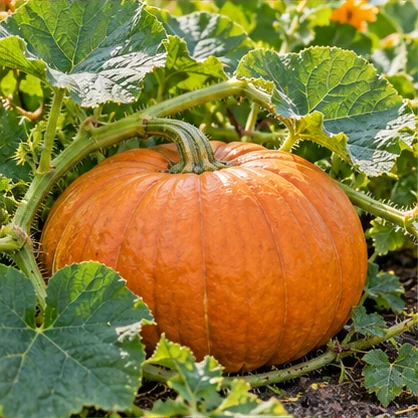
This image was created with AI from described plant characteristics and growing advice. It shows a possible situation and is not a photograph of a verified cultivar.
This growing advice helps you choose. Your variety, growth stage, weather and conditions in your space determine the actual timing.
Start under cover in warmth · Pumpkin
Mid–late AprilStart indoors in warmth and reserve enough bright space for raising plants.
Plan around six weeks of bright propagation space. Winter types then still need enough time to grow and mature.
Royal Horticultural Society · Pompoenen kweken ↗Soort- of productgebonden bron; buitenlandse perioden zijn geen vaste Nederlandse zaaidatum.
Utah State University Extension · Pompoenen kweken ↗Soort- of productgebonden bron; buitenlandse perioden zijn geen vaste Nederlandse zaaidatum.
Guideline periods for the Netherlands and Flanders. Check the variety, available light, soil and measured temperatures. Greenhouse heating does not guarantee enough winter light.
Choose by more than the name. Discover how these varieties and crop types taste, what you can use them for and what growing them involves.
22 of 22 choices · 20 named varieties
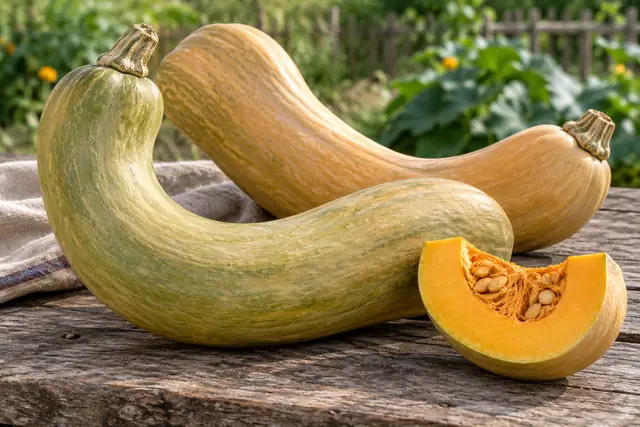
This image was created with AI from described plant characteristics and growing advice. It shows a possible situation and is not a photograph of a verified cultivar.
Long, strongly curved Italian squash can form trombone shapes, with light green skin turning ochre later.
Choose Albenga for spectacular length and curved fruits. The source also names this variety Tromboncino.
A separate flavour profile for the ripe fruit is not described. The light orange flesh offers the general pumpkin base for a cooked meal.
This flavour description applies to the crop; there is no separate tasting result for this variety.Cut the long neck into even pieces for the oven or a stew. The unusual shape gives different portions from a round pumpkin.
Provide plenty of space in a warm bed or on a very sturdy support. Support heavy hanging fruit; a thin cucumber frame is not an obvious solution.
For storage pumpkins, let fruit ripen and harvest before frost with its stalk intact. Exceptional length is a possibility, not a kitchen requirement.
Also listed as: Tromboncino.
Read the source notes →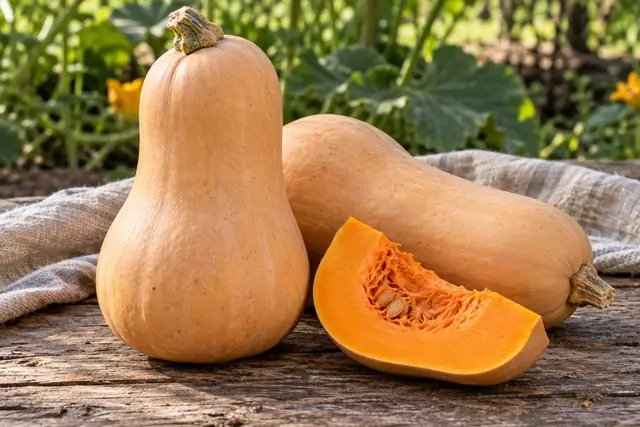
This image was created with AI from described plant characteristics and growing advice. It shows a possible situation and is not a photograph of a verified cultivar.
A Hungarian butternut selection with fruits of about 1.5–2 kg and firm orange flesh.
Choose Sonca Orange when a described hazelnut note matters and you want to try a medium-sized butternut.
The source describes a pronounced hazelnut aroma. This aromatic profile gives the cultivar more identity than its butternut shape alone.
Roast slices to bring out the nutty aroma, or use pieces in a creamy mash.
Provide a sunny, fertile bed and vine space. Start in warmth shortly before planting out to avoid restricted rootballs.
Harvest ripe fruit before frost, with an intact piece of stalk. Check undamaged specimens during storage; a flavour claim does not prove a fixed storage period.
Read the source notes →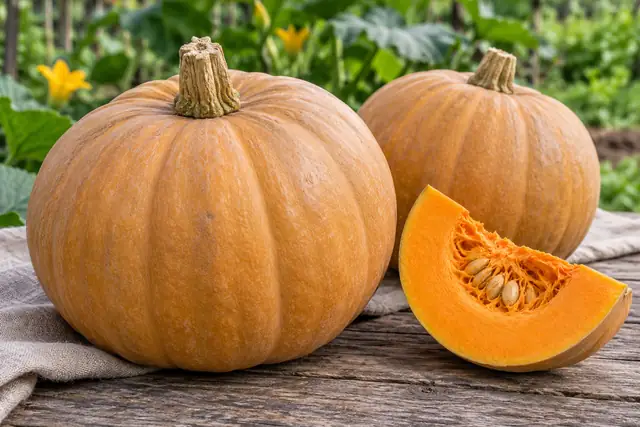
This image was created with AI from described plant characteristics and growing advice. It shows a possible situation and is not a photograph of a verified cultivar.
Large, round, lightly ribbed fruits with ochre skin and orange flesh: a squash for many portions at once.
Choose Dickinson Moschata for plenty of usable flesh per fruit. Honeynut is handier for one small meal.
The described profile is mild. This makes the flesh suitable as a base for seasoning, rather than a distinctly nutty tasting selection.
Make a large pan of soup or bake the flesh for mash. When cutting it open, plan several uses for the large fruit straight away.
Provide a spacious, warm bed and a long season. Rest large fruit on a dry, clean surface and move vines carefully.
Harvest fully ripe before frost. The high weight mentioned is not a Dutch yield guarantee; assess ripeness and healthy skin above all.
Read the source notes →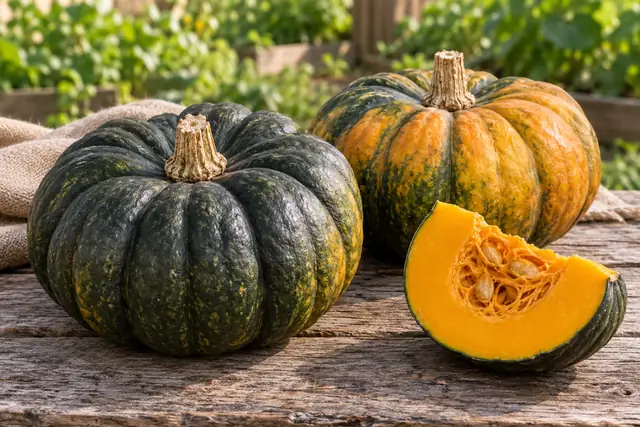
This image was created with AI from described plant characteristics and growing advice. It shows a possible situation and is not a photograph of a verified cultivar.
Small, flattened Japanese squash with deep ribs turn dark green to ochre: a variety with clear ripening changes.
Choose Futsu Black for nutty flavour and small, strongly ribbed fruits instead of smooth butternut.
Thick orange-yellow flesh with a hazelnut-like flavour is described. This is a focused choice for anyone wanting to compare nutty pumpkins.
Roast rib-shaped wedges or use cooked flesh in mash. The deep grooves need a little more attention when peeling and cleaning.
The plant trails. Give a warm, spacious bed and fertile soil; do not leave fruits resting on wet soil for long.
Let the fruit ripen fully and harvest before frost. Turning ochre is part of its development; the initial colour need not remain black.
Read the source notes →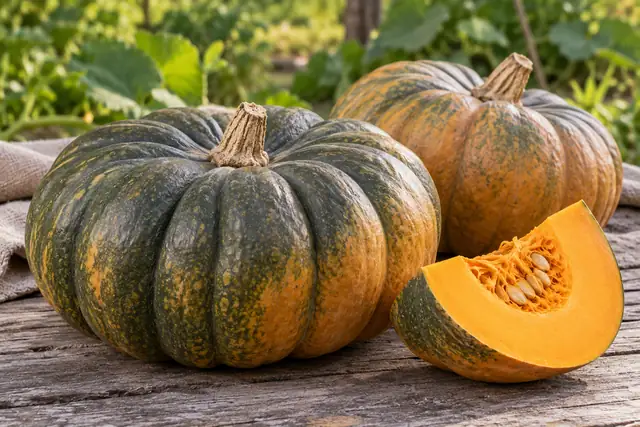
This image was created with AI from described plant characteristics and growing advice. It shows a possible situation and is not a photograph of a verified cultivar.
A strongly trailing, late selection with broad, flattened, deeply ribbed fruits; dark green skin later takes an ochre tint.
Choose this offering when a long, warm season is available and the musky profile appeals. The name resembles other Provence selections without a proven separate identity.
Bright orange, thick, firm flesh is described as slightly sweet, musky and fragrant. That provides a specific aroma for a winter dish.
Use firm pieces in a spiced stew or roast large wedges. A broad fruit lets you plan several meals at once.
Provide plenty of space and start in warmth promptly. Its late nature makes a short, cool summer less suitable.
Let healthy fruit ripen as fully as possible before frost. The ochre tint can develop further during storage; check ripeness from stalk and skin too.
Read the source notes →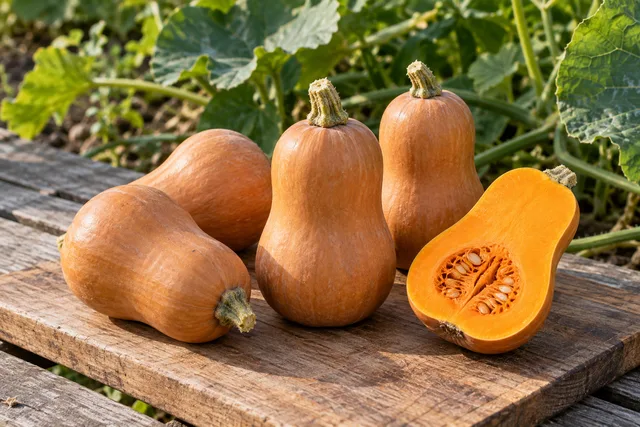
This image was created with AI from described plant characteristics and growing advice. It shows a possible situation and is not a photograph of a verified cultivar.
A small butternut with orange flesh: the manageable size suits preparing in halves.
Choose Honeynut for small butternuts and pronounced sweetness rather than one large storage fruit per harvest.
The source describes exceptionally sweet flavour. This makes Honeynut a clear tasting choice alongside milder, large squash.
Roast halved fruits with a little oil or use sweet flesh in purée. Taste before adding extra sugar.
Provide a warm, fertile position and enough space. The hard skin is a characteristic of ripe fruit, not a reason to skip crop care.
Harvest mature fruits before frost. Store healthy specimens only and check regularly that hard skin and stalk remain intact.
Read the source notes →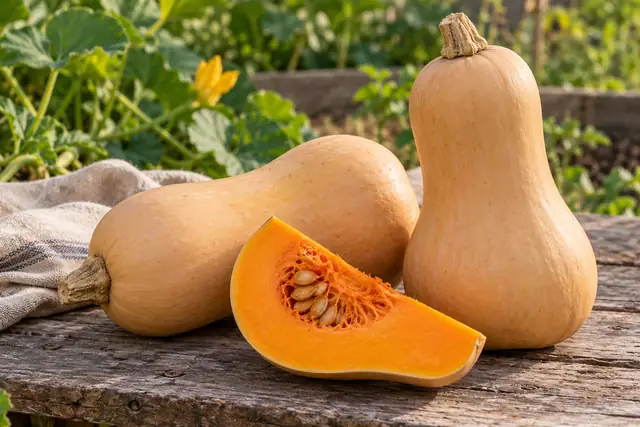
This image was created with AI from described plant characteristics and growing advice. It shows a possible situation and is not a photograph of a verified cultivar.
A familiar butternut with sweet, orange flesh and winter storage potential when the harvest is healthy and ripe.
Choose Waltham Butternut for a named, classic butternut when a supply for several meals matters.
Sweet is the described profile. The source gives no fixed nutty flavour ranking; preparation and ripeness shape the final result.
Roast pieces, make soup or cut even slices from the neck. The bottle shape distributes the flesh differently from a round pumpkin.
Provide a warm, fertile bed with room for the vines. Starting indoors only helps if the plant is not then put into cold soil.
Harvest ripe fruit before frost with a piece of stalk attached. Dry the skin and check winter stores regularly; months of storage require undamaged fruit.
Read the source notes →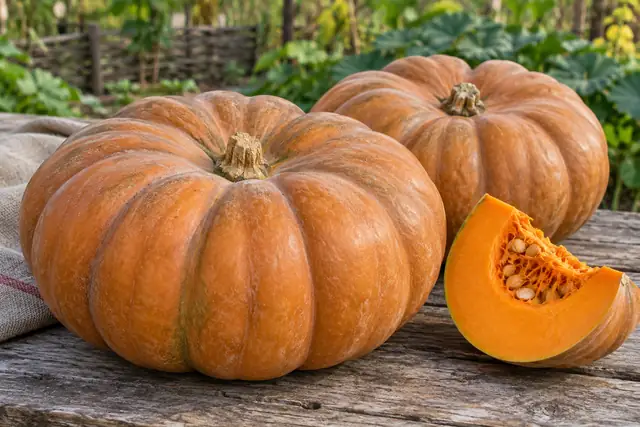
This image was created with AI from described plant characteristics and growing advice. It shows a possible situation and is not a photograph of a verified cultivar.
A large, flat French squash with orange-brown skin: a traditional centrepiece for the autumn kitchen.
Choose this selection for large, flat squash with a described soft, nutty culinary profile and sufficient garden space.
The supplier describes a sweet, nutty flavour and velvety texture. The precise cultivar boundary against other Provence names is not proven.
Use flesh for soup, risotto or purée. Plan several dishes or suitable storage when cutting a large fruit.
Provide sun, warmth and ample fertile soil. In the Netherlands, planting out after frost is more important than a fixed early calendar date.
Harvest fully ripened fruit in autumn before frost. Store healthy, undamaged fruit in dry, airy conditions and use cut fruit promptly.
Also listed as: Muscade de Provence.
Read the source notes →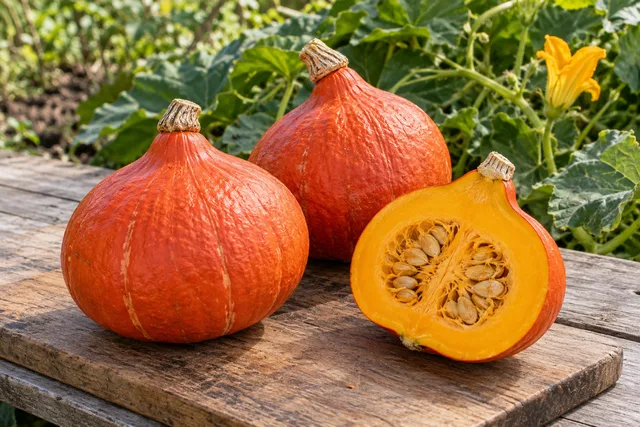
This image was created with AI from described plant characteristics and growing advice. It shows a possible situation and is not a photograph of a verified cultivar.
A trailing, orange-red Hokkaido squash with fruits more manageable than large French storage squash.
Choose Uchiki Kuri for a familiar orange-red culinary squash and a more manageable fruit size.
The supplier mentions sweet fruit. A fixed flavour ranking against Red Kuri is not given; seed selections can differ in practice.
Make soup or roast wedges. Use the young, tender skin too if you wish, after assessing the texture of your own ripe fruit.
Give the trailing plant a sunny, spacious bed and fertile soil. Only sow outdoors when the soil is warm and frost has passed.
Let fruits ripen and harvest before frost. Store undamaged fruits in a cool, dry place; use damaged fruits first.
Read the source notes →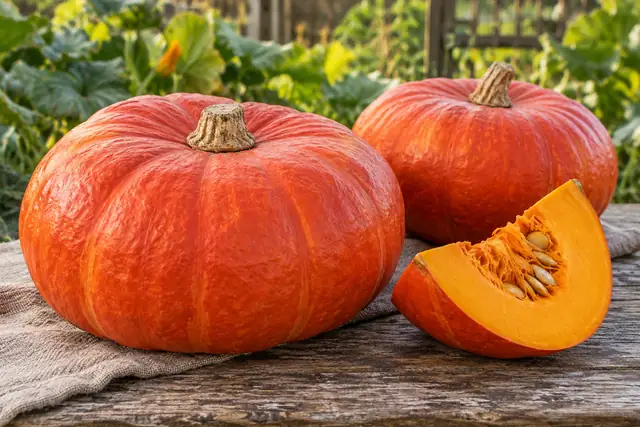
This image was created with AI from described plant characteristics and growing advice. It shows a possible situation and is not a photograph of a verified cultivar.
A broad, flat, orange-red French squash with a fairy-tale autumn appearance and plenty of culinary flesh.
Choose this variety for a large, flat autumn squash. Mini or small kuri types are more practical for one meal's small portions.
The source describes a soft texture with a sweet, nutty flavour. A large decorative fruit therefore need not end up solely as an ornament.
Use large wedges for soup, mash or gratin. Divide a cut fruit into portions straight away so that the whole harvest remains usable.
Provide plenty of sun and room for the vines. Rest heavy fruits on a dry surface and protect young plants from slugs and snails.
Harvest when the stalk begins to turn corky and the fruit is fully ripe, before frost. Lift a heavy fruit with support underneath, rather than by the stalk.
Read the source notes →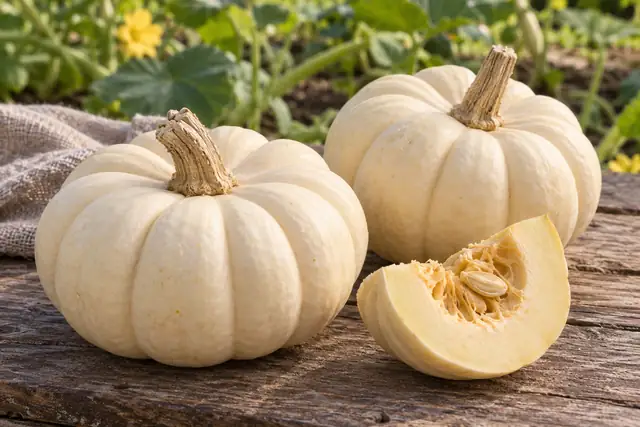
This image was created with AI from described plant characteristics and growing advice. It shows a possible situation and is not a photograph of a verified cultivar.
Miniature, cream-coloured, strongly ribbed, flattened squash: small fruit on a plant that may still need considerable growing space.
Choose Baby Boo for small, pale autumn fruit that also looks attractive on the table. Small fruit does not automatically mean a small container plant.
The supplier mentions good flavour without specifying a distinctive aroma. Its main distinction is its miniature shape and pale colour.
This flavour description applies to the crop; there is no separate tasting result for this variety.Bake small pumpkin halves or make a miniature stuffed dish. Check the skin and seed cavity before serving a whole fruit.
Give the plant a warm, fertile bed and enough room. Keep minis off damp soil to protect their pale skin.
For pumpkin use, let the fruit ripen and pick before frost. Reserve undamaged specimens for storage and use damaged harvests first.
Read the source notes →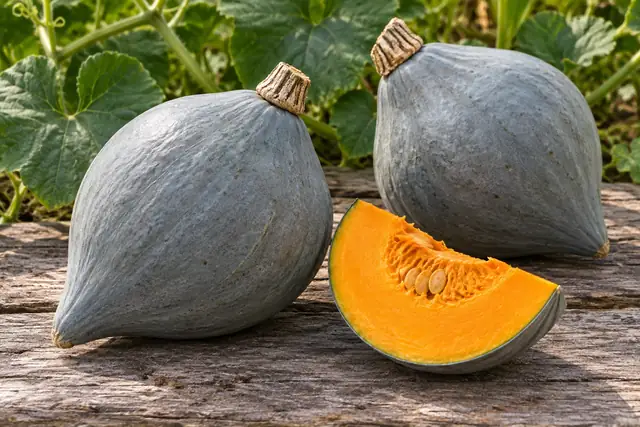
This image was created with AI from described plant characteristics and growing advice. It shows a possible situation and is not a photograph of a verified cultivar.
Grey-green fruits with firm, orange-yellow flesh: a restrained exterior with a distinctive culinary profile.
Choose Blue Ballet for chestnut-like aroma and firm flesh alongside orange kuri squash.
A clear chestnut flavour is described. This makes Blue Ballet an attractive comparison with hazelnut-like Futsu Black.
Roast wedges or make a firm mash in which the chestnut note remains recognisable. Start with simple seasoning to get to know the variety.
The plant trails and needs warm, fertile soil. Allow room for growth and do not let the fruit rest in a wet layer of leaves.
Harvest fully mature before frost and store only undamaged fruits. Grey-green is normal; do not wait for uniformly orange skin.
Read the source notes →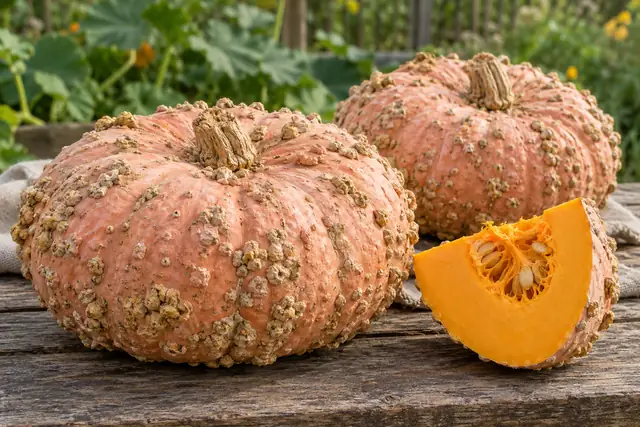
This image was created with AI from described plant characteristics and growing advice. It shows a possible situation and is not a photograph of a verified cultivar.
Salmon-coloured, flattened fruits develop corky protrusions: a striking skin characteristic of this variety.
Choose Galleux d’Eysines for sweet flesh and a highly recognisable autumn appearance. The normal corky patches are no reason to avoid the variety.
Thick orange-yellow flesh is described as fine, firm, tender and sweet. The corky exterior is separate from that kitchen quality.
Cut the fruit into wedges and remove the skin where needed. Use cooked flesh for purée or soup.
The plant trails strongly. Give plenty of space, a warm bed and a dry place beneath ripening fruits.
The skin remains relatively soft according to the source. Harvest carefully before frost and distinguish normal corky protrusions from wet, soft rot patches.
Read the source notes →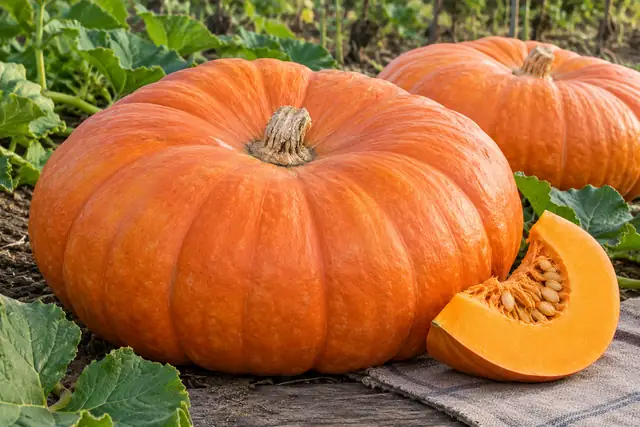
This image was created with AI from described plant characteristics and growing advice. It shows a possible situation and is not a photograph of a verified cultivar.
A trailing selection for very large, orange, flattened squash: mainly a growing project for space and size.
Choose Giant Atlantic to experiment with large fruits, not because size automatically means more flavour.
The source states thick flesh with moderate kitchen quality. For flavour, this differs from choosing Honeynut or Blue Ballet.
Use healthy, usable flesh in soup and plan plenty of portions. Do not let record size become the sole reason to keep the harvest.
Provide a very spacious, warm bed with plenty of feed and water. Large fruits do not suit a light frame or small balcony container.
Harvest before frost and arrange moving it in advance. Old record and average weights in offering texts are not a current guarantee for your garden.
Read the source notes →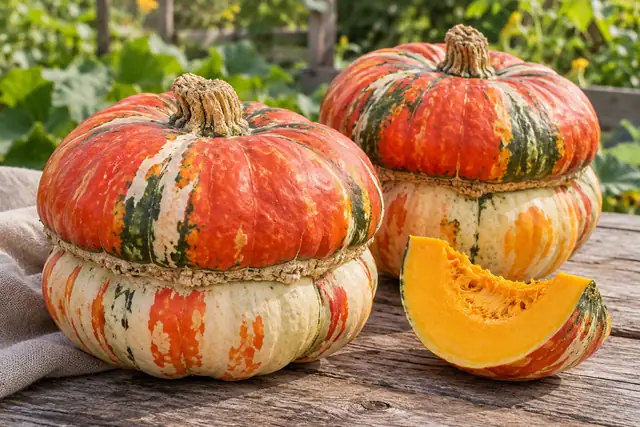
This image was created with AI from described plant characteristics and growing advice. It shows a possible situation and is not a photograph of a verified cultivar.
A coloured turban shape in red, yellow, green and white: each fruit is a striking autumn object with edible flesh too.
Choose this variety when unusual fruit shape matters and you enjoy using a decorative harvest in the kitchen too.
The light orange flesh is described as very firm. A separate aroma is not given; shape and texture are the established points of reference.
This flavour description applies to the crop; there is no separate tasting result for this variety.Cut the fruit open carefully and use the fleshy part in a cooked dish. Most of the thick flesh is on the turban side.
Provide a spacious, warm bed and enough nutrients. Allow the distinctive shape to develop freely without becoming trapped between slats or stones.
Harvest fully mature fruits before frost. Combine ornamental use and eating by processing an undamaged fruit promptly, before damage or rot develops.
Read the source notes →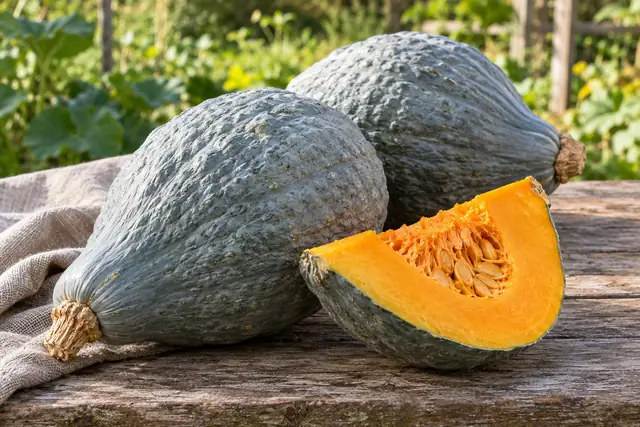
This image was created with AI from described plant characteristics and growing advice. It shows a possible situation and is not a photograph of a verified cultivar.
Blue-grey, elongated, spindle-shaped fruits with rough, thick skin and excellent culinary flesh inside.
Choose Hubbard blauw for blue skin and plenty of flesh per fruit. The large size is less convenient for small individual portions.
Soft orange-yellow flesh is described. The thick, dry skin contrasts clearly with the soft interior.
Carefully cut into larger pieces and cook the flesh for purée or soup. A sturdy chopping board and safe knife technique are practical.
Give a warm, spacious bed and support ripening fruits on a dry surface. The selection mentions fruits weighing several kilos.
Harvest ripe fruit before frost with its stalk intact. Check the thick skin for damage; treat a cut fruit as food to be used, not as a whole storage pumpkin.
Read the source notes →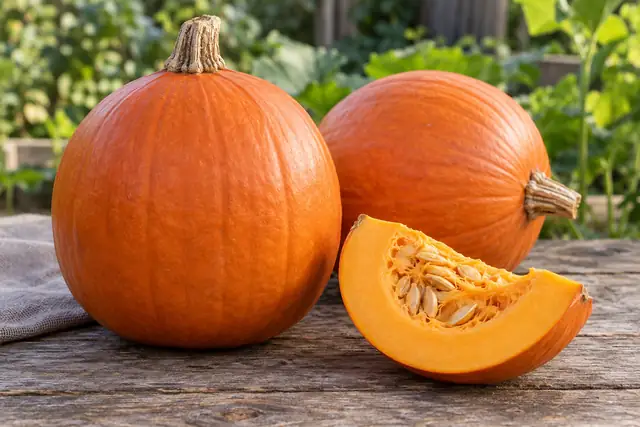
This image was created with AI from described plant characteristics and growing advice. It shows a possible situation and is not a photograph of a verified cultivar.
A round, slightly elongated orange squash with smooth skin: the recognisable Halloween lantern shape.
Choose Jack O’Lanterne for a recognisable carving and ornamental shape that also provides usable flesh.
Thick, light orange flesh of good quality is described. A strong sweetness claim is missing; shape and dual use are the distinction.
This flavour description applies to the crop; there is no separate tasting result for this variety.Use healthy, fresh flesh for purée or soup. For food use, process the harvest before a carved lantern has stood outside for a long time.
Give a warm, spacious position and keep developing fruits on a clean, dry surface so the smooth skin stays attractive.
Let the pumpkin ripen and harvest before frost. Choose an undamaged fruit for a lantern and divide the fresh edible part into portions straight away.
Also listed as: Jack O'Lanterne.
Read the source notes →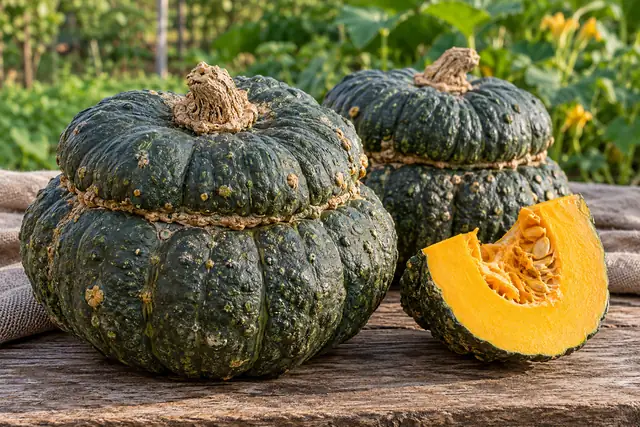
This image was created with AI from described plant characteristics and growing advice. It shows a possible situation and is not a photograph of a verified cultivar.
Dark green-blue, ribbed squash with warty skin and a turban-like top: an unusual Italian autumn shape.
Choose Marina di Chiogga for a heavy, decorative shape and storage harvest, with room for fruits weighing several kilos.
The source mentions tasty flesh without a precise aroma comparison. Shape and described storage suitability give the variety its own place.
This flavour description applies to the crop; there is no separate tasting result for this variety.Roast pieces or use cooked flesh in purée. The warty skin needs care during cleaning and cutting.
Provide a spacious, warm bed and let the fruit ripen on a dry, clean surface. Avoid damaging the rough skin when moving it.
Harvest ripe fruit before frost with its stalk intact. Good storage suitability applies to undamaged, ripe fruit; check this variety regularly in storage too.
Read the source notes →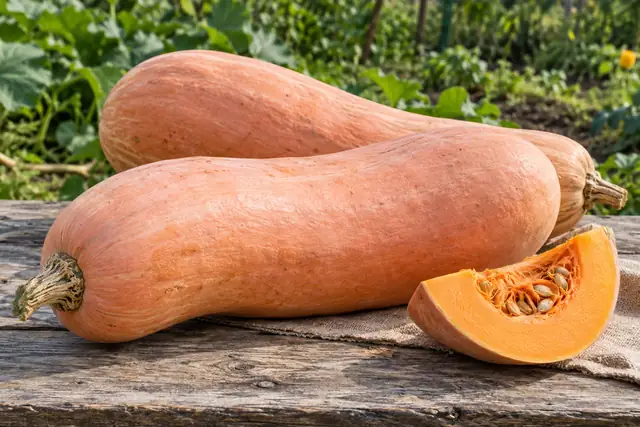
This image was created with AI from described plant characteristics and growing advice. It shows a possible situation and is not a photograph of a verified cultivar.
Large, salmon-coloured, cylindrical fruits have a long, banana-like shape: a squash capable of filling a large bed.
Choose Pink Jumbo Banana for long, salmon-coloured fruits and many portions rather than small culinary fruits.
The source praises flavour without naming a specific aroma. Banana refers to shape, not an established banana profile.
This flavour description applies to the crop; there is no separate tasting result for this variety.Slice some for roasting and portion the rest for other meals. The large shape needs a plan once cut.
Provide plenty of space, warmth and nutrients. The exceptional weights in the source are possibilities under good conditions, not a target for every garden.
Harvest ripe before frost and move large fruits with support beneath their whole weight. Never lift a heavy squash by its stalk.
Read the source notes →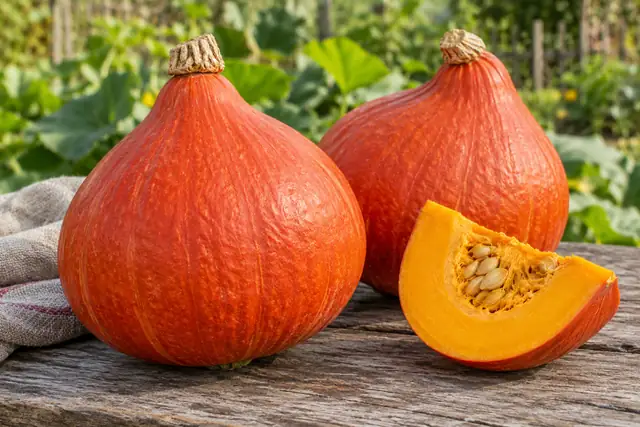
This image was created with AI from described plant characteristics and growing advice. It shows a possible situation and is not a photograph of a verified cultivar.
Orange-red, medium-sized, fig- or top-shaped squash with fine, delicate skin: a recognisable small kuri selection.
Choose Red Kuri for the described chestnut profile and more manageable fruit. Different kuri names are not automatically the same seed line without selection data.
Sweet, dark yellow flesh with a chestnut-like flavour is described. This makes the offering a targeted choice for a nutty autumn dish.
Roast wedges or make purée with few extra flavourings to discover the chestnut note first.
Provide warmth and vine space. Keep young fruits clean and protect fine skin from damage during ripening.
Harvest ripe fruit before frost and store undamaged fruit in dry conditions. Handle the delicate skin carefully, even if storage suitability is good.
Read the source notes →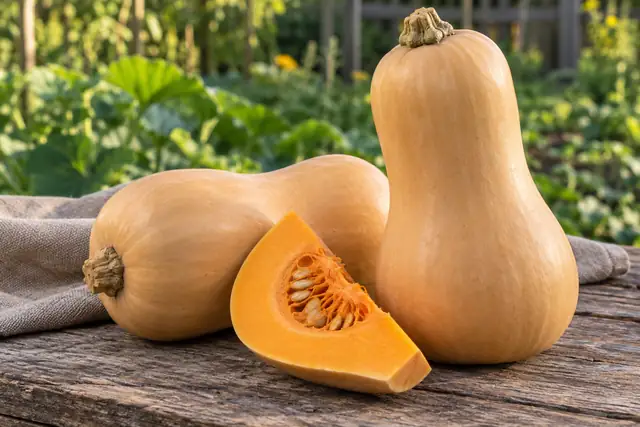
This image was created with AI from described plant characteristics and growing advice. It shows a possible situation and is not a photograph of a verified cultivar.
Butternut is a squash type, not a separate cultivar. The current described Feggies offering names Waltham Butternut in its product text.
Choose a named variety if you want to predict earliness, size or flavour more precisely. The broad type is a starting point for comparing Waltham, Honeynut and Sonca.
A type does not have one fixed aroma. The described Waltham selection is sweet; compare other named butternuts using their own variety information.
This flavour description applies to the crop; there is no separate tasting result for this variety.The bottle shape is practical for roasting neck slices or cutting soup cubes. Size varies by selection.
Provide warm, fertile soil and room for growth. Match pot or open-ground choice to the actual cultivar selected.
Harvest ripe winter squash before frost. Butternut alone defines neither harvest date nor a fixed storage period.
Read the source notes →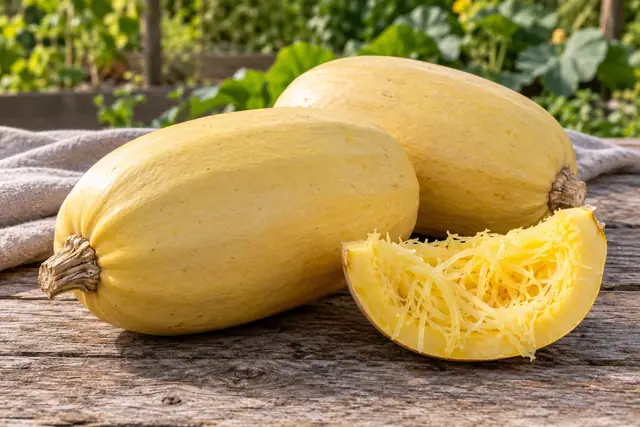
This image was created with AI from described plant characteristics and growing advice. It shows a possible situation and is not a photograph of a verified cultivar.
Elongated squash whose pale yellow flesh separates into firm strands after cooking: a different kitchen texture from purée.
Choose this type if you want a strand-like vegetable base rather than a squash for smooth purée.
The distinction is mainly strand structure, not a proven pasta aroma. General squash flavour combines with sauce.
This flavour description applies to the crop; there is no separate tasting result for this variety.Cook halved fruits and loosen strands with a fork. Serve with tomato sauce or use in an oven dish.
The selection trails. Give a spacious, warm bed and let elongated fruits grow on a dry surface.
For the described spaghetti effect, let the fruit ripen and harvest before frost. Use healthy fruit and test doneness during cooking.
Read the source notes →From a garden bed to a suitable pot or support: give your plant a place that suits your garden and the care you can provide.
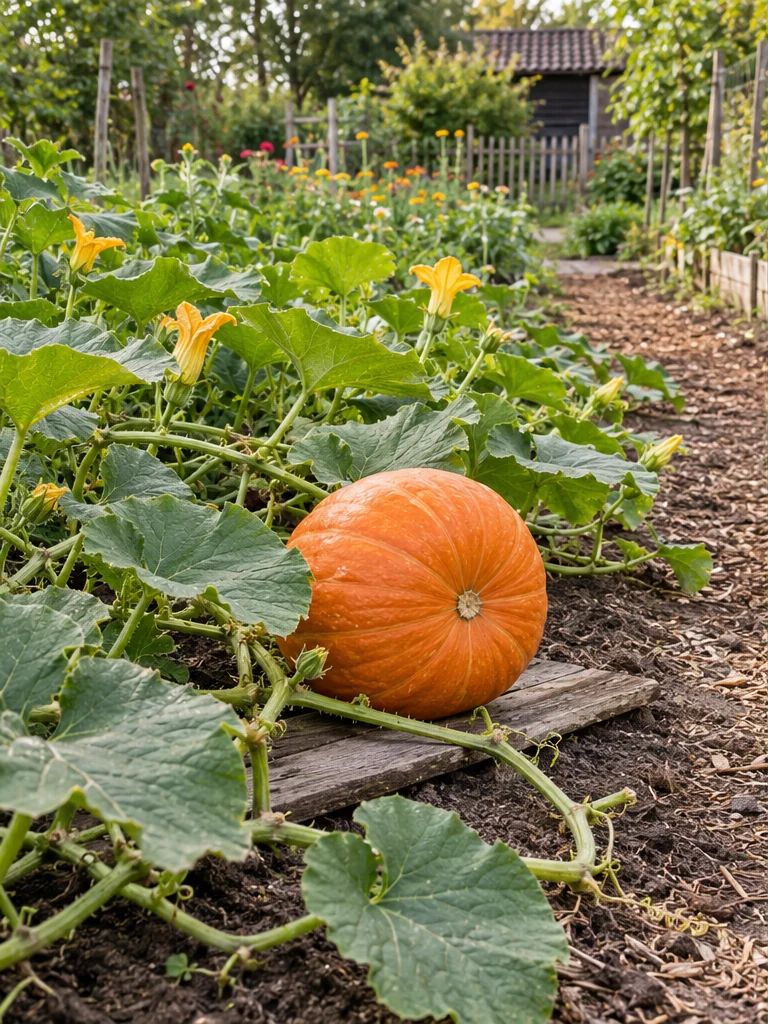
This image was created with AI from described plant characteristics and growing advice. It shows a possible situation and is not a photograph of a verified cultivar.
A trailing variety gets its own bed area and dry support beneath fruits.
For climbing types and those with heavy fruits; keep the harvest path accessible.
Tick off your supplies →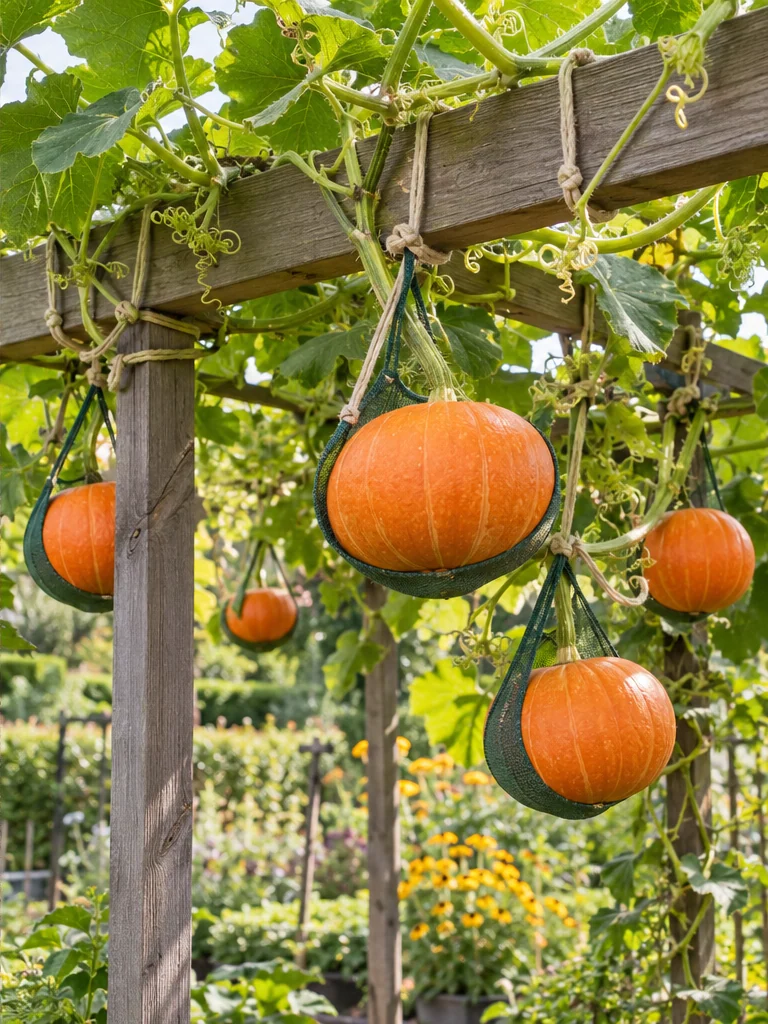
This image was created with AI from described plant characteristics and growing advice. It shows a possible situation and is not a photograph of a verified cultivar.
A suitable small-fruited trailing variety can grow upwards with separate fruit support.
Only for suitable small fruits; large squash grow better on the ground.
Tick off your supplies →See the confirmed differences. Characteristics without supporting evidence are left blank.
0 of 0 varieties
No matching variety found. Try another name or clear the filters.
Choose two to four varieties to compare their source data side by side.
Albenga: Long, strongly curved Italian squashes can develop a trombone-like shape, with light green skin that later turns ochre. Cut the long neck into even pieces for the oven or a stew. The unusual shape gives different portions from a round pumpkin.
A separate flavour profile for the ripe fruit is not described. The light orange flesh offers the general pumpkin base for a cooked meal.
Sonca Orange: A Hungarian butternut selection with fruits of about 1.5–2 kg and firm orange flesh. Roast slices to bring out the nutty aroma, or use pieces in a creamy mash.
The source describes a pronounced hazelnut aroma. This aromatic profile gives the cultivar more identity than its butternut shape alone.
Dickinson Moschata: Large, round, lightly ribbed fruits with ochre skin and orange flesh: a pumpkin for many portions at once. Make a large pan of soup or bake the flesh for mash. When cutting it open, plan several uses for the large fruit straight away.
The described profile is mild. This makes the flesh suitable as a base for seasoning, rather than a distinctly nutty tasting selection.
Futsu Black: Small, flattened Japanese pumpkins with deep ribs change from dark green to ochre: a cultivar with a clear colour change during ripening. Roast rib-shaped wedges or use cooked flesh in mash. The deep grooves need a little more attention when peeling and cleaning.
Thick orange-yellow flesh with a hazelnut-like flavour is described. This is a focused choice for anyone wanting to compare nutty pumpkins.
The name pumpkin covers several Cucurbita species and cultivar groups. A storage pumpkin, ornamental gourd and young summer squash are not equivalent kitchen choices. Buy clearly identified edible seed and check fruit size, growth habit and ripening. For a small household, a smaller fruit can be easier than one large harvest that needs processing immediately.
Vining types can grow several metres; compact bush types still need plenty of space for leaves. The RHS uses about 90 cm for bush forms and more for vining types as a general starting spacing. The cultivar may need different space. Do not place the plant solely where a small growing-on pot happens to fit now.
Starting indoors in spring gives time to raise a healthy young plant. Sow individually and provide good light after germination. Direct outdoor sowing is possible when the soil is warm enough and the remaining growing season is suitable. The American calendar is not a fixed Dutch date. Consider soil warmth, the frost forecast and your cultivar choice together.
Harden off plants raised under cover gradually. Plant outdoors only after the risk of frost and cold nights, in many gardens from late May or June. Avoid disturbing the roots and water after planting. Temporary protection may help during a short cold spell, but it does not guarantee a long season for a warmth-loving plant put out too early.
Mark the position of the rootball at planting. Later, vines and leaves cover a large area, but water must reach the roots. Check the soil and water directly where needed during dry weather. Improve the soil beforehand and apply feed according to need. Filling the space with extra fertiliser does not lengthen a limited growing season.
Male flowers may appear before female flowers with an immature fruit behind them. This is not immediately a problem. Poor weather and few pollinators can limit fruit set. If small fruits drop, also consider drought or cold. Check leaves for fungal disease or feeding damage, provide ventilation and protect young plants from slugs at first.
For winter types, assess colour, hard skin and a maturing stalk according to the cultivar. Let ripening take place on the plant, but avoid frost damage. Cut with a piece of stalk and support the fruit from underneath when carrying it. Cure suitable fruits in a dry, airy place. Damaged or unripe specimens are a different choice for storage.
Store sound, suitable pumpkins in airy, frost-free conditions and check for soft patches. Storage life varies with cultivar and treatment; do not promise yourself a fixed winter supply. Use damaged fruits first if they are otherwise sound. Do not use an edible pumpkin that tastes unusually bitter. Keep the cultivar label with the harvest to inform your next choice.
Tick what you already have. The extras depend on how you grow.
0 of 6 ticked off
Your ticks are saved in this browser.
SeedSteps editorial team · updated on 11 October 2026. The AI images illustrate species and practical growing situations; they do not prove an exact cultivar, observations from your own garden or yield.
Britse gewasadviezen worden gecombineerd met Nederlandse en Vlaamse informatie waar beschikbaar. Amerikaanse Extension-bronnen ondersteunen plantprincipes en herkenning; hun kalenderdata, lokale plaagdruk, bestrijdingsmiddelen en mestdoseringen worden niet rechtstreeks op Nederland of Vlaanderen toegepast. Vorst, bodemwarmte, standplaats en expliciete rasinformatie blijven de lokale controle. Commerciële bronnen onderbouwen uitsluitend benoemde ras- en plantkenmerken; zij zijn geen affiliate-aanbeveling.
Supporting evidence by chapter: Choose by flavour, shape and use: Feggies, Kokopelli, Feggies, Kokopelli, Feggies, Kokopelli, Feggies. Pumpkins are a group with different purposes: Royal Horticultural Society, University of Minnesota Extension. Make room for the mature plant: Royal Horticultural Society. Sow in warmth and keep the rootball intact: Utah State University Extension, University of Maryland Extension. Let the weather have the final say: Royal Horticultural Society, University of Maryland Extension. Find the plant base beneath the large leaves: Royal Horticultural Society, Utah State University Extension. Take your time checking fruit set and leaves: University of Maryland Extension, Royal Horticultural Society. For storage, the fruit must ripen on the plant: University of Minnesota Extension, Royal Horticultural Society. Give each fruit a suitable use: University of Minnesota Extension, Bundesinstitut für Risikobewertung.
