Why grow Express Eleonora?
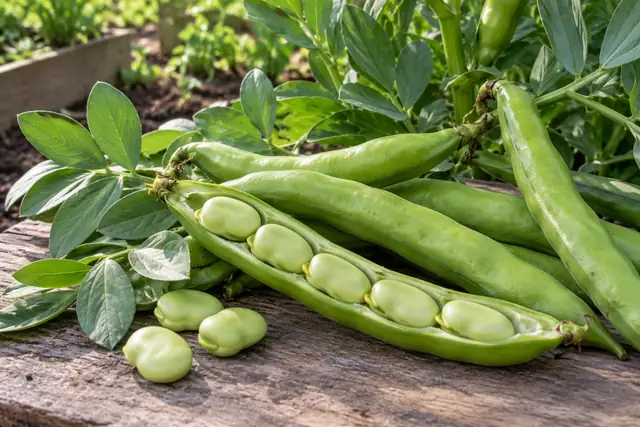
Broad bean with long pods for fresh shelling.
Choose Express Eleonora for a classic fresh broad bean harvest with long pods. A row of your own makes shelling for a meal visible from plant to pan.
How this choice tastes
Young broad beans have the full, slightly earthy character of broad beans. The source supports long pods and productivity, but no separate sweetness compared with other cultivars.
From harvest to kitchen
Shell young, filled pods and cook the beans thoroughly. Larger beans can be skinned after cooking if you want to reduce the skin texture in a refined dish.
What needs attention when growing
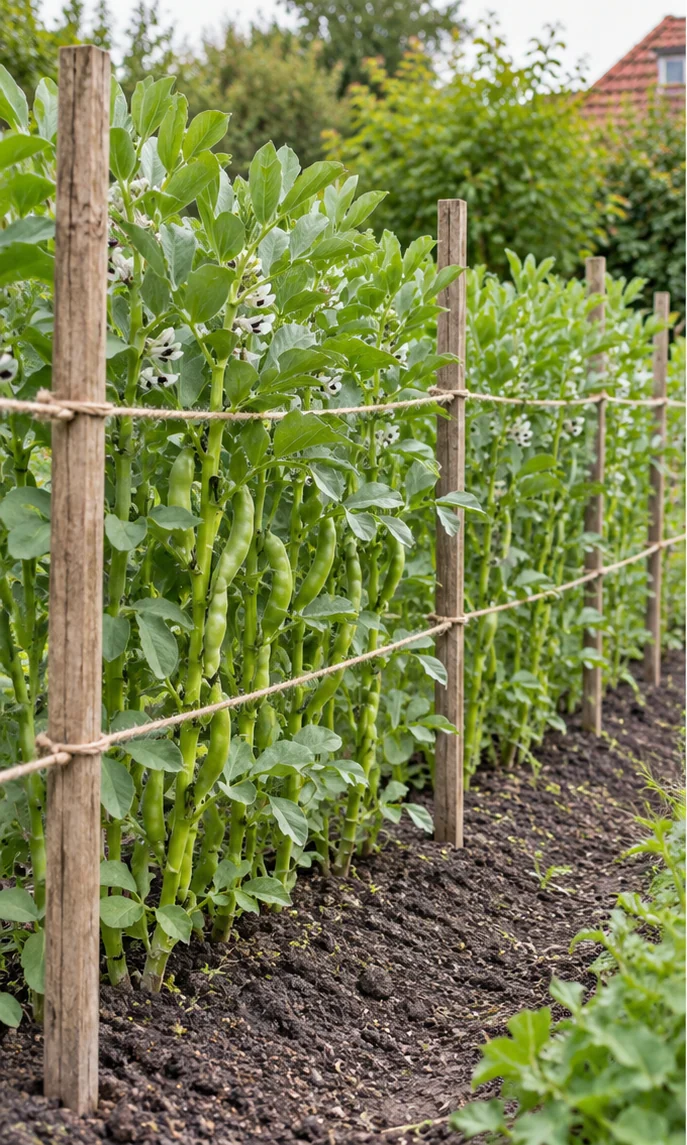
Sow early in spring in workable soil and allow room for the plants. A low string along the row helps keep stems upright in wind.
Harvest once the pods are well filled while the beans are still tender. Pick gradually from the bottom upwards and do not let the entire crop become hard storage beans.
Choose by flavour, shape and use
Express Eleonora: Broad bean with long pods for fresh shelling. Shell young, filled pods and cook the beans thoroughly. Larger beans can be skinned after cooking if you want to reduce the skin texture in a refined dish.
Young broad beans have the full, slightly earthy character of broad beans. The source supports long pods and productivity, but no separate sweetness compared with other cultivars.
Red Epicure: Broad bean with purplish-red seeds that become paler when cooked. Shell young, filled pods and cook the beans thoroughly. Show the fresh red seeds on the harvest tray before cooking; they become paler afterwards.
Red Epicure has the character of broad beans; the red seed is the clear difference. Colour gives no proven flavour advantage over a green or pale-seeded type.
An early bean is a different crop to grow
Broad beans tolerate cool weather better than French and runner beans, allowing early starts, but wet, frozen soil is no good seedbed. Match pots or direct sowing to variety, forecast and soil; no fixed date fits every garden.
Choose height and harvest type first
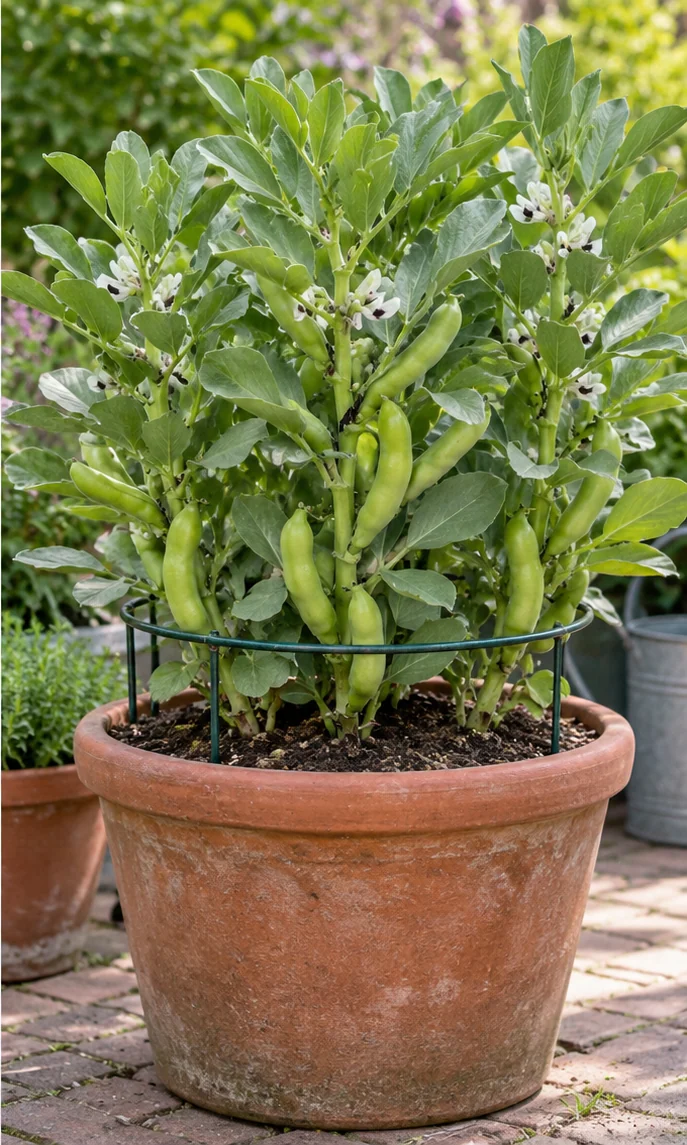
Varieties differ in height, earliness and bean colour after cooking. Choose a compact variety for pots and enough space for taller selections in the bed. Autumn sowing is only a separate option with a suitably hardy variety and appropriate conditions; not a general standard.
Large seeds need a clear planting spot
Sow typically about 5 cm deep in loose, moist soil, following variety advice. Deep pots allow planting healthy emerged seedlings. Provide light and avoid wet compost. Harden off before plants remain permanently outdoors.
Leave air between the sturdy stems
Give each plant recommended spacing and leave a harvest path. A double row simplifies building perimeter support. Plant root balls without pulling hard on roots, water in and check drying or slug damage over the first days.
From flower to heavy pod
Leave flowering plants undisturbed and allow pollinating insects access. Keep soil moist in dry weather while pods develop. Temporary protection should not exclude insects throughout flowering. Flowers appearing does not mean every flower will produce a full pod.
Support the row as a whole
Broad bean stems stand upright but can fall under wind and pod weight. Run string at suitable height around the row. Add another level for tall varieties. Support holds the group together without constricting stems.
Look particularly at the soft tips
Black aphids often gather on growing tips. Inspect early and support natural enemies. Once enough lower pods set, topping may reduce vulnerable new growth; do not top blindly before harvest is established. Assess badly damaged shoots separately.
Shell a test pod
Pick once beans inside have grown enough but remain young and tender. Exterior alone tells little: shell a trial pod. Hold the stem while picking. Long-grown beans often have firmer skins than young harvests.
Store fresh and clear the crop
Use shelled harvests promptly or keep briefly cool. Freeze surplus following a suitable method. Clear foliage after growing and optionally leave healthy roots in soil. Use the freed space for an appropriate following crop.