Why grow Doux de Florence?
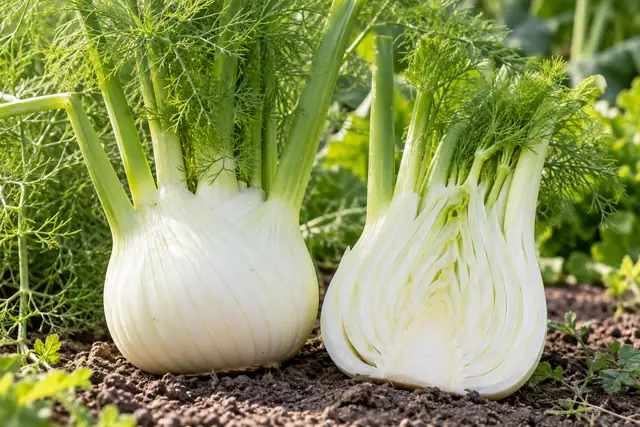
White, swollen leaf bases with a fresh anise flavour.
Choose Doux de Florence if you want classic white bulb fennel. The choice focuses on the edible, swollen leaf bases; ordinary herb fennel gives a different harvest.
How this choice tastes
This Florence fennel is described as having a fresh anise flavour. That is the crop’s character; the cultivar name Doux does not mean it is demonstrably sweeter than Fino.
From harvest to kitchen
Use thinly sliced white parts in a raw salad or grill evenly sized wedges. Keep the base attached when cutting so each wedge holds together during cooking.
What needs attention when growing
Sow during the stated period and keep soil evenly moist. Give each plant enough room for the broad base and avoid a long stay in an undersized pot.
Harvest at a full, firm base and use the bulb fresh. Do not wait for maximum height: for bulb fennel, harvesting before bolting is the key quality choice.
Choose by flavour, shape and use
Fino: Bulb fennel for sheltered and outdoor growing with enough moisture. Slice thinly for a salad with citrus or braise wedges with a little water. A little finely chopped foliage can add fennel aroma just before serving.
Fino has the fresh anise aroma of Florence fennel. Raw slices are crisp; braising softens the texture and rounds out the aroma.
Doux de Florence: White, swollen leaf base with a fresh aniseed flavour. Use thinly sliced white parts raw or grill equal wedges. Retain the base when cutting so each wedge holds together during cooking.
This Florence fennel is described as having a fresh anise flavour. That is the crop’s character; the cultivar name Doux does not mean it is demonstrably sweeter than Fino.
Zacht zomervroegse: Early offering type with a flatter fennel bulb. Slice flattened bulbs thinly for salad or brief pan cooking. Use healthy foliage sparingly as an aromatic finish to the dish.
The fresh anise aroma belongs to Florence fennel; a separate mild flavour score is not established. The flatter bulb shape and early use provide the concrete guidance for choosing here.
Start with the right fennel type
Herb and bulb fennel foliage looks similar. For thick, tender leaf bases, choose a bulb variety and check its sowing season. Some suit earlier growing. A general packet name alone gives no certainty of bulb formation in your garden.
A summer start reduces the risk of bolting
Bulb fennel responds to conditions and may flower before bulbs are usable. June and July offer many Dutch gardens a practical later-harvest start. Early growing needs a suitable variety and more care. Do not use American dates as a fixed Dutch calendar.
Let the root grow in place
Direct sowing avoids transplant damage to young roots. Prepare fine soil, sow thinly and water gently. If using modules, provide root room and plant entire root balls. Do not leave plants too long in undersized cells; steady establishment helps.
Thin with your harvest aim in mind
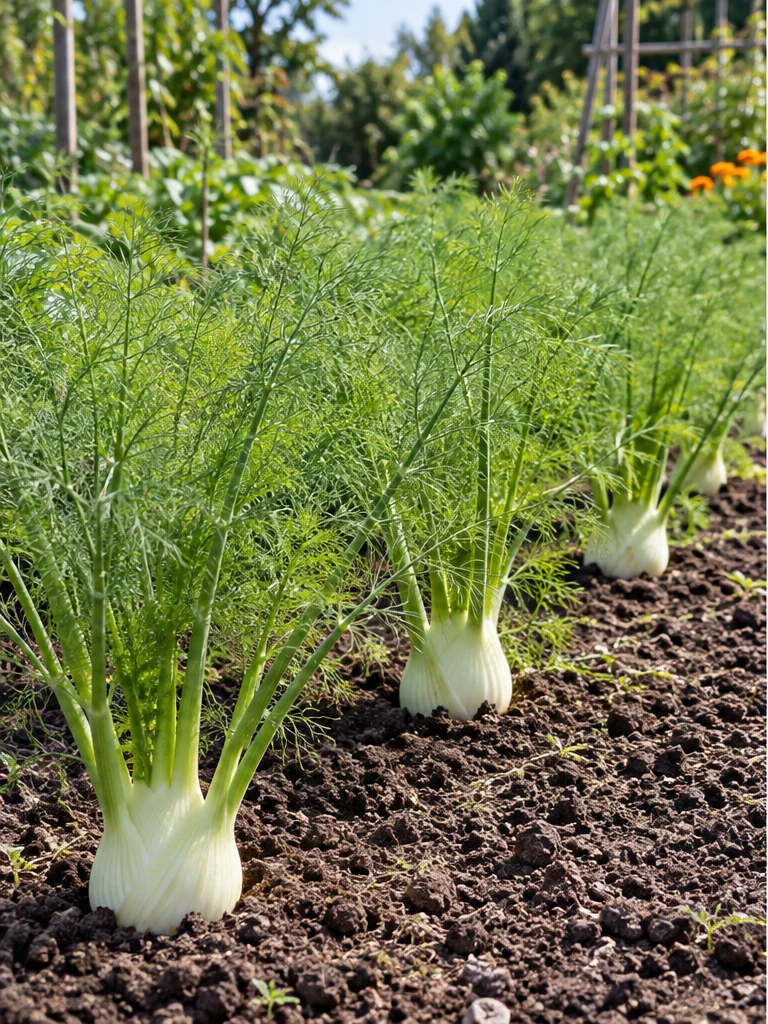
Large bulbs need more room than mini fennel. Around 30 cm between plants is a useful starting point for full-sized bulb fennel; young small bulbs allow closer spacing. Carefully cut or remove extras rather than hoping crowding yields larger bulbs later.
Keep the leaf base visible and the soil moist
Choose a sunny spot with fertile, well-drained soil. The swollen leaf bases develop at the surface. Water regularly when the soil becomes dry, especially in a container. Check below the top layer before deciding. A loose mulch layer may help, without burying the growing point under wet material.
Recognise a stem trying to grow upwards
Elongation with firm flower stems differs from steadily widening bulbs. Harvest bolting plants early and use usable parts. Next round, seek better timing, less drying and gentler transplanting. Extra feed does not turn bolted plants back into bulb fennel.
Cut when the swollen stem is firm and usable
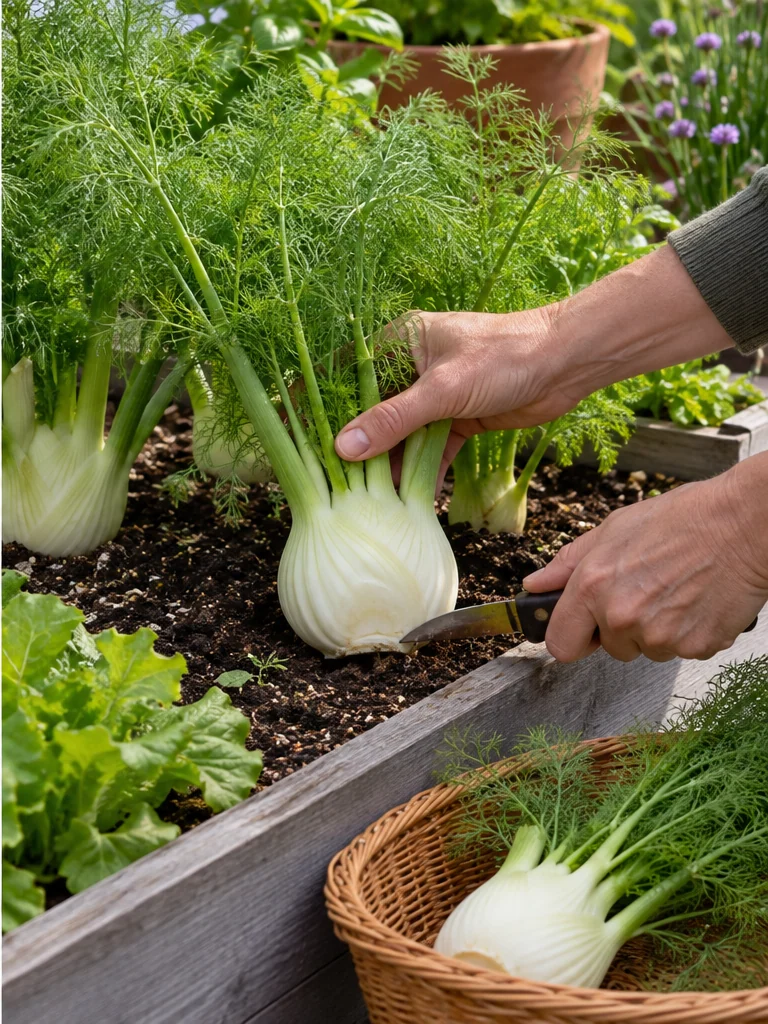
Harvest bulbs at desired size before toughness or elongation. Hold the plant and cut at the base. Young bulbs suit small meals; large ones need more cutting. Keep fine foliage separately as a herb. Compare two harvest sizes of the same variety.
Use the crop as an attractive second round
Start a small fennel row after clearing a bed. Record sowing, first harvest and bolters to discover whether an early or late round suits your position. In containers, note watering frequency too so the next crop fits your week better.