Costata Romanesco: Italian courgette with striking ribs
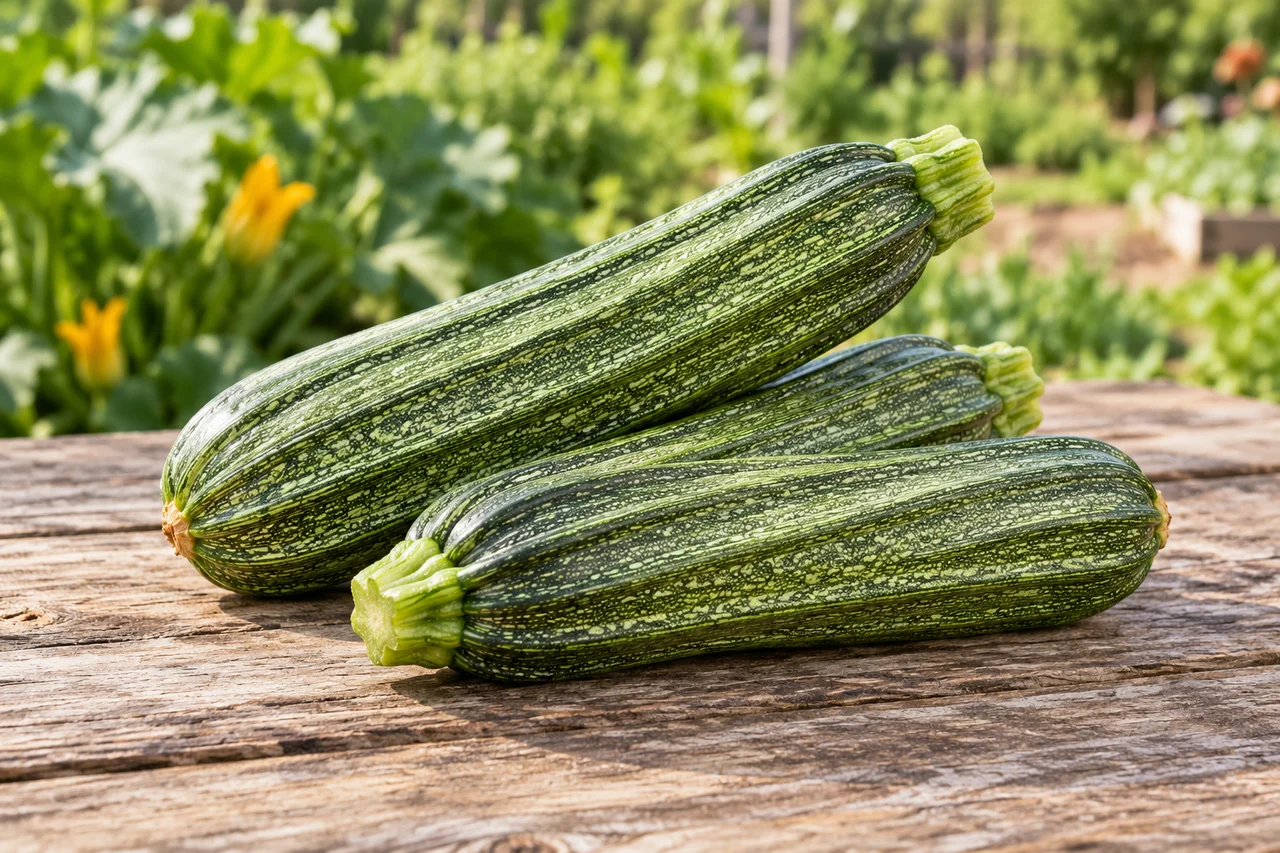
Costata Romanesco is recognisable by elongated grey-green fruit with clear ribs. The producer describes a nutty flavour. Give the vigorous, partly trailing plant a spacious bed.

Loading the garden guide…
Costata Romanesco is recognisable by elongated grey-green fruit with clear ribs. The producer describes a nutty flavour. Give the vigorous, partly trailing plant a spacious bed.

This image was created with AI from described plant characteristics and growing advice. It shows a possible situation and is not a photograph of a verified cultivar.
Growing periods are guidelines for the Netherlands and Flanders. The last frost, warmth and your own growing space determine the timing. Read the courgette guide too for full care instructions.
Start under cover in warmth · Courgette
April–early MayStart indoors in warmth and reserve enough bright space for raising plants.
These plants grow quickly. Do not start in February if you cannot plant out until late May.
RHS · courgette ↗Britse teeltrichtlijn voor een gematigd klimaat; de genoemde perioden zijn richtlijnen voor Nederland en Vlaanderen.
Feggies · Courgette Ola Redonda — ras- en teeltbeschrijving ↗Nederlandse producent of teeltbron; de rasinstructie blijft leidend.
Feggies · Courgette Black Beauty — ras- en teeltbeschrijving ↗Nederlandse producent of teeltbron; de rasinstructie blijft leidend.
Guideline periods for the Netherlands and Flanders. Check the variety, available light, soil and measured temperatures. Greenhouse heating does not guarantee enough winter light.
The ribs run lengthways along the fruit. Skin is grey-green with pale green speckles. Johnny’s describes a traditional Italian, open-pollinated variety with large leaves and partly trailing growth.
This variety suits a spacious bed. The American producer recommends broad rows and notes that extra space eases harvesting. Do not confine it to the same small space as a compact pot variety.
Mark the spot in your garden planner now. Leave a path clear too: you will need to reach the flowers and fruit stalks later. Measure the available space now rather than after planting out.
For our outdoor summer season, usually start in April or May in an individual pot. The exact start depends on when you can safely plant out. Buy seed under the exact cultivar name and write that name on the label; this keeps different cultivars distinguishable.
First let your plant get used to outdoor air and sunshine. Wait to plant out until the risk of night frost has passed and the bed is warm enough. Move the whole root ball carefully. A quick start comes from suitable conditions rather than putting plants outside as early as possible.
Check the soil regularly and water at the roots. If the soil is still wet, skip watering. Record what you do and watch how the plant responds. For the full step-by-step guide to water, soil and feeding, return to the courgette guide.
When the first flowers appear, check whether there is a small ovary behind them. A flower on a thin stalk is male. Allow pollinating insects access to the flowers, even in a greenhouse or under protection. A small fruit that fails to grow first calls for a check of pollination and conditions.
Johnny’s describes a nutty flavour and firm texture. This is a producer description, not a tasting from your garden. Prepare a young fruit simply and discover what you value in the variety.
Save your first harvest date in My garden. This gives you a personal reminder of the season and lets you look back later at which fruits you wanted to pick again.
Keep the name and your own notes with your garden. Saved courgette seed may have cross-pollinated; choose reliable seed again if you want to be sure of growing the same characteristics.
Judge the cultivar by what matters to you: its shape in the kitchen, ease of harvesting or the space the plant needed. The AI illustration helps you explore its appearance; your own photos and harvest records show how growing it actually went.
Courgette belongs to Cucurbita pepo, in the cucumber family. The producer describes Zephyr as a bicoloured summer squash. General growing advice has been adapted to our home gardening context; foreign spacing recommendations and variety characteristics remain clearly attributed to their sources.
SeedSteps editorial team · updated . The images were created with AI and illustrate the features described.
Supporting evidence by chapter: How to recognise Costata Romanesco: Johnny’s Selected Seeds. Choose the spot before you sow: Johnny’s Selected Seeds, Utah State University Extension. From seed to a young plant: Royal Horticultural Society. Gradual hardening off and planting out: Royal Horticultural Society, Utah State University Extension. Care with attention to the roots: University of Minnesota Extension. Flowers are the start of the harvest: Royal Horticultural Society. When do you pick this cultivar?: Johnny’s Selected Seeds, University of Maryland Extension. A choice for next season: Royal Horticultural Society, Johnny’s Selected Seeds.