Why grow Sabre?
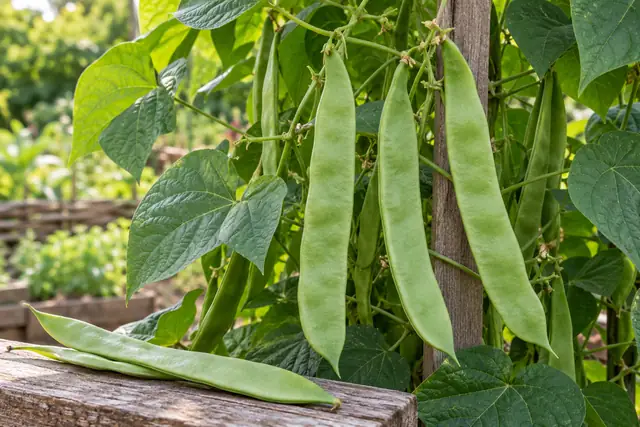
Green, flat-podded bean for strips or pieces.
Choose Sabre for a green, flat climbing bean clearly intended for slicing. The stringless description reduces preparation as long as you harvest young pods in good time.
How this choice tastes
Sabre has the gentle cooked character of slicing beans. The supplier mentions good flavour quality; no substantiated tasting difference from Helda or other green slicing beans is given.
From harvest to kitchen
Slice young, flat pods diagonally for a warm dish or into equal pieces for a vegetable pan. Cooking makes the broad pod wall suitable for eating.
What needs attention when growing
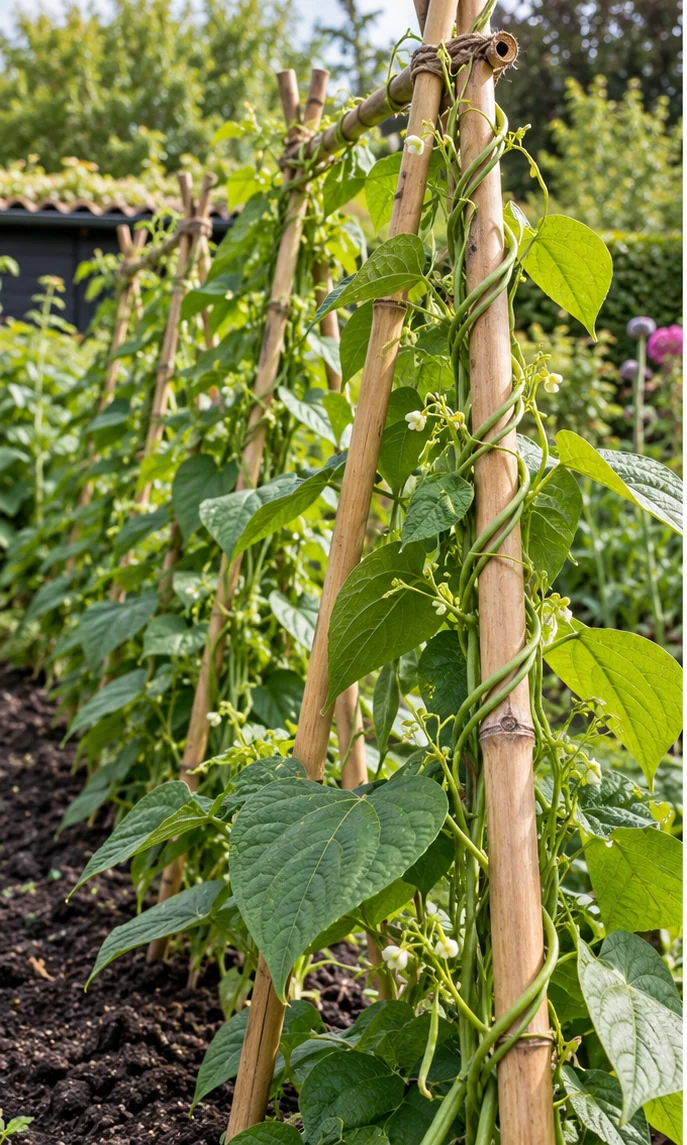
Put sturdy climbing supports in place before sowing in warm soil. Keep vines accessible for picking and water at soil level during dry pod formation.
Harvest once the wall is tender and the pod well formed. Do not let the seeds become large for this kitchen use, and plan several pickings per week.
Choose by flavour, shape and use
Helda: Green climbing flat-podded bean for a wigwam or bean frame. Cut young pods into diagonal strips and cook thoroughly. Use fresh portions or blanch some following a suitable freezing method.
Helda has the mild bean character of cooked flat beans. The broad pod calls for a different approach to cutting than a slender French bean; picking young determines the tender bite.
Sunshine: Long, thin yellow pods on a climber. Cook young yellow pods whole and serve with fresh herbs. You can cut longer ones in half without slicing them into strips like broad flat beans.
Sunshine has a mild cooked-bean character. The slender yellow pod is the documented difference; butter bean does not imply a buttery fat content or fixed flavour score.
Neckargold: Long, yellow, fleshy pods on a climbing bean. Cook young pods whole or cut into equal pieces for a vegetable dish. Use little strongly flavoured sauce at the first tasting to experience the fleshy texture.
The fleshy yellow pod gives a mild bean character after thorough cooking. The source describes no proven sweetness difference from other yellow climbing beans.
Golden Gate: Broad, flat yellow slicing bean on a climber. Cut young pods into diagonal strips and cook thoroughly. A mix with green flat beans gives two colours; prepare pieces of equal width for an even bite.
Golden Gate has a mild cooked-bean character with a broad pod wall. The yellow colour and flat shape are more concrete than a separate cultivar-specific flavour note.
Make your growing choice first
Climbing beans need support; placing a dwarf bean against a tall pole does not change its growth habit. Choose how you want to harvest too. Young French or flat beans need a different picking routine from beans that must mature fully.
Wait for suitable outdoor weather
A bean from warm indoor air cannot immediately cope with a cold garden. Follow the frost forecast, harden the plant off and provide warm soil. A good start avoids trying to recover from several weeks of stalled growth.
Keep an eye on the soil
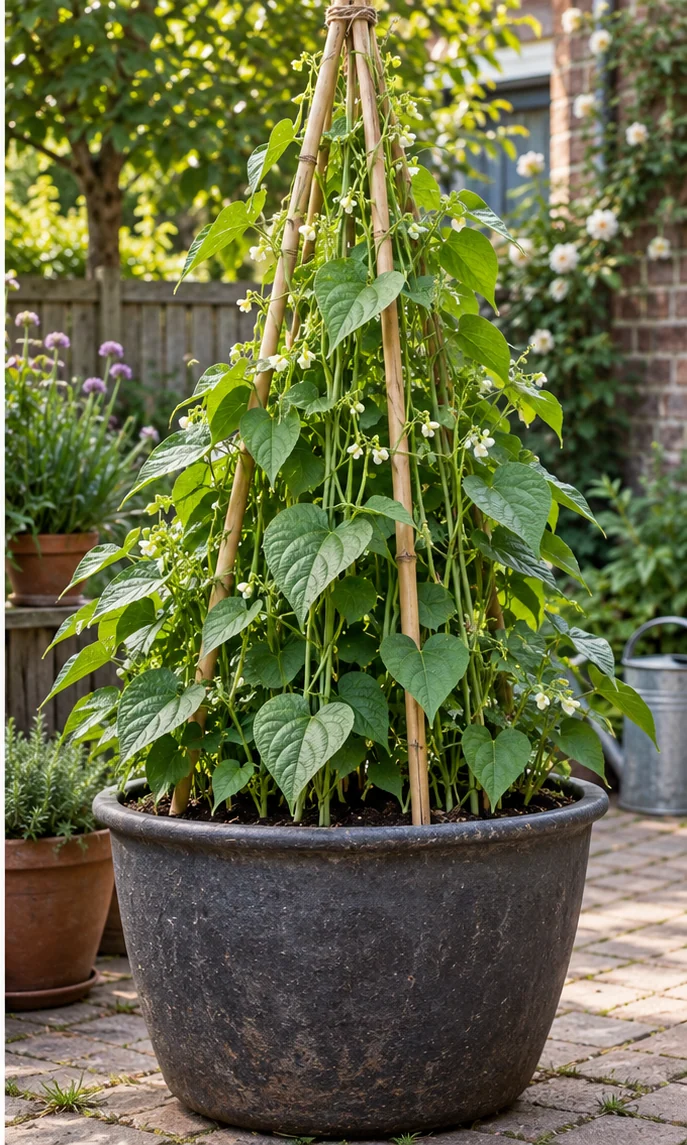
Water according to moisture around the roots, paying extra attention during flowering and pod formation. Keep young plants free of weeds. Growing in pots requires more frequent checks; a dry pot can still be dry inside after a brief shower.
Height starts with a choice
Climbing bean describes the climbing growth habit. It does not yet tell you whether you are growing round French beans, flat slicing beans or drying beans for their seeds. Read both parts of the cultivar profile. Add your intended harvest to the label too; this tells you which development to follow on the plant during the season.
Put the support in place before the plant needs it
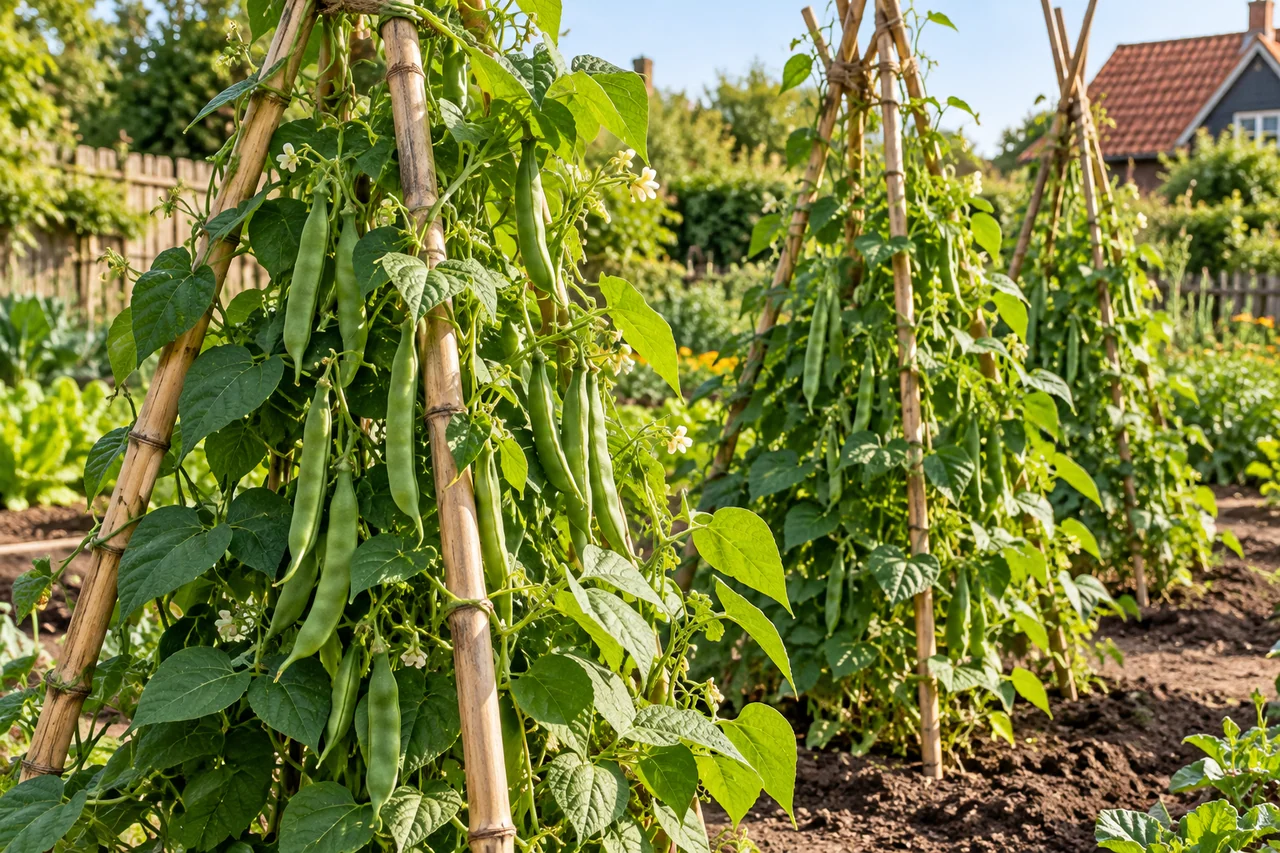
A climbing support belongs in the bed from the start. Check that the canes or frame are sturdy and secure the joins. Think about reaching your hands between the future leaves too. A support covered in growth is only useful if you can find and pick pods from the path.
Wait for soil in which the bean can get started
Bean seed can rot in cold soil. Check both the soil and the weather before starting. A sunny afternoon above a bed that is still cold and wet offers a different starting point from warmed soil. Follow the packet instructions and record your sowing date so you can assess germination in context later.
The first shoots find their own hold
After germination, watch how the shoots reach the support. You can gently guide a shoot that has come loose. Walk along the other side of the bed too: what looks tidy from the path may be hanging loose at the back. This keeps the first climb clear to follow before the different plants form a dense green screen together.
Monitor moisture beneath the canopy
During dry spells, the root zone deserves attention, especially as pods form. Look below the surface rather than just at the colour of the topsoil. Shade from a support covered in growth changes what you see. Make this check a regular part of your garden round and record when you actually watered.
The pod tells you when to pick
For fresh French beans, harvest pods before the seeds bulge strongly. Look among the leaves too and compare what you find with the cultivar profile. Different beans naturally have different lengths and shapes. Do not let a general size guideline outweigh the intended young harvest stage.
A picking round needs two steady hands
The school garden handbook describes supporting the stalk when picking. This makes harvesting a deliberate action rather than pulling at the whole crop. Work from bottom to top and look back at places hidden behind leaves. A small basket and a regular route help you give it the same attention each time.
Record what growing upwards gave you
Chill fresh beans if you are not using them straight after picking. Also record your experience with the bed: where could you reach easily, which side did you often miss, and was the support practical? These notes give you a more concrete starting point next season than a photo of a climbing frame covered in growth alone.