Growing Redbor: follow the purple leaves closely
Redbor stands out for deeply purple, strongly curled leaves. Discover the variety information behind this, provide a suitable position and make young leaf harvesting an attentive round of the bed.
Loading the garden guide…
Redbor stands out for deeply purple, strongly curled leaves. Discover the variety information behind this, provide a suitable position and make young leaf harvesting an attentive round of the bed.

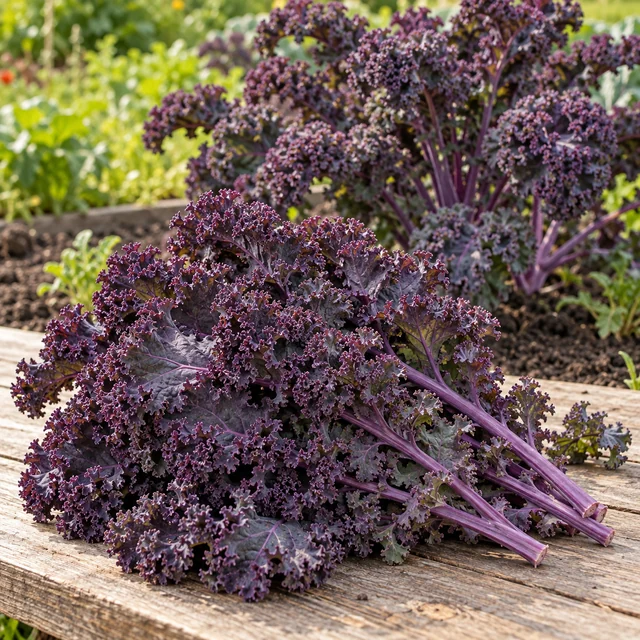
This image was created with AI from described plant characteristics and growing advice. It shows a possible situation and is not a photograph of a verified cultivar.
This growing advice helps you choose. Your variety, growth stage, weather and conditions in your space determine the actual timing.
Start under cover in cool conditions in modules or a seedbed · Kale
April–JuneStart under cover in cool, bright conditions to suit the desired harvest time.
Plan for young leaves or mature winter plants. Portuguese cabbage is not automatically as winter-hardy as kale.
RHS · bladkool ↗Britse teeltrichtlijn voor een gematigd klimaat; de genoemde perioden zijn richtlijnen voor Nederland en Vlaanderen.
Feggies · Boerenkool westlandse herfst – biologische groentezaden ↗Nederlandse producent of teeltbron; de rasinstructie blijft leidend.
Feggies · Boerenkool Westlandse herfst zaden organic ↗Nederlandse producent of teeltbron; de rasinstructie blijft leidend.
Guideline periods for the Netherlands and Flanders. Check the variety, available light, soil and measured temperatures. Greenhouse heating does not guarantee enough winter light.

The source context and any limitations are in the background information at the bottom.
Compare with another varietyThe options below belong to the plant. From these, choose the method that suits your variety's growth habit.

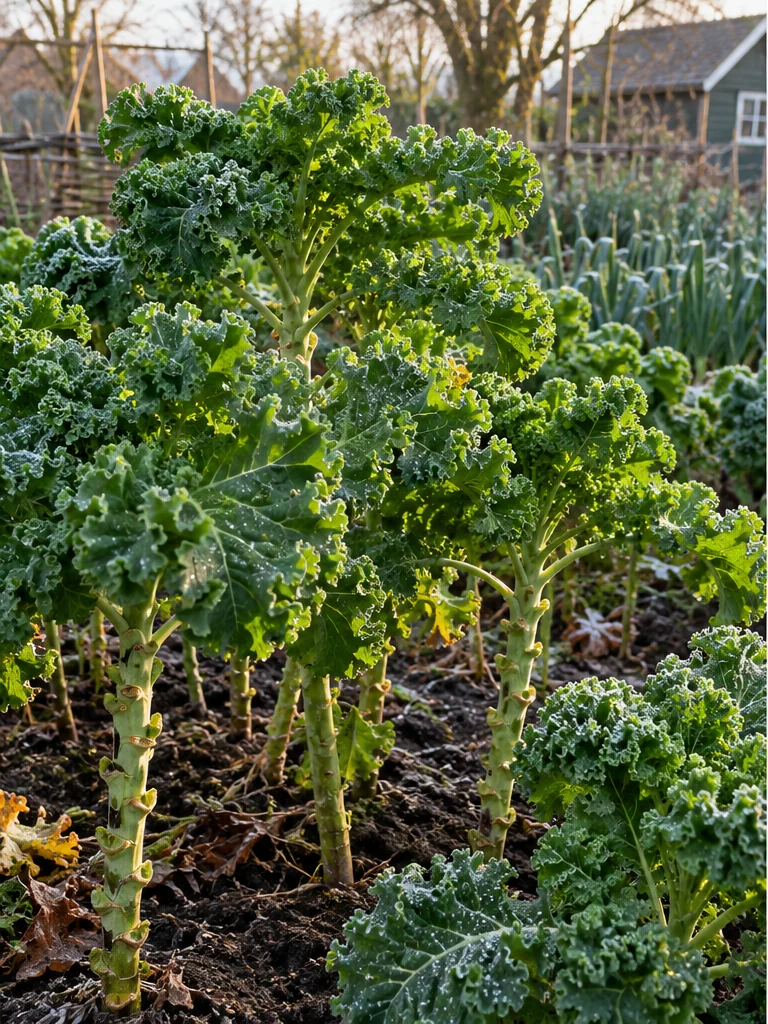
This image was created with AI from described plant characteristics and growing advice. It shows a possible situation and is not a photograph of a verified cultivar.
Established plants make the autumn bed useful.
For a vegetable garden with room in summer and winter.
Tick off your supplies →
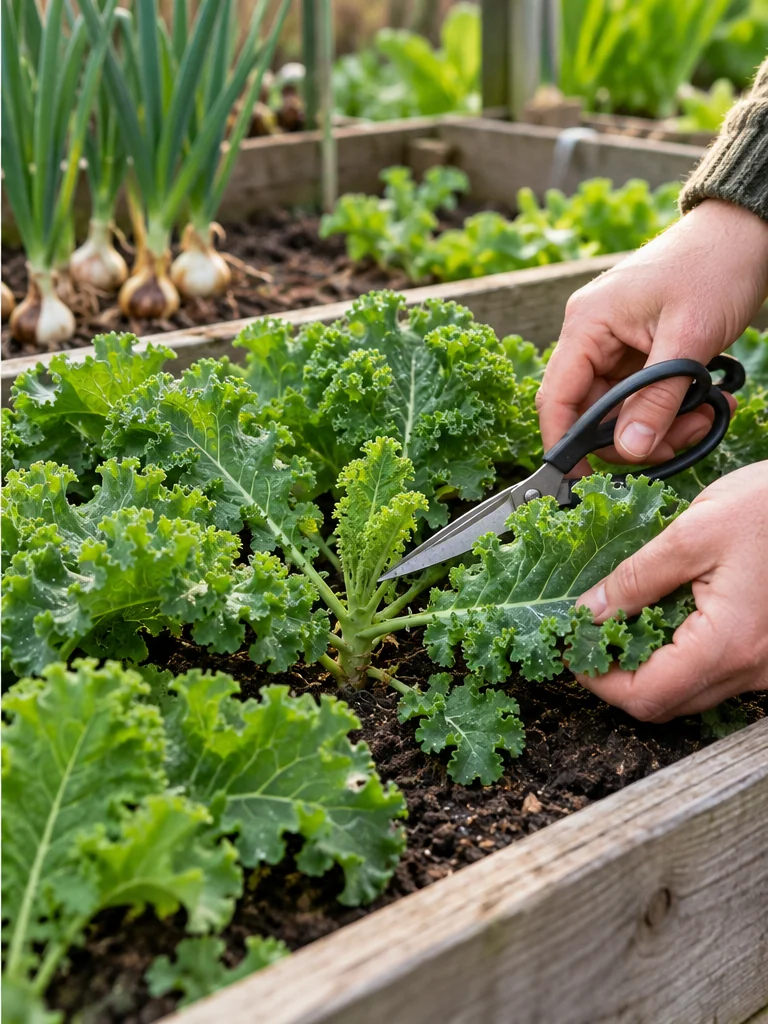
This image was created with AI from described plant characteristics and growing advice. It shows a possible situation and is not a photograph of a verified cultivar.
A short crop can provide small, fresh leaves.
For small portions and limited space.
Tick off your supplies →The school gardening handbook names Redbor as purple kale alongside green Westlandse Winter. This gives colour a practical place in cultivar choice. Observe both if you grow them together: appearance makes comparison easy, but each still needs its own cultivar description. Green kale does not establish Redbor's height, leaf texture or seed type.
The RHS describes deeply purple, strongly curled Redbor leaves and young tender harvests. Observe unfolding leaves closely. Shape and colour aid recognition but do not alone indicate pleasant picking quality locally; actual stage remains important.
The Dutch school garden selection explicitly lists Redbor as F1. Keep current packaging in notes to identify seed lots later. Compare full name and designation next season, linking purple-leaf choices to actual starting seed.
The British RHS variety profile gives a height of fifty to one hundred centimetres and a spread of ten to fifty centimetres. It describes a clump-forming plant for full sun. Use these measurements as a source-specific starting point and follow the variety instructions on your packet for spacing. A stated plant width is not automatically a complete planting scheme for your vegetable garden.
The RHS places Redbor in fertile, moist soil that drains well. Look beyond the surface. Water when the root zone needs it and watch for standing rainwater. American kale guidance helps explain organic matter and water stress; such general growing knowledge does not provide separate Dutch sowing advice for this cultivar.
Use the striking foliage as a reason to look closely and regularly. Insect mesh and bird protection may form part of cultivation; allow enough room above the plant under a cover. A general health description in a cultivar profile does not promise specific diseases or pests will stay away. Examine damage and conditions before deciding what to do.
RHS highlights Redbor's young tender leaves. Turn this into each round's observation: which match your stage? General kale advice gives individual outer-leaf picking while others grow. Connect this with actual plants and leave room for continued growth.
Kale may taste different after cold weather and grow less during frost. Follow Redbor's usable foliage and local conditions. A British hardiness rating guarantees neither a Dutch harvest nor a fixed minimum temperature for your bed. Keep a photograph alongside picking notes to connect its striking purple appearance with what the plant actually yielded for you.
Tick what you already have. The extras depend on how you grow.
0 of 6 ticked off
Your ticks are saved in this browser.
SeedSteps editorial team · updated on 11 October 2026. The AI images illustrate species and practical growing situations; they do not prove an exact cultivar, observations from your own garden or yield.
Britse gewasadviezen worden gecombineerd met Nederlandse en Vlaamse informatie waar beschikbaar. Amerikaanse Extension-bronnen ondersteunen plantprincipes en herkenning; hun kalenderdata, lokale plaagdruk, bestrijdingsmiddelen en mestdoseringen worden niet rechtstreeks op Nederland of Vlaanderen toegepast. Vorst, bodemwarmte, standplaats en expliciete rasinformatie blijven de lokale controle. Commerciële bronnen onderbouwen uitsluitend benoemde ras- en plantkenmerken; zij zijn geen affiliate-aanbeveling.
Supporting evidence by chapter: A purple plant makes your choice visible: Handboek Schooltuinen, via Velt. The curl belongs to this variety profile: Royal Horticultural Society. An F1 designation needs its own source: Handboek Schooltuinen, via Velt. Think about height while the plant is still small: Royal Horticultural Society. Moisture and drainage belong together: Royal Horticultural Society, University of Minnesota Extension. Purple leaves deserve the same careful inspection: Royal Horticultural Society, University of Minnesota Extension. A picking round begins with the desired leaves: Royal Horticultural Society, University of Minnesota Extension. Record what your purple plant does in winter: Royal Horticultural Society, University of Maryland Extension, University of Minnesota Extension.
Variety type: Leaf cabbage for young leaves Brits RHS-rasportret of aangehaalde raskeuzelijst; geen Nederlandse kalender of algemene ziekteimmuniteit. Royal Horticultural Society
Growth habit: Clump-forming Brits RHS-rasportret of aangehaalde raskeuzelijst; geen Nederlandse kalender of algemene ziekteimmuniteit. Royal Horticultural Society
Height: 50-100 cm Brits RHS-rasportret of aangehaalde raskeuzelijst; geen Nederlandse kalender of algemene ziekteimmuniteit. Royal Horticultural Society
Light: Full sun Brits RHS-rasportret of aangehaalde raskeuzelijst; geen Nederlandse kalender of algemene ziekteimmuniteit. Royal Horticultural Society
Main colour: Deep purple leaves Brits RHS-rasportret of aangehaalde raskeuzelijst; geen Nederlandse kalender of algemene ziekteimmuniteit. Royal Horticultural Society
Open-pollinated / F1: F1-hybride Rasnaam en F1-aanduiding in Nederlandse schooltuinselectie; geen introductiejaar of verkoopranglijst. Handboek Schooltuinen, via Velt
Soil: Fertile, moist and free-draining soil Brits RHS-rasportret of aangehaalde raskeuzelijst; geen Nederlandse kalender of algemene ziekteimmuniteit. Royal Horticultural Society
Texture: Strongly curled leaves Brits RHS-rasportret of aangehaalde raskeuzelijst; geen Nederlandse kalender of algemene ziekteimmuniteit. Royal Horticultural Society
Width: 10-50 cm Brits RHS-rasportret of aangehaalde raskeuzelijst; geen Nederlandse kalender of algemene ziekteimmuniteit. Royal Horticultural Society