Loading the garden guide…
Loading the garden guide…
Een opvallende rode kroonpeper aan een krachtig gewas, met een bijzondere eetervaring binnen één vrucht. Kies Bishop Crown voor een afwijkende vrucht en een contrast tussen zoete rand en pittiger kern, als proefras voor liefhebbers.
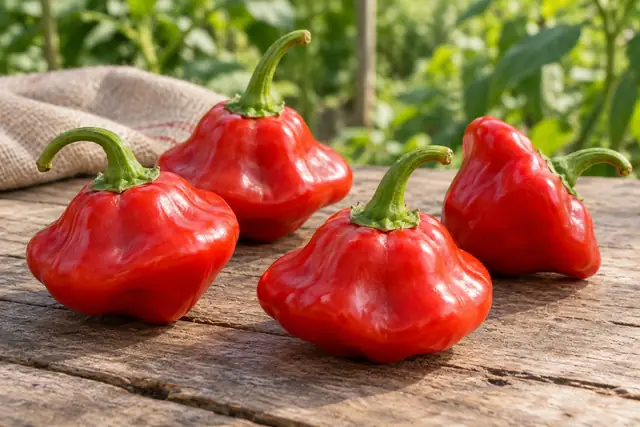
This image was created with AI from described plant characteristics and growing advice. It shows a possible situation and is not a photograph of a verified cultivar.
This growing advice helps you choose. Your variety, growth stage, weather and conditions in your space determine the actual timing.
Warm voorzaaien · Chilli
Februari–maart; langzame typen soms eerderZaai warm binnen voor en reserveer voldoende lichte opkweekruimte.
Een langzaam rijpende peper heeft een andere start dan een snelle Capsicum annuum. Een januaristart past alleen bij voldoende warmte, licht en opkweekruimte.
RHS · peper ↗Britse teeltrichtlijn voor een gematigd klimaat; de genoemde perioden zijn richtlijnen voor Nederland en Vlaanderen.
De Bolster · Koh Chang en Koh Tao — producentvergelijking ↗Nederlandse producent of teeltbron; de rasinstructie blijft leidend.
Feggies · Peper Cayorange — rasbeschrijving ↗Nederlandse producent of teeltbron; de rasinstructie blijft leidend.
Guideline periods for the Netherlands and Flanders. Check the variety, available light, soil and measured temperatures. Greenhouse heating does not guarantee enough winter light.
The source context and any limitations are in the background information at the bottom.
Compare with another varietyDe bron beschrijft zacht zoet vruchtvlees met meer scherpte rond het centrum. Niet ieder deel van de peper smaakt daardoor even heet.
Snijd kleine stukjes voor een saus en proef een buitenrand apart van het centrum. Verwijderen van zaadlijsten neemt niet gegarandeerd alle scherpte weg.
Why choose it? Kies Bishop Crown voor een afwijkende vrucht en een contrast tussen zoete rand en pittiger kern, als proefras voor liefhebbers.
The options below belong to the plant. From these, choose the method that suits your variety's growth habit.
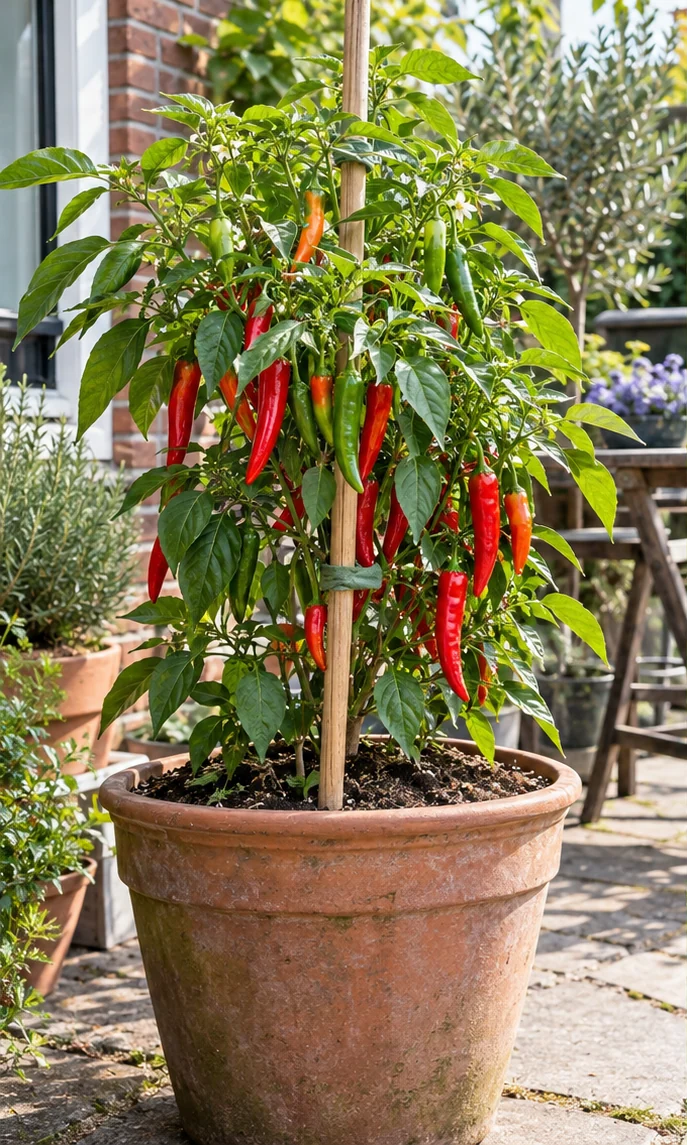
This image was created with AI from described plant characteristics and growing advice. It shows a possible situation and is not a photograph of a verified cultivar.
Een pot maakt een kleine peperteelt verplaatsbaar en makkelijk te volgen.
Voor een warm balkon of terras waar kou en uitdrogen actief gevolgd kunnen worden.
Tick off your supplies →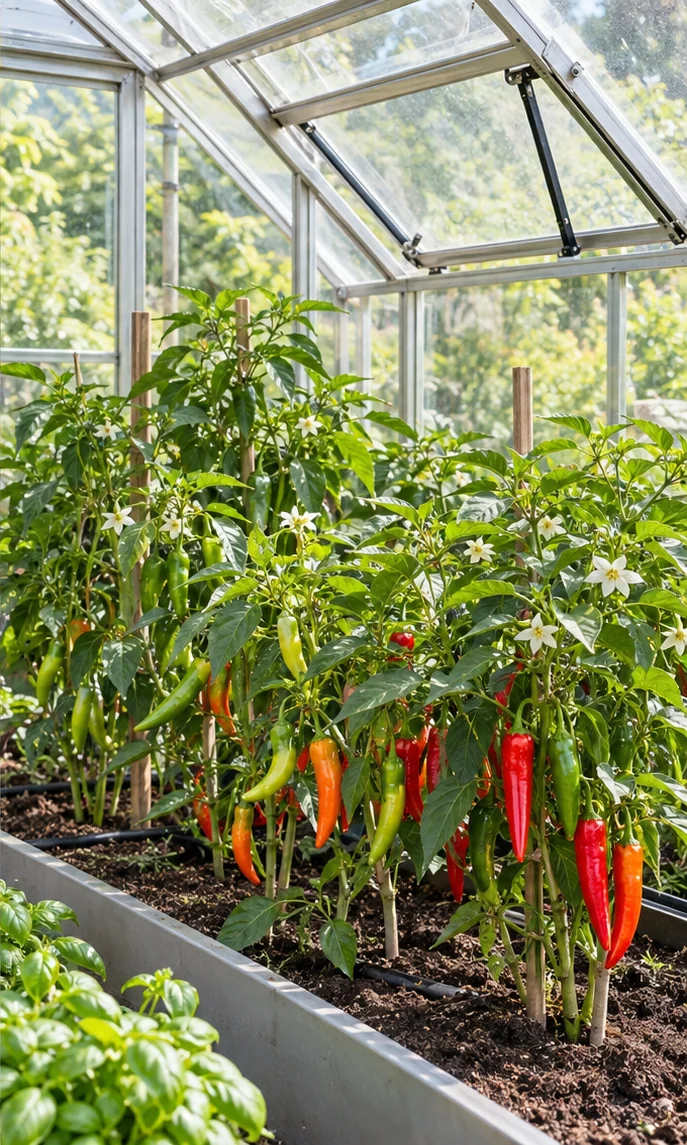
This image was created with AI from described plant characteristics and growing advice. It shows a possible situation and is not a photograph of a verified cultivar.
Onder glas krijgt een warmtevragend ras meer beschutte tijd om te rijpen.
Voor een langer warm seizoen; een kas kan ook te heet worden.
Tick off your supplies →Een opvallende rode kroonpeper aan een krachtig gewas, met een bijzondere eetervaring binnen één vrucht.
Kies Bishop Crown voor een afwijkende vrucht en een contrast tussen zoete rand en pittiger kern, als proefras voor liefhebbers.
De bron beschrijft zacht zoet vruchtvlees met meer scherpte rond het centrum. Niet ieder deel van de peper smaakt daardoor even heet.
Snijd kleine stukjes voor een saus en proef een buitenrand apart van het centrum. Verwijderen van zaadlijsten neemt niet gegarandeerd alle scherpte weg.
Geef veel warmte en voldoende ruimte voor een krachtig gewas rond een meter. Steun takken die meerdere vruchten dragen.
Laat de vruchten rood kleuren voor rijpe oogst. Proef opnieuw per oogstbeurt en neem het zoete randprofiel niet als mildheidsgarantie voor de hele vrucht.
Cayorange: A very early-ripening chilli with bright yellow-orange fruits, also selected for promising outdoor growing in warmth. Add a small amount of ripe chilli to a sauce and increase the quantity after tasting. The colour gives a different accent from red chilli.
The source mentions consistently good scent and flavour, without an exact heat rating. Orange colour does not prove that it is a mild sweet pepper.
Westlandse Lange Rode: A familiar elongated, pointed chilli that changes from green to red, suitable for fresh picking and drying. Finely chop red-ripe chillies for a sauce or dry sound fruits for later. Start with little and adjust the amount.
The source describes a hot flavour. Other listings differ in their heat ratings; taste your own harvest rather than relying on a fixed guarantee of heat.
Lombardo: A mid-early cultivar with long, slender, pointed fruits, changing from light green to bright red, on a strongly branching plant. Use thin rings in a vegetable dish or preserve the harvest using a proven recipe. The source recommends it for preserving.
Sweet flesh and a mild profile are described. Lombardo is therefore a different choice from a hot cayenne.
Black Hungarian: Purple flowers and conical, Jalapeño-like fruits that ripen from almost black to dark red make this Hungarian cultivar distinctive. Use rings in a salsa or cook small pieces with a dish. Taste a small amount before adding a whole fruit.
Juicy flesh and a well-regarded flavour are described; the offering is listed among hot chillies. A fixed Scoville value has not been established.
Chillies include several types with different shapes, growing periods and heat levels. Look at the full cultivar description and the warm season available to you. Colour alone does not measure heat. Start with a manageable number of plants so you can also use the harvest. Keep the cultivar name and your own tasting notes with the crop.
Chillies need a long period of raising compared with many summer vegetables. Sow in warmth in early spring and give seedlings light after emergence. A heat mat may support germination but also dries the sowing compost faster. Check moisture accordingly. Buy a healthy young plant if you have no suitable bright place for raising one.
Let plants acclimatise gradually to sun and outdoor air. Chillies do not tolerate frost; cold nights may slow growth and fruit set. Choose a sheltered spot or greenhouse and check the local forecast. The American calendar differs from the Dutch one. The useful starting point is a genuinely warm planting-out time, not a fixed date on the packet.
Set the plant at about the same depth as in its growing-on pot and retain the rootball. Use soil or a growing medium that retains moisture and drains excess water. A pot must be large enough for the chosen type. Put in support early if necessary, so you do not need to push it through a full rootball later.
Water at the base when the root zone dries out. A warm pot particularly needs more frequent checks. Too much nitrogen can produce plentiful leaves and slower fruiting, so more feed is not automatically better. Follow the product dosage and soil conditions. Keep leaves as dry as possible and give greenhouse plants fresh air on hot days.
When flowers drop, first consider heat, cold and moisture. Check curled or sticky leaves for aphids. A sunken patch at the end of a fruit may relate to disrupted moisture uptake. Take a photograph and watch whether the problem continues before intervening; one damaged fruit does not describe the plant's whole condition.
Some chillies are deliberately harvested green; others are left to develop more colour. Check the use and ripe colour appropriate to the cultivar. Cut with sharp scissors and support the branch with your other hand. Do not pull at a firmly attached fruit. Regular harvesting helps keep the crop in a useful picking rhythm.
Wear gloves when cutting hot chillies or processing a large harvest. Do not touch your eyes or face immediately afterwards, and clean your hands and tools. Start with a small amount when cooking. Record what you used for each cultivar and how you experienced its flavour; this is more useful than assigning the same heat to every fruit.
Tick what you already have. The extras depend on how you grow.
0 of 6 ticked off
Your ticks are saved in this browser.
SeedSteps editorial team · updated on 11 October 2026. The AI images illustrate species and practical growing situations; they do not prove an exact cultivar, observations from your own garden or yield.
Britse gewasadviezen worden gecombineerd met Nederlandse en Vlaamse informatie waar beschikbaar. Amerikaanse Extension-bronnen ondersteunen plantprincipes en herkenning; hun kalenderdata, lokale plaagdruk, bestrijdingsmiddelen en mestdoseringen worden niet rechtstreeks op Nederland of Vlaanderen toegepast. Vorst, bodemwarmte, standplaats en expliciete rasinformatie blijven de lokale controle. Commerciële bronnen onderbouwen uitsluitend benoemde ras- en plantkenmerken; zij zijn geen affiliate-aanbeveling.
Supporting evidence by chapter: Why grow Bishop Crown?: Feggies, Alsagarden. How this choice tastes: Feggies, Alsagarden. From harvest to kitchen: Feggies, Alsagarden. What needs attention when growing: Feggies, Alsagarden. Choose by flavour, shape and use: Feggies, Culinaris, Feggies, De Bolster, Feggies, Feggies, Kokopelli. Choose a cultivar without expecting fixed heat: Royal Horticultural Society, University of Minnesota Extension. Start early, in warmth and with enough light: Royal Horticultural Society, University of Minnesota Extension. Wait for suitable nights before moving outdoors: Royal Horticultural Society, University of Minnesota Extension. Give the roots a steady start: Royal Horticultural Society, University of Minnesota Extension. Keep moisture and feeding balanced: Royal Horticultural Society, University of Minnesota Extension. Look at flowers, leaves and fruit together: Royal Horticultural Society, .
Groeiwijze: krachtig Beschrijving van de genoemde rasbron; geen eigen tuinwaarneming. Feggies, Alsagarden
Hoofdkleur: rood Beschrijving van de genoemde rasbron; geen eigen tuinwaarneming. Feggies, Alsagarden
Flavour: De bron beschrijft zacht zoet vruchtvlees met meer scherpte rond het centrum. Niet ieder deel van de peper smaakt daardoor even heet. Smaakbeschrijving van de rasbron, vertaald naar eigen woorden. Rijpheid, teelt en bereiding beïnvloeden de smaak. Feggies, Alsagarden
