Why grow Taisai?
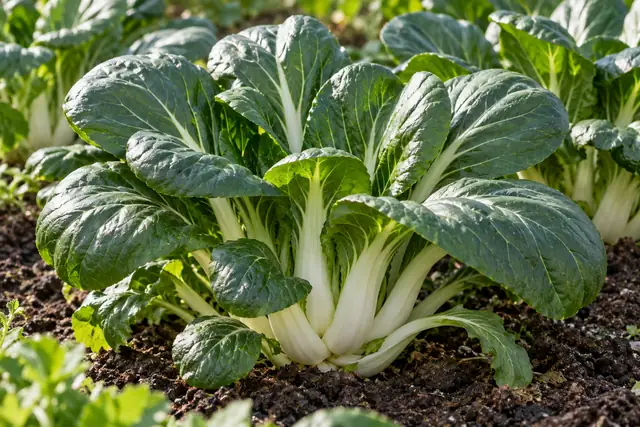
Taisai forms a rosette of dark green, spoon-shaped leaves with broad, white ribs. It does not form a closed cabbage head.
Choose Taisai for white ribs and a full, green rosette. Red Inferno offers a visibly different colour form.
How this choice tastes
The source gives no unique Taisai aroma. Familiar pak choi preparation is therefore described as crop information, not a cultivar comparison.
From harvest to kitchen
Fry ribs first and add thin leaves later. Finely cut raw ribs add crisp structure to salad.
What needs attention when growing
Sow with enough space for rosettes and maintain even moisture. Moisture stress and an unfavourable season can encourage bolting.
Harvest young for individual leaves or later for a whole rosette. Check early for a developing flower stem.
Choose by flavour, shape and use
Taisai: Taisai forms a rosette of dark green, spoon-shaped leaves with broad white ribs, without a closed head. Fry ribs first and add thin leaves later. Finely sliced raw ribs add crisp texture to salad.
The source gives no unique Taisai aroma. Familiar pak choi preparation is therefore described as crop information, not a cultivar comparison.
Red Inferno: Red Inferno is a small pak choi with red, spoon-shaped leaves and light green veins. Colour makes young rosettes recognisable. Use young leaves in mixed salad or stir-fry a small rosette briefly. The source mentions a crisp young harvest.
A distinct pungency or sweetness for Red Inferno is not confirmed. The described crispness is a texture characteristic.
Pak choi grows with open leaf stalks
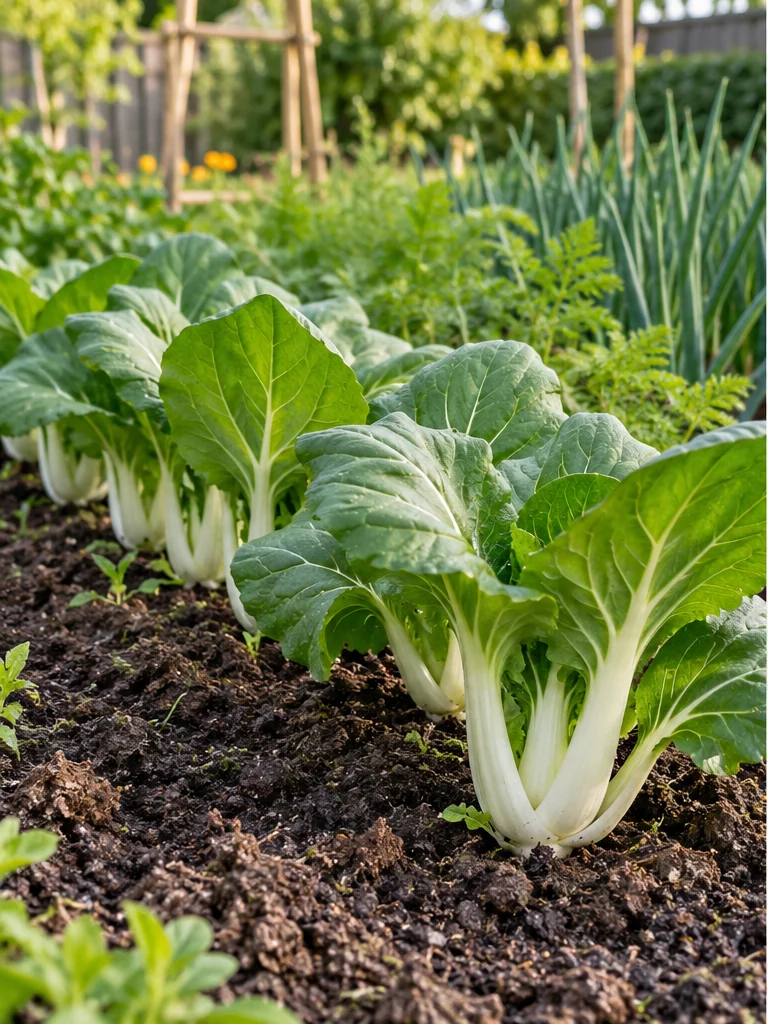
Pak choi is not a closed Chinese cabbage head. Broad stalks remain visible beneath open leaves. Check whether the seed label gives a small or large final type. Many varieties allow baby harvests, but full-plant spacing and timing must match the type.
A late-summer round is often manageable
Pak choi grows in several periods, but bolting needs attention. Young cold exposure and warm long days interrupt leaf aims. Choose suitable varieties and consider late-summer starts. Minnesota calendars belong to another climate; transfer moisture, spacing and protection principles.
Sow in place or in separate modules
Sow thinly in a fine strip or raise individual plants in modules. Keep young roots undamaged when planting out. Do not let a plant become pot-bound in a small cell. A sowing line and label make thinning easier, especially when growing several Asian leafy vegetables in the bed at once.
Match space to the meal
Baby leaves allow closer growing than whole plants. The RHS gives about 25–30 cm for larger plants and less for younger stages. Choose the aim first. Crowding does not automatically give broad, firm stalks, while small portions need no large row.
Let the stalks grow steadily
Even soil moisture supports tender leaves and crisp stalks. Water bases and check beneath surfaces. Containers dry faster. Light shelter helps strong heat, but pak choi still needs light. Avoid saucers staying full of water.
Check the first leaves for small holes
Flea beetles damage seedlings quickly; slugs and caterpillars also feed. Inspect before assigning causes. Mesh needs closed edges and growth room. Check regularly under protection to reveal trapped pests or poor moisture promptly.
Pick young or cut a whole plant
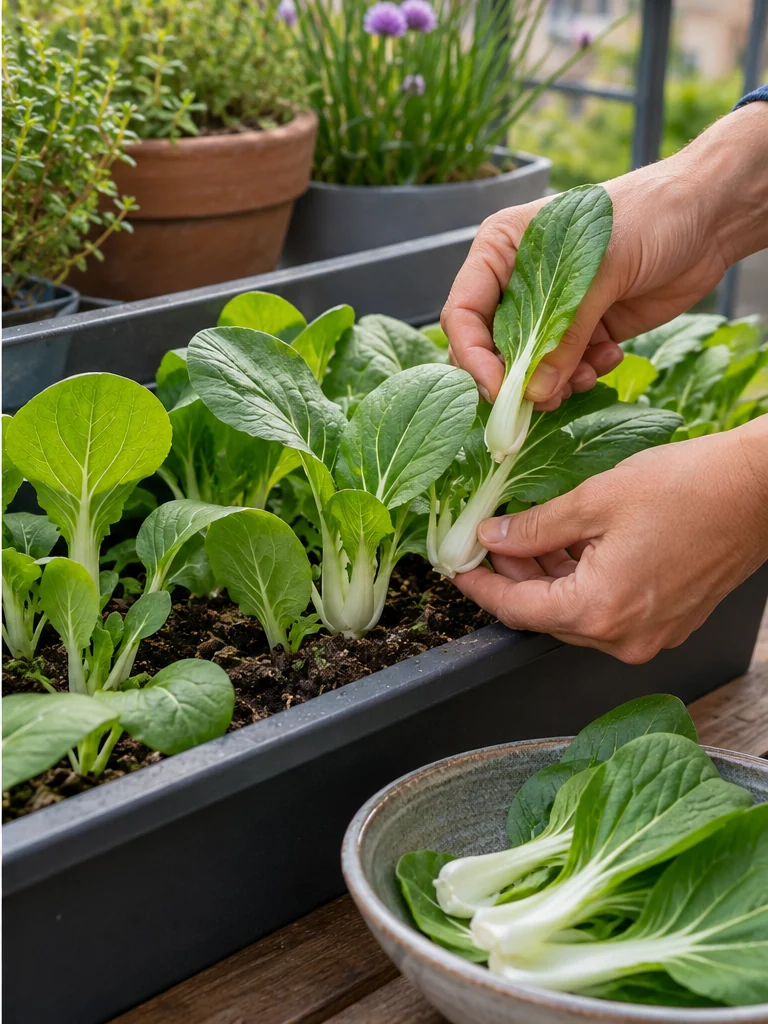
For loose leaves, retain central growth. For whole pak choi, cut low at the base once size and firmness suit. Do not wait for an obvious flower stem. Young whole plants can be usable portions; maximum size is no required goal.
Use promptly and plan a small follow-on crop
Rinse sand between stalks and preferably use fresh. Cool leftover pak choi promptly. Note sowing, bolting and desired size. Start another round only when variety timing and care availability fit. Small rounds fit weekly cooking more easily.