Why grow Violette?
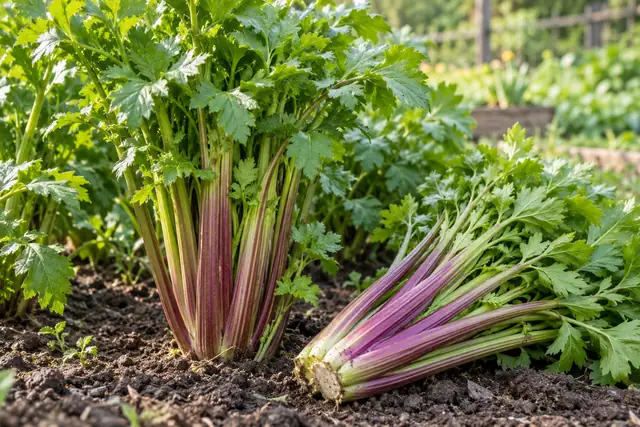
Violette brings reddish ribs to a celery bed. Alongside colour, the product description emphasises early, sturdy development.
Choose Violette if you mainly use celery in cooked dishes and find coloured ribs appealing. Colour alone does not prove a flavour difference.
How this choice tastes
The source calls this selection very aromatic. This supports a clear choice for celery flavour, but not a fixed perfume or sweetness level.
From harvest to kitchen
Use ribs and leaves as a fragrant soup base. Thinly sliced ribs also suit dishes where colour remains visible.
What needs attention when growing
Give pre-grown plants a fertile position with even moisture. Do not let the root zone dry out for long during development.
Harvest ribs when firm enough for your dish. For soup, take healthy aromatic leaves too.
Choose by flavour, shape and use
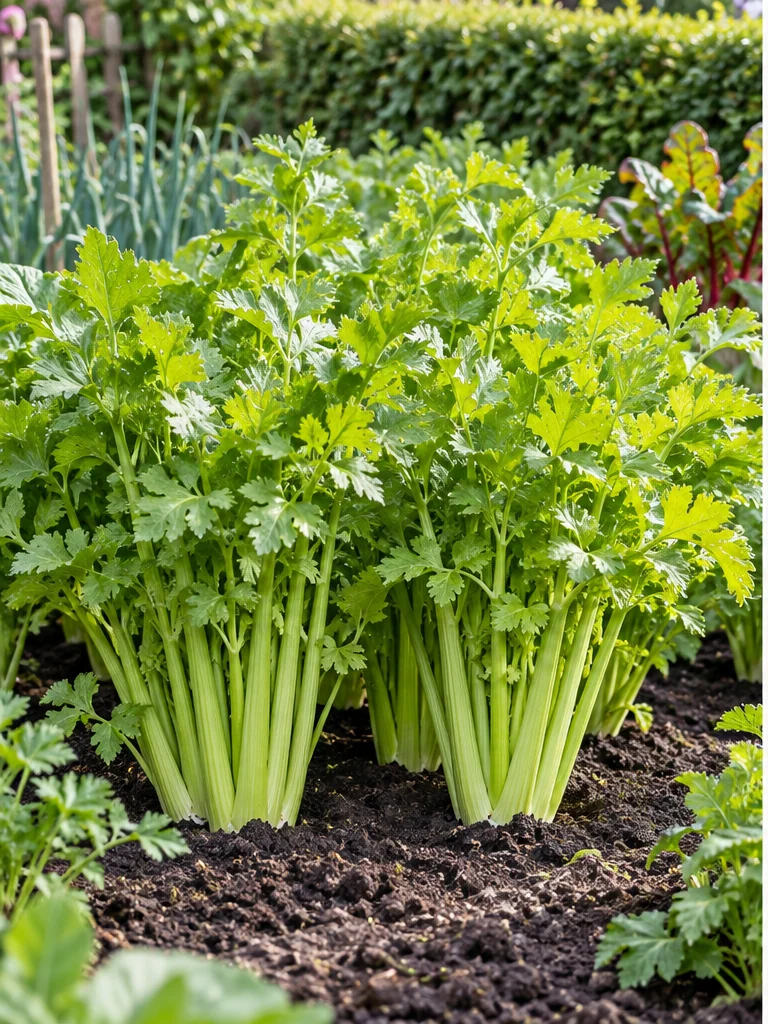
Blanc Pascal: Blanc Pascal is distinguished by short, broad, fleshy ribs. The pale colour is produced by excluding light. Cut ribs into substantial pieces for cooking or use thin slices where juicy texture is wanted.
The source emphasises tender, fleshy ribs but no distinct aroma profile. A sweetness comparison with Tall Utah is lacking.
Violette: Violette brings reddish ribs to a celery bed. Besides colour, the product description emphasises early, sturdy development. Use ribs and leaves as a fragrant soup base. Thinly sliced ribs also suit dishes where colour remains visible.
The source calls this selection very aromatic. This supports a clear choice for celery flavour, but not a fixed perfume or sweetness level.
Tall Utah: Tall Utah is a named celery selection. The source gives growing guidance but does not substantiate a unique rib colour or fixed plant size here. Use ribs in salad or juice them with vegetables. The leaves can flavour a cooked base.
The aroma description applies to celery as a crop. A cultivar-specific comparison with Violette or Blanc Pascal is not available.
Choose how much blanching work you want
Green and self-blanching varieties can grow in blocks. Traditional types need more light exclusion around stalks. Start with a clearly described variety, not unknown leftover plants. Stalks are leaf stalks; upper leaves remain necessary for growth.
Fine seed needs time and light
Sow indoors in moist seed compost in spring. Barely cover small seeds so light can aid germination. Keep warm enough and provide light after emergence. Germination may be slow. Avoid drying seedlings then trying to restore them with a large watering.
Keep young plants out of prolonged cold
Young celery can bolt later after cold exposure. Match starting to sufficiently warm planting time. Prick out or thin modules promptly and maintain steady growth. Purchased young plants are practical without a suitable light raising area at home.
Plant in fertile, moisture-retentive soil
Harden plants off gradually and plant only when cold will not cause a prolonged growth check. Use well-drained soil with enough organic matter. For block planting, follow cultivar spacing. Water after planting and leave the heart clear; do not bury young leaf stalks deep in wet earth.
Make moisture checks part of every garden round
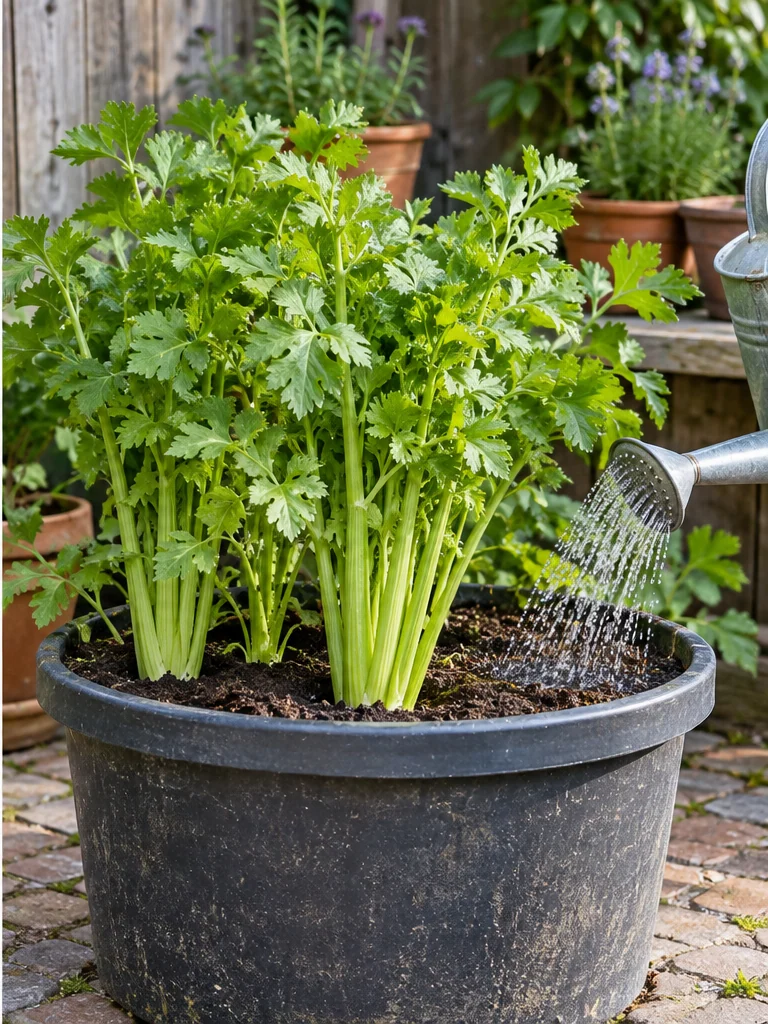
Celery responds poorly to drought stress: stalks often stay thin or fibrous. Feel the root zone and water the soil gently. A container dries much faster than a moisture-retentive bed. Mulch can help, but leave the base clear. Feed selectively; water and healthy roots remain the first requirements.
Exclude light without wrapping wet foliage
If blanching stalks, follow variety type and work close to harvest. Fit paper or cardboard sleeves around stalks, leaving upper leaves free. Check trapped moisture and soft patches. Green or self-blanching block crops do not all need the same action.
Thin stems call for a broad check
With poor growth, assess moisture, soil and roots. Premature flowers suit disrupted young crops. Inspect spotted leaves and slug damage separately. Do not automatically lime dark heart tissue: nutrient uptake also depends on water and healthy roots.
Harvest stalks or a whole plant
Take usable outer stalks while the centre grows, or harvest the whole plant at its base. Act before coarseness and fibres. Consider variety frost sensitivity. Cool and protect from drying; use fresh stalks and clean leaves in cooking.