
Jaune St Vincent: discover its flavour and how to grow it
Een oude gele tomaat met lichte ribben en sappig, zoet vruchtvlees. Kies hem als je een klassieke gele tomaat wilt met wat vorm, zonder de zeer grillige lobben van een Calabash. Het is een keuze voor de oogst in het middenseizoen.
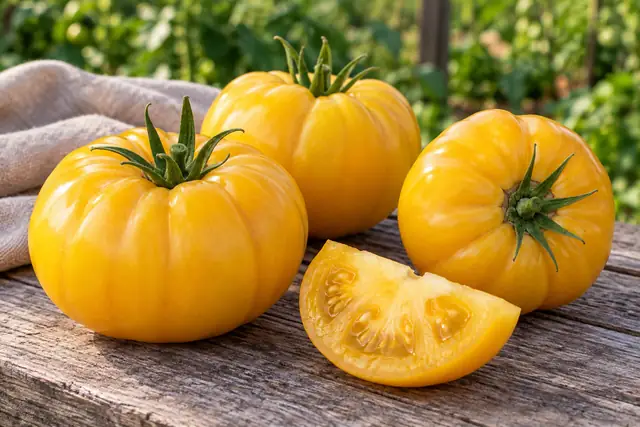
This image was created with AI from described plant characteristics and growing advice. It shows a possible situation and is not a photograph of a verified cultivar.
- Location
- Veel zon, warmte en beschutting; kas dagelijks ventileren
- Buiten planten
- Na lokaal vorstgevaar en bij voldoende warmte
- Support
- Stamtomaten leiden; struiktypen hun zijtakken laten behouden
- Pot
- Eén plant in een ruime pot, vaak 30–45 cm breed of groter naar ras
This growing advice helps you choose. Your variety, growth stage, weather and conditions in your space determine the actual timing.
Sowing under cover and raising seedlings
Warm voorzaaien · Tomato
Eind februari–half maart voor kas; eind maart–begin april voor buitenZaai warm binnen voor en reserveer voldoende lichte opkweekruimte.
- Germination and temperature
- Kiemen: ongeveer 18 °C. Na opkomst veel licht en bescherming tegen kou.
- After emergence
- Zet zaailingen direct na opkomst licht. Een donkere zolder vraagt geschikte groeiverlichting; warmte alleen is onvoldoende. Ventileer en houd de grond vochtig, zonder haar te verzadigen.
- Pricking out and potting on
- Verspeen zodra de eerste echte bladeren hanteerbaar zijn. Pak een zaailing aan een blad vast. Pot verder op als de wortels de kluit vullen.
- Hardening off and planting out
- Laat binnen opgekweekte planten geleidelijk aan zon, wind en buitentemperatuur wennen; zet ze bij koude nachten weer beschut. Verwarmde kas kan eerder; koude kas pas vorstvrij en warm genoeg. Buiten na de laatste vorst, vaak eind mei of juni.
Stem de start af op de uiteindelijke plek. Een grote plant die nog weken te donker binnen moet staan, krijgt geen betere start.
Sources and use
RHS · tomaat ↗Britse teeltrichtlijn voor een gematigd klimaat; de genoemde perioden zijn richtlijnen voor Nederland en Vlaanderen.
Feggies · Tomaat Ace 55 VF — rasbeschrijving ↗Nederlandse producent of teeltbron; de rasinstructie blijft leidend.
Feggies · Tomaat Ananori — rasbeschrijving ↗Nederlandse producent of teeltbron; de rasinstructie blijft leidend.
Guideline periods for the Netherlands and Flanders. Check the variety, available light, soil and measured temperatures. Greenhouse heating does not guarantee enough winter light.
What makes Jaune St Vincent different?
- Vruchtvorm
- licht afgeplat en geribd
- Hoofdkleur
- geel
- Flavour
- Jaune St Vincent wordt beschreven als zoet en sappig. Dat maakt hem een toegankelijke gele keuze; een specifiek citrusaroma of extra lage zuurgraad is niet gedocumenteerd.
The source context and any limitations are in the background information at the bottom.
Compare with another varietyFlavour and kitchen
Jaune St Vincent wordt beschreven als zoet en sappig. Dat maakt hem een toegankelijke gele keuze; een specifiek citrusaroma of extra lage zuurgraad is niet gedocumenteerd.
Snijd de licht afgeplatte vruchten dwars in plakken. De ribben geven elke plak een aardige omtrek op brood, in een tomatensalade of naast een omelet.
Why choose it? Kies hem als je een klassieke gele tomaat wilt met wat vorm, zonder de zeer grillige lobben van een Calabash. Het is een keuze voor de oogst in het middenseizoen.
Zo kun je tomaat kweken
The options below belong to the plant. From these, choose the method that suits your variety's growth habit.
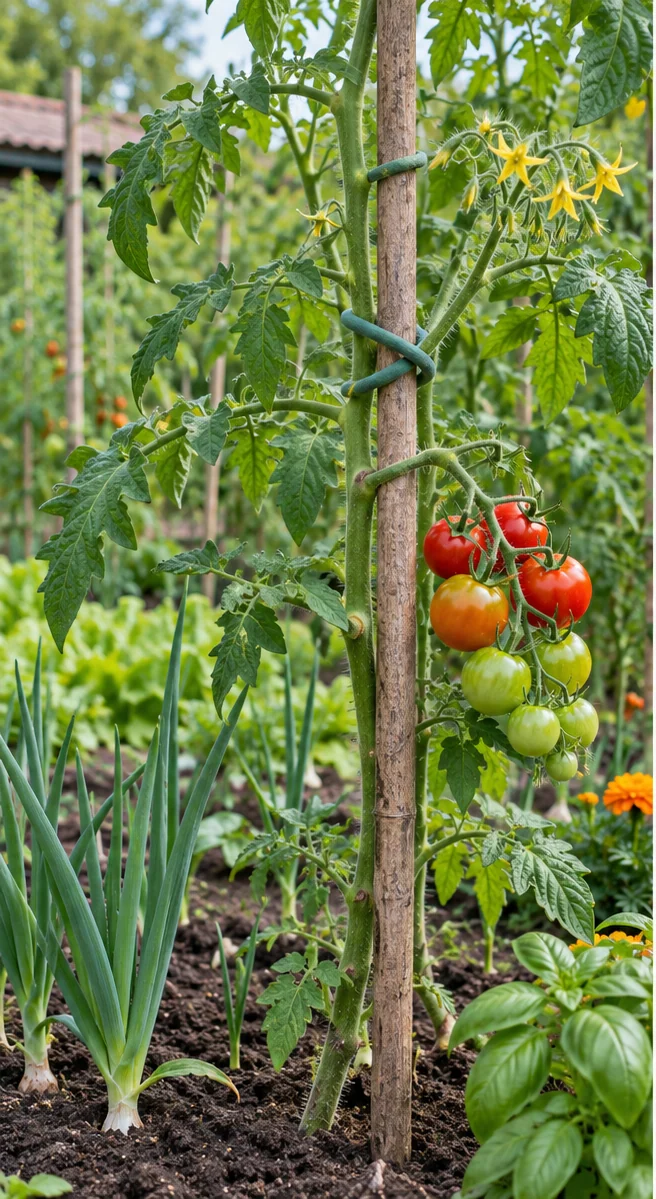
This image was created with AI from described plant characteristics and growing advice. It shows a possible situation and is not a photograph of a verified cultivar.
Een stamtomaat langs een stok
Een enkele hoofdstengel is overzichtelijk en houdt de oogst binnen handbereik. De tomaat klimt niet zelf: jij verbindt de groei losjes met de steun.
- Kies een doorgroeiend ras dat voor buiten wordt aangeboden.
- Plant op een warme beschutte plek na vorstgevaar en zet een stevige stok naast de kluit.
- Maak zachte ruime bindlussen en verwijder jonge okselscheuten als je één stam leidt.
- Voeg steunpunten toe tijdens de groei en controleer steeds of de lus niet knelt.
Voor een zonnige buitenplek met ruimte voor een hoge plant.
Tick off your supplies →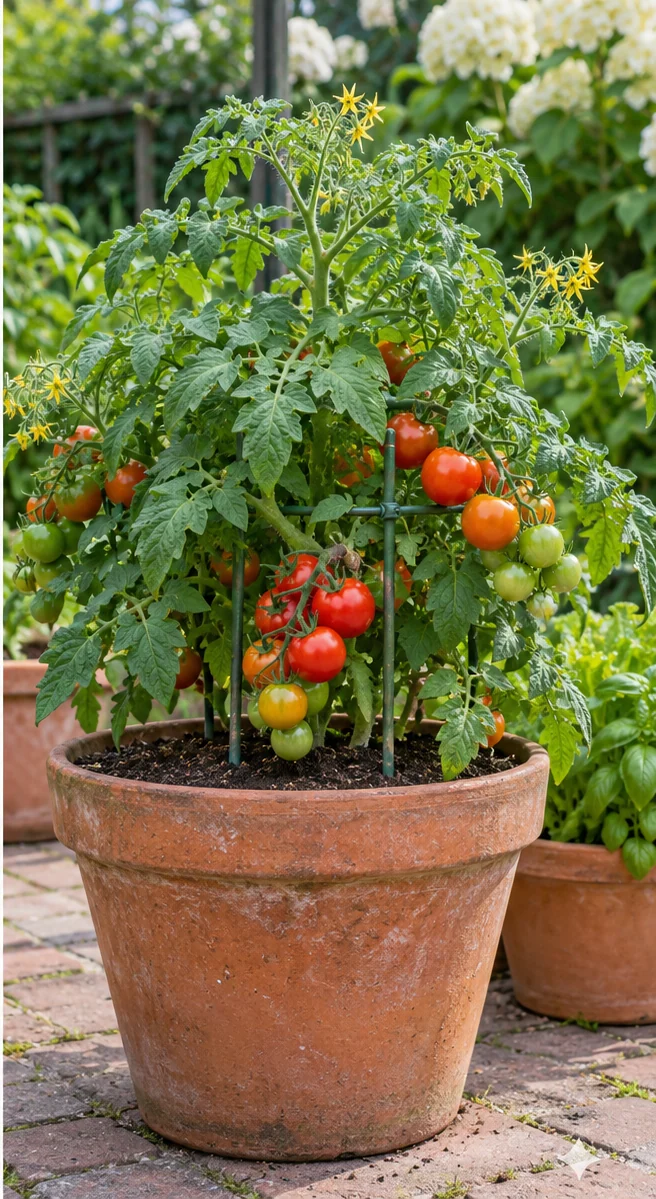
This image was created with AI from described plant characteristics and growing advice. It shows a possible situation and is not a photograph of a verified cultivar.
Een struiktomaat in een terras-pot
Een compact zelftoppend ras geeft veel vertakte groei in een beperkte hoogte. Laat de zijtakken staan en ondersteun zware vruchttakken waar nodig.
- Kies expliciet een compact struik- of potras.
- Gebruik een ruime pot met drainage en voedzame potgrond, één plant per pot.
- Laat de zijtakken groeien en zet zo nodig korte steun of een kooi neer.
- Controleer vocht dagelijks bij warmte en voer passende voeding volgens dosering aan.
Voor balkon of terras; de uiteindelijke grootte hangt van het ras af.
Tick off your supplies →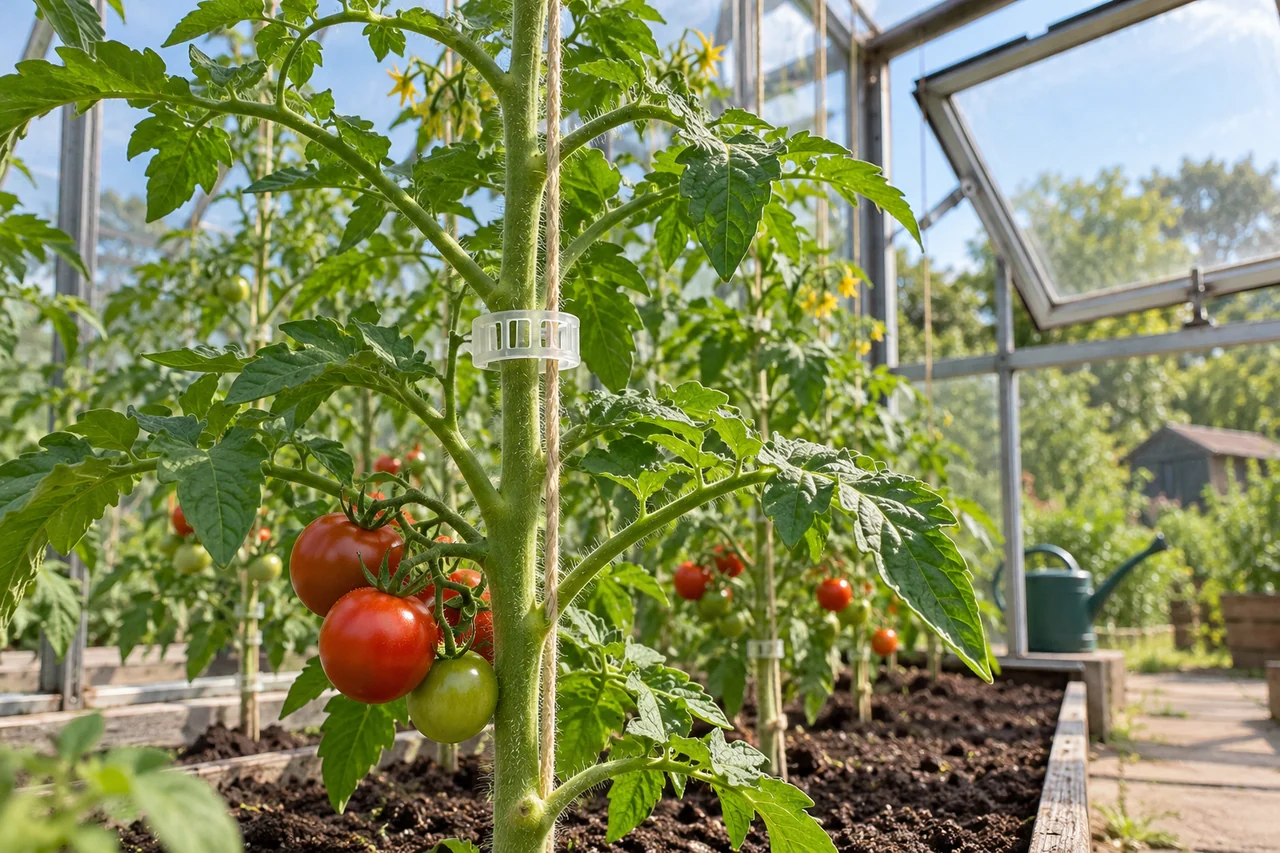
This image was created with AI from described plant characteristics and growing advice. It shows a possible situation and is not a photograph of a verified cultivar.
Een stamtomaat aan touw in de kas
Onder glas kun je de hoogte benutten en het gewas tegen regen beschermen. Ventilatie en een veilige verankering van het touw horen bij deze methode.
- Bevestig een dragend touw aan een stevige daarvoor geschikte kasconstructie.
- Plant in kasgrond of een ruime container en zorg dat de wortels vocht kunnen krijgen.
- Leid een stamtomaat geleidelijk met ruime omwentelingen of losse plantclips.
- Ventileer iedere warme dag en volg bloemen, vruchten en waterbehoefte.
Voor een kas met voldoende hoogte en een veilige dragende bevestiging.
Tick off your supplies →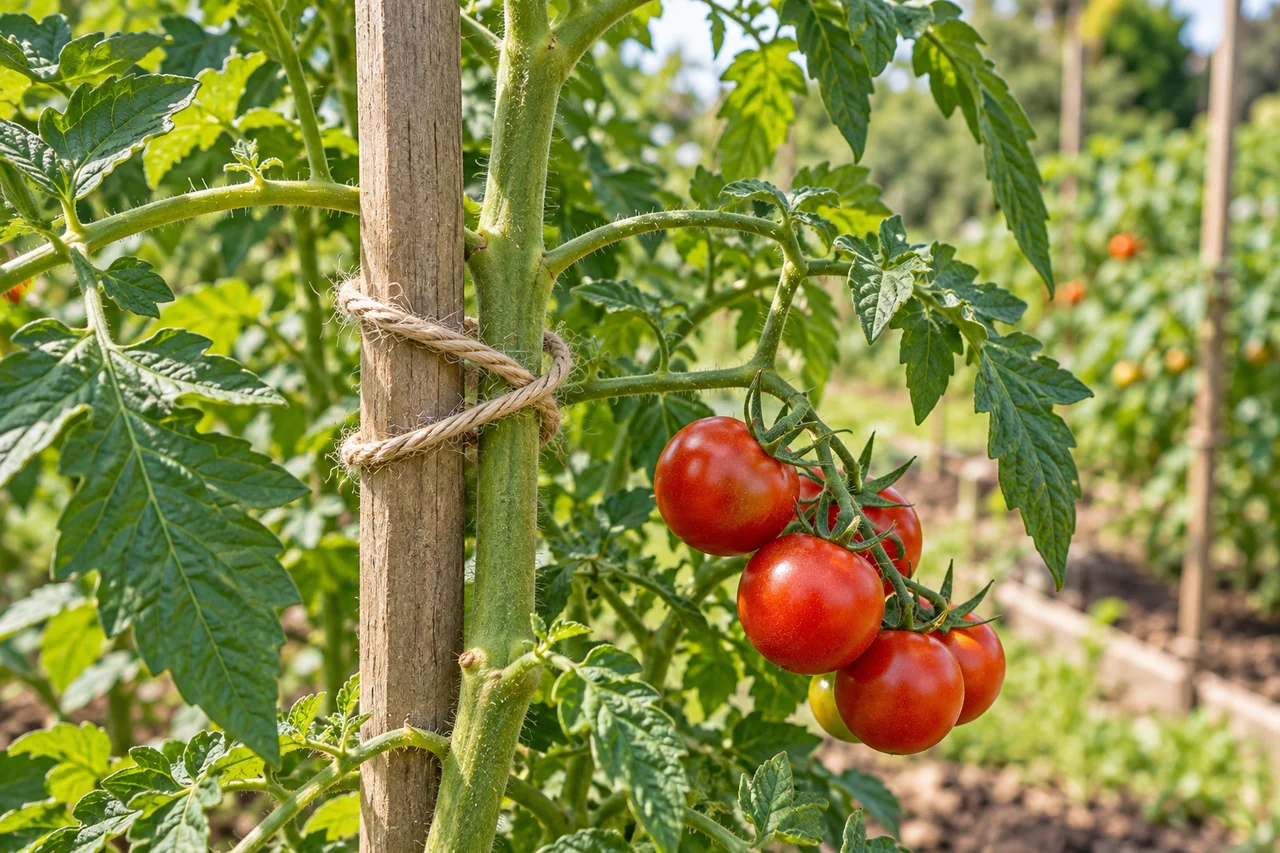
This image was created with AI from described plant characteristics and growing advice. It shows a possible situation and is not a photograph of a verified cultivar.
A soft loop gives the stem room
Use soft ties and leave room around the main stem. Check the loop as the plant grows and loosen it before it starts to constrict.
View your supplies →Why grow Jaune St Vincent?
Een oude gele tomaat met lichte ribben en sappig, zoet vruchtvlees.
Kies hem als je een klassieke gele tomaat wilt met wat vorm, zonder de zeer grillige lobben van een Calabash. Het is een keuze voor de oogst in het middenseizoen.
How this choice tastes
Jaune St Vincent wordt beschreven als zoet en sappig. Dat maakt hem een toegankelijke gele keuze; een specifiek citrusaroma of extra lage zuurgraad is niet gedocumenteerd.
From harvest to kitchen
Snijd de licht afgeplatte vruchten dwars in plakken. De ribben geven elke plak een aardige omtrek op brood, in een tomatensalade of naast een omelet.
What needs attention when growing
Een kas of beschutte zonnige plek helpt de gele vruchten rijpen. Ondersteun de plant vanaf het uitplanten en controleer het zaadetiket voor de snoeiwijze; de gevonden tekst legt die niet duidelijk vast.
Oogst wanneer de vrucht geel is en licht meegeeft. Pluk grote geribde vruchten met beide handen of een schaartje zodat de tros niet onnodig wordt belast.
Choose by flavour, shape and use
Ace 55 VF: A round red tomato for anyone starting with the classic shape and a juicy harvest. Slice the round fruits for bread or an everyday salad. Their juicy character also suits a fresh tomato sauce.
The described flavour is classically tomato-like. Choose this as a reference alongside a sweet cherry tomato, so you can taste the difference in the same meal.
Ananori: A large, flat beefsteak tomato with light ribbing and marbled colouring from green to yellow and red. Cut broad slices for tomato carpaccio or a sandwich. The thin skin and large size invite eating fresh soon after picking.
The supplier praises the flavour but gives no precise description of its sweetness and acidity. Taste the ripe beefsteak tomato alongside a red variety; the marbled colour does not predict a particular aroma.
Anna Russian: Pink-red heart-shaped fruits on a vigorous plant with strikingly fine, drooping foliage. Use thick slices of the heart-shaped fruits on bread or add them to sauce. The small seed cavity leaves plenty of usable flesh.
The current description mentions mildly sweet, firm and juicy flesh with few seeds. This makes the large heart-shaped tomato useful both fresh and cooked.
Japans Laag: A bushy tomato about half a metre tall, with small round red fruits. Pick small amounts for lunch or salad straight from the pot. You do not need a large beefsteak tomato to add colour to a slice of bread.
The cultivar is described as sweet and juicy. This makes it a compact alternative to tall cherry tomatoes for a fresh snack harvest.
Choose the plant type before picking up the secateurs
The same treatment does not suit every tomato. An indeterminate cordon tomato can be trained with one main stem. A bush type, by contrast, develops its harvest on branches. Check the cultivar label before removing sideshoots; an arbitrary pruning rule may cost you future fruiting branches.
A loop must still fit next week
Make the attachment to the stake firmer than the attachment to the plant. A soft figure-of-eight tie prevents rubbing between stake and stem and leaves room for growth. Check older ties on every garden round, especially beside heavy trusses. Do not secure a truss in a way that constricts its stem.
Warmth works together with ventilation
A greenhouse can extend growth and harvesting, but a closed greenhouse quickly becomes too hot on sunny days. Open windows and doors when needed and let air reach the flowers. A light tap on a flowering truss can help release pollen; do not force or damage the flowers.
Make the water supply visible
Feel below the top layer rather than just looking at the dry colour of the surface. Water the soil and let excess water drain away. A small pot needs more frequent adjustments and produces greater fluctuations in moisture. A larger container gives more room for manoeuvre but does not replace checks.
Rain protection and a healthy harvest
Check outdoor plants particularly carefully during warm, humid weather. Dark, spreading patches on leaves, stems or fruit call for investigation of disease, including late blight. Remove severely diseased material and keep healthy produce separate. A roof can reduce rain exposure, but airy spacing and timely checks remain necessary.
One plant species, many ways to choose
A tomato may be small enough to eat whole or invite you to cut it into slices. Behind this diversity lies more than a row of different seed packets. The gene bank at Wageningen University & Research preserves cultivated varieties, landraces and wild relatives to keep genetic variation available for breeding. A cultivar is therefore a choice within a larger range of possibilities. At home, start with what you want to pick and eat; the most striking name is not necessarily the best match for your space.
Look closely: from flower to berry
Compound leaves and yellow, star-shaped flowers grow on the hairy stem. The fleshy fruit is botanically a berry, although we use tomatoes as a vegetable in the kitchen. This dual view makes following the plant more interesting: watch the flowers that become small fruits and the trusses filling out. You can see different stages of plant life during the same garden round.
Start with growth habit and use
Do you want to pick a handful of fruits regularly or process a large amount at once? Indeterminate cordon tomatoes keep forming new trusses; determinate bush types give a more concentrated harvest. This difference also determines how much support and space you need. A cultivar name alone does not tell you this: check the documented characteristics of your choice.
Sun, shelter and drainage
Find a sunny, warm spot out of strong wind. Roots need moisture but must not stay in wet soil for long. A greenhouse keeps rain off the crop and offers more warmth; a suitable outdoor position remains a fully valid growing choice.
Preparing the soil and feeding
Use soil information to guide feeding. Mature compost may improve structure. Do not apply nitrogen by guesswork: plentiful leaf growth does not prove good fruit production. Requirements depend on the existing soil and growing method.
Sowing ahead of your own planting-out date
For outdoor growing, March is a useful starting point in the Flemish school garden source, which specifically discusses Resibella. This is an example, not a fixed date for all cultivars. Sow only when you can provide the seedlings with enough light, warmth and space until they move to their final position.
Warmth for germination, then plenty of light
Keep the seed compost moist. After emergence, light is essential: long, thin stems indicate a shortage. Wait until true leaves appear before pricking out, and give each seedling its own growing space. Support the rootball and gently hold the seedling by a leaf.
Hardening off is gradual
Gradually acclimatise plants raised indoors to sun and wind. Start in a sheltered position and increase their time outside. Bring them back indoors on cold nights. A sturdy plant with a well-rooted rootball can cope with the transition better than a weak seedling planted out in a hurry.
Planting out: look beyond the date
Velt plants outdoor tomatoes after the Ice Saints days. Also check the local forecast and the actual warmth at the planting position. According to KNMI, frost can also occur on or after those days. Mid-May is therefore a planning point, not proof that your garden is frost-free.
Cordon or bush tomato?
For a tomato trained as a single stem, remove young sideshoots and tie in the main stem loosely. On bush tomatoes, let the side branches grow. A bush may also need support when fruits weigh down its branches.
Keep moisture even
Large fluctuations in moisture can make the fruits split. Feel the soil and check pots particularly carefully in hot weather. Mulch helps retain moisture. An existing split will not heal if you suddenly give much more water; work towards a more even water supply.
Blossom-end rot does not automatically mean a calcium deficiency
A dark, sunken patch at the bottom of the fruit may indicate blossom end rot. The problem concerns calcium in the growing fruit; there may still be enough calcium in the soil. Uneven water uptake, root damage and excessive feeding play a part. Investigate the conditions before adding lime.
Following flowers and fruit set
The cultivated tomato is predominantly self-pollinating. The WUR gene bank treats wild relatives and heterogeneous accessions separately: they do not reproduce identically. In your garden, watch whether flowers form fruits. Do not infer a guarantee of fruit set from a botanical name.
Harvesting by ripeness
Pick ripe fruits when they reach the colour appropriate to the cultivar. Green does not mean unripe in every cultivar. Timing depends on the cultivar, weather and growing position. Under glass, harvesting may start earlier and continue for longer. Check regularly rather than planning a single fixed harvest day.
Saving seed while keeping your chosen characteristics
Take fully ripe fruits from healthy, open-pollinated plants. Remove the seeds with their gel, let the mixture ferment briefly, then rinse and dry carefully. Seed from an F1 may germinate, but the offspring will not predictably match the parent. Keep the cultivar name and origin with the seed.
Healthy starting material
Do not save seed from visibly diseased plants. Seed-borne diseases are also a concern in professional collections. WUR checks its regenerated material for such diseases. Fermenting at home does not guarantee that infected seed becomes healthy; start with healthy material.
Pot or greenhouse: keep observing the plant
A pot dries out faster than open ground. Choose enough root space and secure supports firmly. The general calendar indicates when a growing stage is possible; the current plant size, fruit set and temperature determine what your own plant needs.
Frequently asked question: why no fixed calendar date?
A calendar helps you plan ahead, but two gardens can have different conditions on the same day. KNMI describes the last spring frost using measurements and scenarios. Use the regional timeline as a window and record the actual sowing and planting dates in My garden.
What you need
Tick what you already have. The extras depend on how you grow.
0 of 7 ticked off
Your ticks are saved in this browser.
Discover and grow more
More background, sources and image information
SeedSteps editorial team · updated on 11 October 2026. The AI images illustrate species and practical growing situations; they do not prove an exact cultivar, observations from your own garden or yield.
Britse gewasadviezen worden gecombineerd met Nederlandse en Vlaamse informatie waar beschikbaar. Amerikaanse Extension-bronnen ondersteunen plantprincipes en herkenning; hun kalenderdata, lokale plaagdruk, bestrijdingsmiddelen en mestdoseringen worden niet rechtstreeks op Nederland of Vlaanderen toegepast. Vorst, bodemwarmte, standplaats en expliciete rasinformatie blijven de lokale controle. Commerciële bronnen onderbouwen uitsluitend benoemde ras- en plantkenmerken; zij zijn geen affiliate-aanbeveling.
- World Checklist of Vascular Plants — 4 juni 2026Royal Botanic Gardens, Kew · accessed 2026-10-07
- Solanum lycopersicum — Extension Gardener Plant ToolboxNorth Carolina State University Extension · accessed 2026-10-07
- Tomaten kweken — RHSRoyal Horticultural Society · accessed 2026-10-08
- Growing tomatoes in home gardensUniversity of Minnesota Extension · accessed 2026-10-08
- Tomaat Jaune St Vincent — rasbeschrijvingFeggies · accessed 2026-10-11
- Is ijsheiligen nog heilig?KNMI · accessed 2026-10-08
- De fenologische kalenderVelt · accessed 2026-10-07
- Schoolmoestuinkalender 2025 — voorbeeld ResibellaVelt · accessed 2026-10-07
- Culinaris assortiment 2025 — okra en tomatenCulinaris · accessed 2026-10-11
- Tomaat Ace 55 VF — rasbeschrijvingFeggies · accessed 2026-10-11
- Tomaat Ananori — rasbeschrijvingFeggies · accessed 2026-10-11
- Tomaat Anna Russian — rasbeschrijvingFeggies · accessed 2026-10-11
- Tomaat Black Cherry — rasbeschrijvingFeggies · accessed 2026-10-11
- Tomaat Black Shadow — rasbeschrijvingFeggies · accessed 2026-10-11
- Tomaat Gardener’s Delight — rasbeschrijvingFeggies · accessed 2026-10-11
- Tomaat Indigo Rose — rasbeschrijvingFeggies · accessed 2026-10-11
- Tomaat Japans Laag — rasbeschrijvingFeggies · accessed 2026-10-11
- Tomaat Pamplemousse du Grand-Père — rasbeschrijvingFeggies · accessed 2026-10-11
- Tomaat Aunt Ruby’s German Green — rasbeschrijvingFeggies · accessed 2026-10-11
- Tomaat Awesome Emma Cherry — rasbeschrijvingFeggies · accessed 2026-10-11
- Tomaat Balconi Geel — rasbeschrijvingFeggies · accessed 2026-10-11
- Tomaat Banana Legs — rasbeschrijvingFeggies · accessed 2026-10-11
- Tomaat Black and Brown Boar — rasbeschrijvingFeggies · accessed 2026-10-11
- Tomaat Black Plum — rasbeschrijvingFeggies · accessed 2026-10-11
- Tomaat Blue Beauty — rasbeschrijvingFeggies · accessed 2026-10-11
- Tomaat Blue Dawg Indigo — rasbeschrijvingFeggies · accessed 2026-10-11
- Tomaat Blue Green Zebra — rasbeschrijvingFeggies · accessed 2026-10-11
- Tomaat Brad’s Atomic Grape — rasbeschrijvingFeggies · accessed 2026-10-11
- Tomaat Cœur de Bœuf Blauw — rasbeschrijvingFeggies · accessed 2026-10-11
- Tomaat Calabash rood — rasbeschrijvingFeggies · accessed 2026-10-11
- Tomaat Chocolade Peer — rasbeschrijvingFeggies · accessed 2026-10-11
- Tomaat Coeur de Boeuf — rasbeschrijvingFeggies · accessed 2026-10-11
- Tomaat Coeur de Boeuf Akers — rasbeschrijvingFeggies · accessed 2026-10-11
- Tomaat Coeur de Boeuf Blanche — rasbeschrijvingFeggies · accessed 2026-10-11
- Tomaat Copia — rasbeschrijvingFeggies · accessed 2026-10-11
- Tomaat Damascus Steel — rasbeschrijvingFeggies · accessed 2026-10-11
- Tomaat Dancing With The Smurfs — rasbeschrijvingFeggies · accessed 2026-10-11
- Tomaat des Andes — rasbeschrijvingFeggies · accessed 2026-10-11
- Tomaat Dorada — rasbeschrijvingFeggies · accessed 2026-10-11
- Tomaat Fahrenheit Blues Indigo — rasbeschrijvingFeggies · accessed 2026-10-11
- Tomaat Fuzzy Wuzzy — rasbeschrijvingFeggies · accessed 2026-10-11
- Tomaat Gekleurde Tomaten Mix — rasbeschrijvingFeggies · accessed 2026-10-11
- Tomaat Gele Paprika — rasbeschrijvingFeggies · accessed 2026-10-11
- Tomaat Gele Peer — rasbeschrijvingFeggies · accessed 2026-10-11
- Tomaat German Gold — rasbeschrijvingFeggies · accessed 2026-10-11
- Tomaat Glorie van Mechelen — rasbeschrijvingFeggies · accessed 2026-10-11
- Tomaat Grandma Mary’s Paste — rasbeschrijvingFeggies · accessed 2026-10-11
- Tomaat Green Zebra — rasbeschrijvingFeggies · accessed 2026-10-11
- Tomaat Grosse Blanche — rasbeschrijvingFeggies · accessed 2026-10-11
- Tomaat Grosse des Marais — rasbeschrijvingFeggies · accessed 2026-10-11
- Tomaat Ida Gold — rasbeschrijvingFeggies · accessed 2026-10-11
- Tomaat Ivory Egg — rasbeschrijvingFeggies · accessed 2026-10-11
- Tomaat kerstomaat gemengd — rasbeschrijvingFeggies · accessed 2026-10-11
- Tomaat Lucid Gem — rasbeschrijvingFeggies · accessed 2026-10-11
- Tomaat Marmande — rasbeschrijvingFeggies · accessed 2026-10-11
- Tomaat Midnight Select — rasbeschrijvingFeggies · accessed 2026-10-11
- Tomaat Noire Russe Charboneuse — rasbeschrijvingFeggies · accessed 2026-10-11
- Tomaat Oaxacan Jewel — rasbeschrijvingFeggies · accessed 2026-10-11
- Tomaat Oaxacan Rose — rasbeschrijvingFeggies · accessed 2026-10-11
- Tomaat Old Yellow Candystripe — rasbeschrijvingFeggies · accessed 2026-10-11
- Tomaat Olirose de St Domingue — rasbeschrijvingFeggies · accessed 2026-10-11
- Tomaat Orangette — rasbeschrijvingFeggies · accessed 2026-10-11
- Tomaat Ormato — rasbeschrijvingFeggies · accessed 2026-10-11
- Tomaat Persuasion — rasbeschrijvingFeggies · accessed 2026-10-11
- Tomaat Primavera — rasbeschrijvingFeggies · accessed 2026-10-11
- Tomaat Prince Borghese — rasbeschrijvingFeggies · accessed 2026-10-11
- Tomaat Purple Bumble Bee — rasbeschrijvingFeggies · accessed 2026-10-11
- Tomaat Purple Calabash — rasbeschrijvingFeggies · accessed 2026-10-11
- Tomaat Purple Russian — rasbeschrijvingFeggies · accessed 2026-10-11
- Tomaat Raisin Vert — rasbeschrijvingFeggies · accessed 2026-10-11
- Tomaat Roma VF — rasbeschrijvingFeggies · accessed 2026-10-11
- Tomaat Rosso Sicilian — rasbeschrijvingFeggies · accessed 2026-10-11
- Tomaat San Marzano — rasbeschrijvingFeggies · accessed 2026-10-11
- Tomaat Slivovidny — rasbeschrijvingFeggies · accessed 2026-10-11
- Tomaat Suzy — rasbeschrijvingFeggies · accessed 2026-10-11
- Tomaat Tigerella — rasbeschrijvingFeggies · accessed 2026-10-11
- Tomaat Tigerette Cherry — rasbeschrijvingFeggies · accessed 2026-10-11
- Tomaat Valencia Orange — rasbeschrijvingFeggies · accessed 2026-10-11
- Tomaat Violette Jasper — rasbeschrijvingFeggies · accessed 2026-10-11
- Tomaat Voyage — rasbeschrijvingFeggies · accessed 2026-10-11
- Tomaat Yellow Clementine — rasbeschrijvingFeggies · accessed 2026-10-11
- Tomaat Yellow Pearshaped — rasbeschrijvingFeggies · accessed 2026-10-11
- Tomaat Zebranelle — rasbeschrijvingFeggies · accessed 2026-10-11
- Tomaat Vivagrande — rasbeschrijvingFeggies · accessed 2026-10-11
- Tomaat Wolverine — rasbeschrijvingFeggies · accessed 2026-10-11
- Prune Noire / Black Plum — producent bevestigt synoniemSemailles · accessed 2026-10-11
- Prince Borghese — groei en vruchtkenmerkenSemailles · accessed 2026-10-11
- Tomaat Blush — rasbeschrijvingFeggies · accessed 2026-10-11
- Tomaat Cerise — rasbeschrijvingFeggies · accessed 2026-10-11
- Tomaat Evergreen — rasbeschrijvingFeggies · accessed 2026-10-11
- Tomaat Teton de Wepion — rasbeschrijvingFeggies · accessed 2026-10-11
- Tomaat Witte ster uit Antwerpen — rasbeschrijvingFeggies · accessed 2026-10-11
- Sunviva — beschrijving van de veredelaarOpenSourceSeeds / Universiteit Göttingen · accessed 2026-10-11
- Evergreen — vruchtvlees en groeivormSemailles · accessed 2026-10-11
- Tomato disordersUniversity of Minnesota Extension · accessed 2026-10-07
- Saving vegetable seedsUniversity of Minnesota Extension · accessed 2026-10-07
- CGN-tomatencollectieWageningen University & Research · accessed 2026-10-07
Supporting evidence by chapter: Why grow Jaune St Vincent?: Feggies. How this choice tastes: Feggies. From harvest to kitchen: Feggies. What needs attention when growing: Feggies. Choose by flavour, shape and use: Feggies, Feggies, Feggies, Feggies. Choose the plant type before picking up the secateurs: Royal Horticultural Society, University of Minnesota Extension, University of Minnesota Extension. A loop must still fit next week: Royal Horticultural Society, University of Minnesota Extension, University of Minnesota Extension. Warmth works together with ventilation: Royal Horticultural Society, University of Minnesota Extension, University of Minnesota Extension. Make the water supply visible: Royal Horticultural Society, University of Minnesota Extension, University of Minnesota Extension. Rain protection and a healthy harvest: Royal Horticultural Society, University of Minnesota Extension, University of Minnesota Extension. One plant species, many ways to choose: Wageningen University & Research. Look closely: from flower to berry: North Carolina State University Extension. Start with growth habit and use: University of Minnesota Extension. Sun, shelter and drainage: Royal Horticultural Society. Preparing the soil and feeding: University of Minnesota Extension. Sowing ahead of your own planting-out date: Velt. Warmth for germination, then plenty of light: University of Minnesota Extension. Hardening off is gradual: University of Minnesota Extension. Planting out: look beyond the date: Velt, KNMI. Cordon or bush tomato?: Royal Horticultural Society. Keep moisture even: University of Minnesota Extension. Blossom-end rot does not automatically mean a calcium deficiency: University of Minnesota Extension. Following flowers and fruit set: Wageningen University & Research. Harvesting by ripeness: Royal Horticultural Society. Saving seed while keeping your chosen characteristics: University of Minnesota Extension. Healthy starting material: Wageningen University & Research, University of Minnesota Extension. Pot or greenhouse: keep observing the plant: North Carolina State University Extension. Frequently asked question: why no fixed calendar date?: KNMI.
Vruchtvorm: licht afgeplat en geribd Beschrijving van de genoemde rasbron; geen eigen tuinwaarneming. Feggies
Hoofdkleur: geel Beschrijving van de genoemde rasbron; geen eigen tuinwaarneming. Feggies
Flavour: Jaune St Vincent wordt beschreven als zoet en sappig. Dat maakt hem een toegankelijke gele keuze; een specifiek citrusaroma of extra lage zuurgraad is niet gedocumenteerd. Smaakbeschrijving van de rasbron, vertaald naar eigen woorden. Rijpheid, teelt en bereiding beïnvloeden de smaak. Feggies